

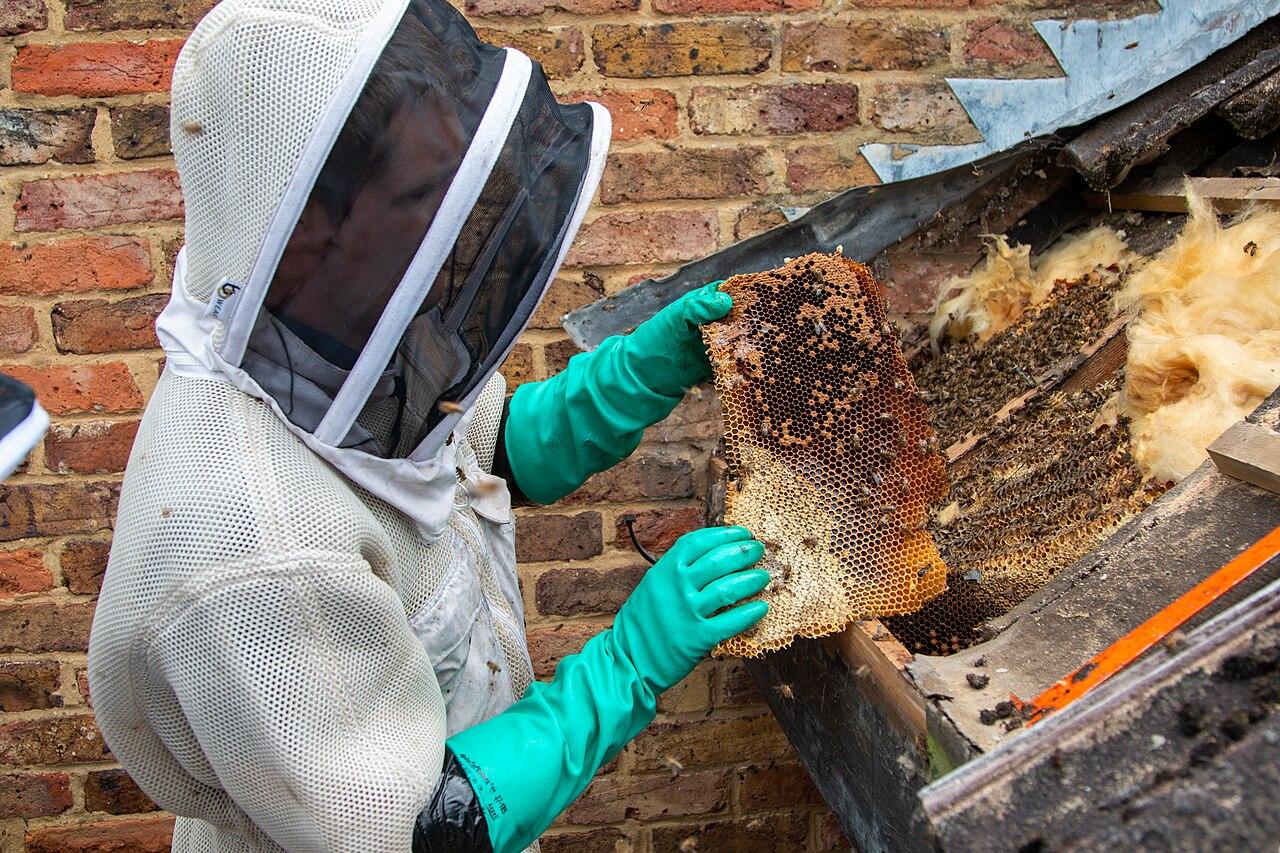

If a bee colony has built a hive around your Frisco property, the safest approach is to avoid disturbing it and have the colony identified and inspected before choosing a removal method. Bee Hive Removal in Frisco, TX involves more than taking away visible bees. A professional assessment should determine whether the colony is exposed or established inside a wall, roof, soffit, chimney, or another cavity, and whether live removal is practical. Honey bee colonies inside structures can also leave behind comb and stored honey, making follow up work important.
Understanding the Bee Hive Problem
A bee hive is not always easy to locate from the outside. Bees may enter through a small opening and establish a colony inside a wall or other protected cavity.
A visible cluster can also represent a temporary swarm rather than a permanent hive. Texas A&M AgriLife Extension explains that honey bee swarms may gather temporarily while scout bees search for a suitable nesting location.
The distinction affects the removal plan. A temporary swarm sitting on a tree branch may require a different response from an established colony inside a roof or wall.
For property owners, several signs can indicate that bees have established a nest:
- Bees repeatedly enter and exit the same structural opening.
- Activity continues around the same location for days.
- Bees appear around rooflines, soffits, wall gaps, or vents.
- Buzzing comes from inside a wall or enclosed cavity.
- Bees are appearing through an interior opening.
The goal should be to locate the colony rather than simply eliminate the bees that happen to be visible.
How Bee Hive Removal in Frisco, TX Is Evaluated
A responsible removal process starts with an inspection. The technician should determine the type of insect, location of the colony, accessibility of the hive, and level of activity around the property.
This matters especially for commercial buildings. A hive near a busy entrance, outdoor seating area, loading zone, or employee walkway creates a different management challenge than a colony located in an isolated section of a residential yard.
The inspection should answer four practical questions:
A useful lesson from structural pest work is that visible activity does not always identify the source. If bees are entering a small opening beneath siding, for example, treating the opening without determining what is behind it may leave the underlying colony untouched.
The same principle applies to roof cavities and wall voids. The removal plan should address the actual nesting location whenever it can be safely identified.
When Live Bee Relocation Is an Option
Some property owners specifically want to preserve honey bees rather than use a treatment designed to kill them. In appropriate circumstances, a Bee Hive Relocation Service in Frisco, TX can provide a live removal approach.
Live relocation is not automatically possible for every colony. The condition of the hive, its accessibility, structural location, colony size, and surrounding safety concerns can affect whether relocation is practical.
Texas A&M AgriLife Extension notes that beekeepers may sometimes provide live honey bee removal and relocation services.
Property owners comparing removal options should ask what will happen to the bees, comb, and nesting cavity.
Questions to Ask Before Service
A useful comparison checklist includes:
- Has the insect been identified as a honey bee?
- Is the colony exposed or inside a structure?
- Where is the queen and main colony believed to be located?
- Is live removal practical for this particular hive?
- Will remaining comb be removed?
- What happens to honey left inside the cavity?
- Will the original entry point need to be sealed after removal?
- What temporary safety measures should occupants follow?
These questions help homeowners and business managers compare complete removal plans instead of comparing only the initial service description.
Removing a Hive Without Creating a Second Problem
Removing the bees is only one part of structural hive management. If bees have occupied a cavity, the colony may have constructed comb and stored honey inside the space.
Leaving that material behind can complicate future property maintenance. The appropriate cleanup method depends on where the colony was established and whether the structure can be accessed without unnecessary damage.
The original entry point also deserves attention. A gap that allowed bees to enter may remain available after the colony is gone.
Potential areas for inspection include:
Roof and Soffit Areas
Roof edges, soffits, fascia, and other exterior transitions can contain small gaps that provide access to protected spaces.
Wall Cavities
Siding, masonry joints, vents, utility penetrations, and other openings can provide routes into enclosed areas.
Chimneys and Vents
Protected openings can attract insects looking for sheltered nesting locations. These areas should be inspected without disturbing active bees unnecessarily.
Landscaping Structures
Sheds, fences, outdoor structures, and other features can also provide sheltered locations for colonies.
The best post removal plan connects three tasks: colony removal, appropriate cleanup, and prevention of another entry.
Residential and Commercial Hive Removal Require Different Planning
The basic principles remain the same, but the property environment can change the practical priorities.
For a home, the main concerns may include children, pets, bedrooms, attic access, and proximity to outdoor living spaces. Homeowners should keep household members away from concentrated bee activity until the area has been assessed.
Businesses have additional considerations. A hive near a customer entrance or employee walkway can interfere with normal operations. Property managers may need to establish a temporary exclusion area while the colony is assessed.
A practical comparison looks like this:
The removal provider should understand these site conditions before starting work. A plan that works for an isolated backyard may not be appropriate beside a busy commercial entrance.
A Safer Decision Process for Frisco Property Owners
Property owners can reduce unnecessary disturbance by following a simple sequence.
Step 1: Create distance. Keep people and pets away from concentrated bee activity.
Step 2: Observe without disturbing. Note where bees are flying and whether they repeatedly use one opening.
Step 3: Avoid improvised treatments. Do not hit, burn, block, or spray an active hive without understanding what is present.
Step 4: Arrange identification and inspection. Determine whether the insects are honey bees and whether a colony is established.
Step 5: Compare removal methods. Ask whether conventional removal or live relocation is appropriate.
Step 6: Address the structure. Determine whether comb, honey, or an accessible entry point requires follow up.
Step 7: Document the work. For commercial properties, record the affected location, work completed, and any recommended repairs or exclusion measures.
This process gives property owners a clearer basis for comparing providers and helps separate a complete hive management plan from a short term response to visible bee activity.
FAQ
Can a bee hive be removed without killing the bees?
In some situations, yes. Live removal and relocation may be possible when the colony can be safely accessed and transferred, but the method depends on the hive's location and condition.
Should I block the entrance to a bee hive?
Do not automatically block an active entrance before the colony has been assessed. Blocking an established colony without a removal plan can complicate access and may force bees to seek another route into or through the structure.
How can I prevent bees from returning after hive removal?
The property should be inspected for the opening that allowed the colony to establish itself. After the colony and any necessary nesting material have been handled, appropriate repairs or exclusion measures can reduce access to the same cavity.
The key takeaway from Bee Hive Removal in Frisco, TX is that safe removal starts with identification and inspection, not immediate treatment. Property owners should determine whether they have a temporary swarm or an established colony, understand where the hive is located, compare conventional and live relocation options, and address the structural conditions that allowed the bees to enter. A complete solution protects people and property while considering the most appropriate way to manage the colony.
