


Mylar Bags for Seeds: How They Protect Germination Rates in Storage
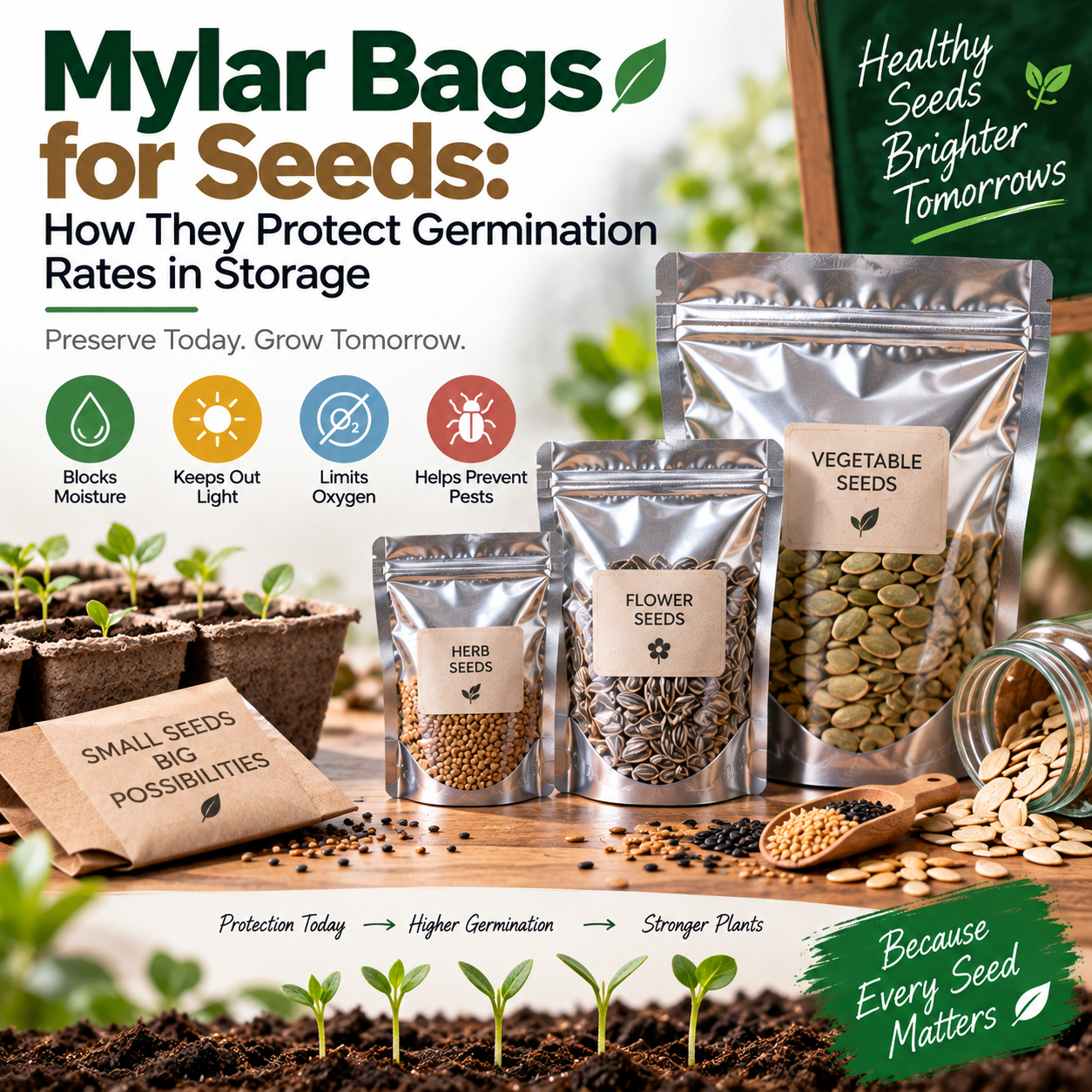
A seed is alive, even sitting in a jar on a shelf. That single fact changes everything about how it should get stored. Moisture, oxygen, and temperature all affect a seed's germination rate long before it ever reaches soil. Suppliers like premium mylar bags have seen growing interest from gardeners and seed savers for exactly this reason, since the same barrier properties that protect food apply directly to protecting genetic material meant to sprout years later.
Why Moisture Content Matters More Than Anything Else
Moisture drives seed deterioration faster than any other single factor. Research on seed storage consistently points back to this one variable above light, oxygen, or even temperature.
- Seeds above roughly 13% moisture content become vulnerable to fungal growth in most starchy varieties
- Oily seeds face similar risk at moisture levels as low as 7 to 8%
- High moisture combined with warm storage accelerates seed respiration, generating heat that can kill the seed from the inside
- Studies on maize storage found germination dropped by over 90% within three weeks when moisture content reached 24%, compared to minimal loss at 18%
Getting moisture right before sealing matters more than any packaging choice made afterward.
Drying Seeds to the Right Level Before Sealing
Most seed-saving guides recommend drying seeds to around 8% moisture content before they go into a sealed mylar bag.
- Spread seeds in a single layer in a well-ventilated, shaded area for several days
- Use a food dehydrator on its lowest setting if faster drying is needed, avoiding direct heat that can damage the embryo
- Test dryness by attempting to snap a seed in half. A properly dried seed snaps cleanly rather than bending
- Avoid oven drying at high temperatures, since excess heat can kill the seed even while appearing to dry it properly
- Package seeds within a day or two of reaching target dryness to avoid reabsorbing ambient moisture before sealing
What Oxygen Removal Actually Does for Seeds
Unlike dry food, a seed is a living organism that continues low-level respiration even in storage. This makes oxygen removal slightly more nuanced than with grains or beans.
- Oxygen absorbers remove residual oxygen without harming seed viability, since research confirms the absorption process leaves nitrogen behind unaffected
- Lower oxygen levels reduce insect activity and mold growth, both major threats to stored seed viability
- Reduced oxygen also limits premature germination triggers that can occur in a container with excess moisture and air
- A properly sized absorber, matched to bag volume the same way it would be for food storage, provides these benefits without added risk
Adding Desiccants Alongside Oxygen Absorbers
Many experienced seed savers combine an oxygen absorber with a food-safe desiccant packet rather than relying on one alone.
- Desiccants actively pull residual moisture from the sealed environment, working alongside the barrier film itself
- Silica gel packets remain the most common desiccant choice for home seed storage
- Combining both tools addresses oxygen and moisture as two separate threats, rather than assuming one solution covers both
- In especially humid climates, this combination becomes more important than in already-dry storage environments
Storage Temperature and Its Effect on Germination
Temperature works alongside moisture and oxygen rather than independently, and cooler storage consistently extends viable shelf life.
| Storage Temperature | Effect on Seed Longevity |
|---|---|
| Room temperature (65-75°F) | Shortest viable storage window |
| Refrigerator (35-40°F) | Meaningfully extends viability for most seed types |
| Freezer (0°F or below) | Longest viable storage, suited to multi-year preservation |
Seeds pulled from refrigerated or frozen storage need to warm gradually to room temperature before opening the bag, since condensation can form on cold seeds exposed to warmer, humid air.
Common Mistakes That Reduce Germination Rates
A handful of recurring errors show up across seed-saving projects, most avoidable with a bit more attention during packing.
- Sealing seeds before they reach adequate dryness, trapping moisture that accelerates deterioration
- Skipping oxygen absorbers entirely, assuming the bag's barrier alone provides sufficient protection
- Storing bags in a location with fluctuating temperatures rather than a stable, cool environment
- Failing to label bags with seed type and storage date, leading to confusion years later
- Opening a cold, refrigerated bag immediately rather than letting it reach room temperature first
Choosing the Right Bag for Seed Storage
Reviewing options across specialized mylar bags helps identify sizing and thickness suited to smaller seed quantities, since seed packets rarely need the bulk capacity built for grains or beans.
Testing Viability Before Committing a Full Planting Season
Checking a small sample before planting an entire stored batch prevents a wasted growing season on seeds that didn't survive storage as well as expected.
- Count out ten seeds from the stored batch
- Place them between damp paper towels inside a plastic bag or container
- Keep the setup in a warm location, generally 70-75°F, for the seed type's typical germination window
- Count how many seeds sprout after that period
- Multiply the sprouted count by 10 to estimate the overall germination percentage of the batch
A germination rate below 50 percent generally means planting seeds more densely than usual to compensate, while a rate below 25 percent often signals it's time to replace the batch with fresher seed.
Which Seeds Benefit Most From Mylar Storage
Not every seed type gains the same advantage from this level of protection, and matching effort to actual need avoids overcomplicating simple storage tasks.
- Heirloom and rare varieties saved from a personal garden benefit most, since replacing them isn't as simple as buying a new packet
- Bulk seed purchases bought ahead of a planting season hold their viability longer under proper barrier storage
- Seeds intended for long-term seed banking or multi-year preservation see the clearest advantage from oxygen and moisture control
- Seeds purchased fresh each season for immediate planting see less benefit, since they won't sit in storage long enough for degradation to become a factor
Signs Seeds Didn't Survive Storage Well
A few warning signs indicate seeds may have lost viability despite careful storage, worth checking before relying on a full batch for planting.
- Seeds that feel unusually light or hollow when compared to fresh seed of the same type
- Visible mold, discoloration, or an off smell upon opening the bag
- Seeds that fail to sink when placed in water, a rough indicator used for larger seed types
- A germination test that comes back well below the expected rate for that seed's typical shelf life
Catching these signs early, ideally through a germination test before the planting season starts, prevents the larger disappointment of empty garden beds after seeds fail to sprout.
How Long Properly Stored Seeds Stay Viable
Viability varies significantly by seed type, even under identical storage conditions.
| Seed Category | Typical Viable Storage Life |
|---|---|
| Short-lived (onion, corn, leek) | 1–3 years |
| Medium-lived (beans, peas, carrots) | 3–5 years |
| Long-lived (tomato, cucumber, lettuce) | 5–10+ years |
These ranges assume proper drying, sealed storage, and cool conditions throughout. Poor storage practices can cut even long-lived varieties down to a fraction of their potential shelf life.
Protecting a Season's Worth of Work
Seeds represent time and effort that took an entire growing season to produce, which makes proper storage worth the extra care it requires. Drying to the correct moisture level, adding oxygen and moisture control, and keeping storage temperature stable together determine whether seeds saved this year still germinate reliably several seasons from now. Skipping any one of these steps shifts the risk back onto the seeds themselves, often in ways that don't show up until it's too late to fix.

 Bangla