

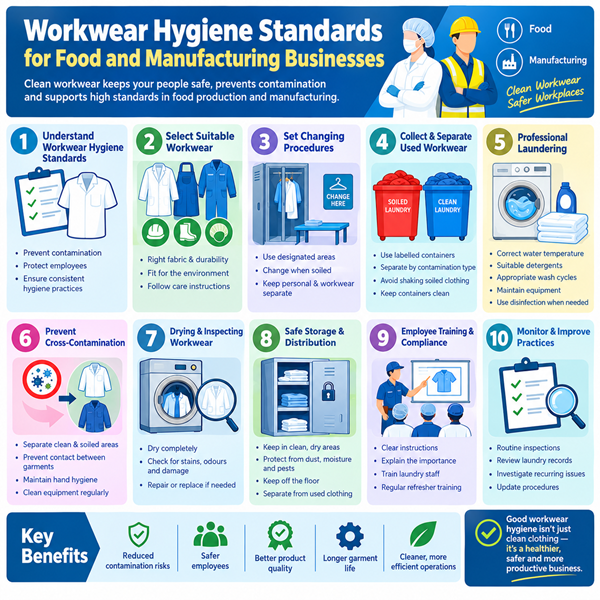

Maintaining clean and hygienic workwear is essential for businesses operating in food production and manufacturing environments. Employees regularly interact with machinery, raw materials, finished products, and workplace surfaces, making their clothing an important part of overall hygiene management.
In food processing facilities, contaminated uniforms can contribute to the transfer of dirt, microorganisms, and foreign materials to food products. In manufacturing environments, workwear may accumulate oils, dust, chemicals, and other industrial residues that require appropriate handling and cleaning.
Implementing effective workwear hygiene standards helps businesses maintain cleaner workplaces, protect employees, minimise contamination risks, and support consistent operational practices. From selecting suitable garments to professional laundering and safe storage, every stage of workwear management contributes to workplace hygiene.
1. Understanding Workwear Hygiene Standards
Workwear hygiene standards refer to the procedures and practices used to maintain the cleanliness, condition, and suitability of clothing worn during professional activities.
Although food businesses and manufacturing facilities have different operational requirements, both need structured workwear management systems.
Food businesses typically focus on preventing contamination of ingredients, food-contact surfaces, and finished products. Manufacturing businesses may prioritise removing industrial residues, protecting workers, and maintaining suitable protective clothing.
An effective hygiene programme should include:
-
Appropriate workwear selection.
-
Safe collection and handling of used garments.
-
Separation of clean and contaminated clothing.
-
Suitable washing and drying procedures.
-
Regular garment inspection.
-
Hygienic storage and distribution.
-
Employee training and compliance monitoring.
These measures help establish consistent hygiene practices throughout the workplace.
2. Selecting Suitable Workwear for Different Industries
Choosing appropriate garments is the first step towards maintaining effective workwear hygiene standards.
In food production environments, workwear should support cleanliness and minimise opportunities for contamination. Depending on the operation, this may include clean coats, aprons, trousers, hair coverings, and dedicated footwear.
Garments should be suitable for the working environment, comfortable enough for regular use, and easy to clean according to their care instructions.
Manufacturing facilities may require specialised workwear designed to withstand demanding conditions. Depending on the workplace, employees may need protective overalls, high-visibility clothing, chemical-resistant garments, or other protective equipment.
Businesses should consider:
-
Fabric durability and washability.
-
Workplace-specific contamination risks.
-
Comfort and suitability for the task.
-
Manufacturer cleaning instructions.
-
Required protective properties.
-
Frequency of garment replacement.
Selecting appropriate clothing helps ensure that hygiene procedures remain practical and effective.
3. Establishing Proper Workwear Changing Procedures
Employees should understand when and where workwear must be changed.
In food manufacturing facilities, dedicated changing areas can help prevent outdoor clothing from introducing dirt or contaminants into production environments.
Employees should wear clean designated garments before entering controlled production areas and replace clothing when it becomes visibly soiled or otherwise unsuitable.
Manufacturing businesses should also establish procedures for changing garments after exposure to significant workplace contamination.
Used workwear should be placed in designated laundry containers rather than carried loosely through clean areas.
Clear changing procedures reduce unnecessary contact between clean garments, personal clothing, and contaminated materials.
4. Safe Collection and Separation of Used Workwear
Proper collection is an important part of maintaining workplace hygiene.
Used garments may contain food residues, oils, dust, chemicals, sweat, or other contaminants. Handling them carelessly can transfer these substances to employees, equipment, or clean clothing.
Businesses should provide clearly identified laundry containers in appropriate locations.
Where different types of contamination are present, garments should be separated according to established procedures.
For example, food production uniforms may require separation from industrial garments contaminated with oils or chemical residues.
Additional precautions may include:
-
Using suitable protective equipment when handling contaminated garments.
-
Avoiding unnecessary shaking of soiled clothing.
-
Keeping laundry containers clean and maintained.
-
Separating clean and used garments during transportation.
-
Following workplace procedures for hazardous contamination.
These practices help prevent contamination from spreading beyond its original source.
5. Professional Laundering and Washing Procedures
Washing is central to effective workwear hygiene standards, but the correct laundering method depends on the garment, fabric, contamination type, and workplace requirements.
Food businesses should establish suitable laundering procedures to remove food residues, grease, dirt, and other contaminants from uniforms.
Manufacturing facilities may require specialised cleaning processes for garments exposed to oils, dust, or industrial substances.
The laundering process should consider:
Water temperature: Select temperatures according to fabric care instructions and the required cleaning process.
Detergent selection: Use suitable detergents for the type of soil and garment material.
Washing cycles: Ensure the selected cycle provides appropriate cleaning without damaging the clothing.
Equipment maintenance: Clean and maintain washing machines according to manufacturer recommendations.
Specialised treatment: Where disinfection or additional processing is required, use an appropriate validated procedure.
Businesses should avoid assuming that every garment can be cleaned effectively using the same washing programme.
6. Preventing Cross-Contamination in Food and Manufacturing Facilities
Cross-contamination occurs when unwanted substances transfer between garments, people, equipment, or surfaces.
In food production, this may involve transferring contaminants from used clothing to food-contact areas or finished products.
In manufacturing, contamination may affect workplace cleanliness, product quality, or employee safety.
To reduce these risks, businesses should maintain clear separation between clean and contaminated workwear.
Practical measures include:
-
Using designated clean and soiled laundry areas.
-
Preventing clean garments from contacting used clothing.
-
Maintaining appropriate hand hygiene.
-
Cleaning laundry equipment regularly.
-
Using suitable containers for garment transportation.
-
Following documented handling procedures.
Where required, businesses should incorporate workwear management into their wider hygiene and contamination-control programmes.
7. Drying and Inspecting Workwear
After washing, garments should be dried thoroughly before being returned to employees or placed into storage.
Damp workwear can develop unpleasant odours and may support microbial growth under unsuitable conditions.
Drying methods should follow garment care instructions to prevent shrinkage, fabric deterioration, or damage to protective features.
Once dry, each garment should be checked for cleanliness and condition.
Inspection should identify:
-
Remaining stains or visible residues.
-
Unpleasant odours.
-
Tears, loose seams, or damaged fasteners.
-
Excessive wear.
-
Missing components.
-
Damage to protective properties.
Garments that remain contaminated or are no longer suitable for use should be reprocessed, repaired, or replaced as appropriate.
Regular inspection helps businesses maintain consistent garment quality and hygiene.
8. Safe Storage and Distribution of Clean Workwear
Clean workwear must be protected from contamination after laundering.
Food and manufacturing businesses should provide designated storage areas that are clean, dry, and protected from dust, moisture, pests, and workplace residues.
Garments should only be stored once completely dry.
Suitable storage practices include:
-
Using clean lockers or enclosed cupboards.
-
Keeping garments away from floors and waste areas.
-
Separating clean clothing from used workwear.
-
Protecting garments during transportation.
-
Maintaining organised distribution systems.
-
Inspecting storage areas regularly.
For food production facilities, storage arrangements should also support the site's hygiene procedures and prevent unnecessary contact with potential contamination sources.
9. Employee Training and Hygiene Compliance
Employees play an important role in maintaining workwear hygiene standards.
Businesses should provide clear instructions covering garment use, changing procedures, laundry collection, and storage requirements.
Training should explain why clean workwear matters and how poor handling practices can affect workplace hygiene.
Laundry personnel should also understand appropriate sorting, cleaning, equipment maintenance, and garment inspection procedures.
Regular refresher training helps reinforce expectations and encourages consistent employee participation.
10. Monitoring and Improving Workwear Hygiene Practices
Workwear hygiene should be reviewed regularly to ensure procedures remain effective.
Businesses can monitor performance through routine inspections, laundry records, equipment maintenance schedules, and employee feedback.
Recurring problems such as persistent stains, unpleasant odours, damaged garments, or storage issues should be investigated.
Where necessary, businesses should update procedures, improve employee training, or review their laundering arrangements.
Documented processes can also support accountability and help organisations demonstrate that workwear is managed consistently.
Conclusion
Effective workwear hygiene standards are essential for food and manufacturing businesses seeking to maintain clean, organised, and safe working environments.
From selecting appropriate garments and establishing changing procedures to professional laundering, contamination prevention, and safe storage, every stage contributes to workplace hygiene.
By combining suitable cleaning processes, regular inspections, employee training, and consistent monitoring, businesses can reduce contamination risks, protect garment quality, and support reliable daily operations.
A structured workwear hygiene programme is therefore an important part of maintaining professional standards and promoting a cleaner working environment across food production and manufacturing facilities.
