


How Businesses Can Reduce Missed Calls with Inbound Call Automation
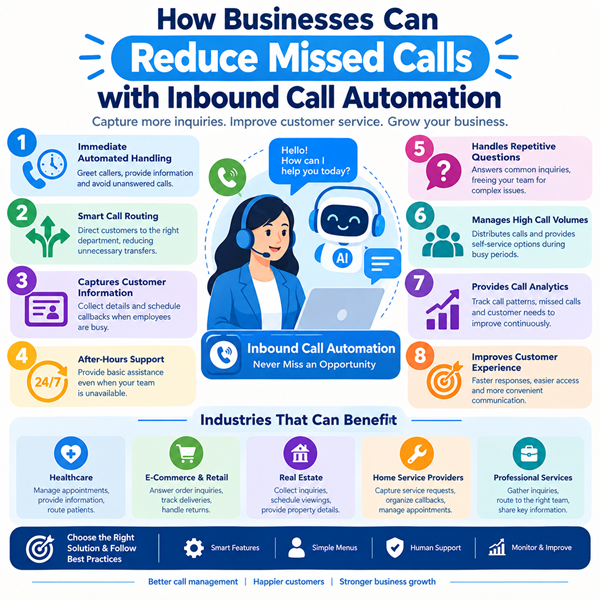
Missed calls can create significant challenges for businesses that depend on telephone communication to connect with customers, manage inquiries, and generate sales opportunities. Whether a customer is requesting a service quote, scheduling an appointment, or seeking support, an unanswered call can lead to frustration and potentially lost business.
As companies grow, managing incoming calls manually becomes increasingly difficult. High call volumes, limited staff availability, and repetitive customer inquiries can prevent teams from responding to every caller promptly.
This is where inbound call automation becomes valuable. By using automated call handling, intelligent routing, AI voice agents, and customer communication tools, businesses can manage incoming calls more efficiently and reduce the risk of missed opportunities.
In this guide, we explore why businesses miss calls, how automation helps address these challenges, and practical ways to improve customer communication.
Why Do Businesses Miss Incoming Calls?
Before implementing an automation solution, businesses should understand the common reasons behind unanswered calls.
1. High Call Volumes
Businesses often experience sudden increases in incoming calls during promotional campaigns, seasonal demand, or busy operating hours. When multiple customers call simultaneously, available employees may struggle to answer everyone.
2. Limited Staff Availability
Small businesses and growing teams may not have dedicated employees available to answer calls throughout the day. Staff members frequently manage other responsibilities, including sales, administration, customer service, and daily operations.
3. Repetitive Customer Inquiries
Employees spend considerable time answering common questions about business hours, pricing, appointments, service availability, and general policies. These repetitive interactions can reduce the time available for other incoming calls.
4. After-Hours Inquiries
Customers may contact businesses outside regular operating hours. Without automated assistance or a reliable message collection system, these calls may go unanswered.
5. Inefficient Call Routing
When customers reach the wrong department or experience unnecessary transfers, communication becomes slower and less efficient. Poor routing processes can also increase pressure on support employees.
Addressing these challenges requires a structured communication strategy that combines efficient workflows with suitable automation technology.
What Is Inbound Call Automation?
Inbound call automation uses software and intelligent communication technologies to manage incoming telephone calls with minimal manual intervention.
Depending on the platform, these systems can answer calls, provide automated information, collect customer details, route callers to appropriate departments, and support routine customer service activities.
Common features include:
- Interactive voice response (IVR)
- AI-powered voice agents
- Intelligent call routing
- Automated call distribution
- Call recording and reporting
- Automated message collection
- Customer relationship management (CRM) integrations
By automating suitable tasks, businesses can improve call management while allowing employees to focus on interactions that require human assistance.
7 Ways Inbound Call Automation Helps Reduce Missed Calls
1. Provides Immediate Automated Call Handling
One of the most practical advantages of inbound call automation is its ability to respond to incoming calls without requiring an employee to answer every interaction manually.
Automated systems can greet callers, present available options, and provide information about common inquiries.
For example, a customer calling a service company to ask about operating hours can receive an automated response immediately.
This reduces dependence on employee availability and helps businesses manage incoming communication more consistently.
2. Routes Customers to the Right Department
Intelligent call routing helps direct customers according to their requirements, reducing unnecessary transfers and improving call management.
For example, a caller requesting billing assistance can be routed to the accounts department, while someone seeking technical support can be directed to the appropriate team.
Some systems also distribute calls across available representatives based on predefined rules.
This organized process helps prevent communication bottlenecks and allows employees to handle inquiries more efficiently.
3. Captures Customer Information When Employees Are Busy
Even with automation, some calls will require human assistance. However, businesses can reduce the risk of losing these inquiries by collecting relevant customer information.
Depending on the system, callers may leave a message, provide their contact details, explain their requirements, or request a callback.
Employees can then review these inquiries and follow up when available.
This approach is particularly useful for businesses that depend on telephone inquiries for appointments, consultations, service requests, or sales opportunities.
4. Offers Support Beyond Regular Business Hours
Customers do not always contact businesses during standard operating hours. They may have questions about appointments, services, orders, or availability in the evening or during weekends.
Inbound call automation can provide basic assistance outside regular business hours through automated menus and AI voice agents.
For example, an automated system can explain business hours, collect callback requests, or provide general service information.
Although complex concerns may still require human assistance, after-hours automation helps businesses remain accessible when employees are unavailable.
5. Handles Repetitive Customer Questions
Frequently asked questions can consume a considerable amount of employee time.
Common examples include:
- What are your business hours?
- Do you offer appointments?
- Where is your business located?
- What services do you provide?
- How can I request a quotation?
AI-powered inbound call automation can answer suitable routine questions automatically.
By reducing repetitive work, businesses can free employees to respond to more complex inquiries and manage incoming calls more effectively.
6. Manages High Call Volumes More Efficiently
During busy periods, multiple customers may contact a business simultaneously. Traditional phone systems can struggle when available employees are already handling other conversations.
Automated call management helps organize incoming demand through call distribution, self-service options, and automated responses.
For example, a healthcare clinic may use automated call handling to provide appointment information while directing callers who need personalized assistance to reception staff.
This helps businesses manage increased demand without relying entirely on additional employees.
7. Provides Call Analytics for Continuous Improvement
Reducing missed calls requires understanding when and why communication problems occur.
Many inbound call automation platforms provide reporting features that help businesses monitor:
- Total incoming calls
- Missed and unanswered calls
- Peak calling periods
- Call duration
- Customer inquiry patterns
- Callback requests
These insights help managers identify operational weaknesses and make informed improvements.
For example, if call reports reveal that unanswered calls increase during lunchtime, managers can adjust employee schedules or introduce additional automated handling during that period.
Industries That Can Benefit from Inbound Call Automation
Inbound call automation supports businesses across different industries, particularly those that rely on phone-based customer communication.
Healthcare Practices
Clinics and medical practices can use automated systems to manage appointment inquiries, provide operating hours, collect callback requests, and direct patients to appropriate departments.
Real Estate Agencies
Real estate businesses frequently receive inquiries about property availability, rental details, and viewing appointments. Automated call handling can collect prospective customer information and organize follow-ups for agents.
E-Commerce Businesses
Online retailers can use automation to respond to common questions about orders, delivery procedures, returns, and customer support.
Home Service Providers
Plumbers, electricians, cleaning companies, and maintenance businesses often receive calls while employees are working on-site. Automated systems can capture service requests and organize callback opportunities.
Professional Service Companies
Consultants, agencies, and other professional service providers can use automated call handling to collect inquiries, provide basic information, and route prospective clients to the appropriate team.
Best Practices for Reducing Missed Calls
Technology alone cannot guarantee effective communication. Businesses should combine automation with well-designed customer service processes.
Identify common call-handling problems: Review existing communication processes to understand when calls are missed and which inquiries create the most pressure.
Choose suitable automation features: Select tools such as IVR, AI voice agents, call routing, and message collection according to your business requirements.
Keep automated menus simple: Avoid complicated menus that make it difficult for customers to reach the information or assistance they need.
Maintain human support options: Customers should have a clear way to reach an employee when their inquiry requires personalized assistance.
Monitor performance regularly: Review call reports, callback completion, and customer feedback to identify areas for improvement.
Integrate communication tools: Where appropriate, connect your call automation platform with CRM or scheduling software to organize customer information and follow-up activities.
Final Thoughts
Missed calls can affect customer satisfaction, communication efficiency, and potential business opportunities. As customer demand increases, relying exclusively on manual call handling can make it difficult for businesses to respond consistently.
Inbound call automation helps address these challenges through automated responses, intelligent routing, message collection, after-hours assistance, and call analytics.
By implementing the right features and maintaining accessible human support, businesses can create a more organized communication system that captures more inquiries and supports long-term growth.
For companies looking to improve customer service while managing increasing call volumes, inbound call automation offers a practical foundation for more efficient and reliable business communication.

 Bangla