

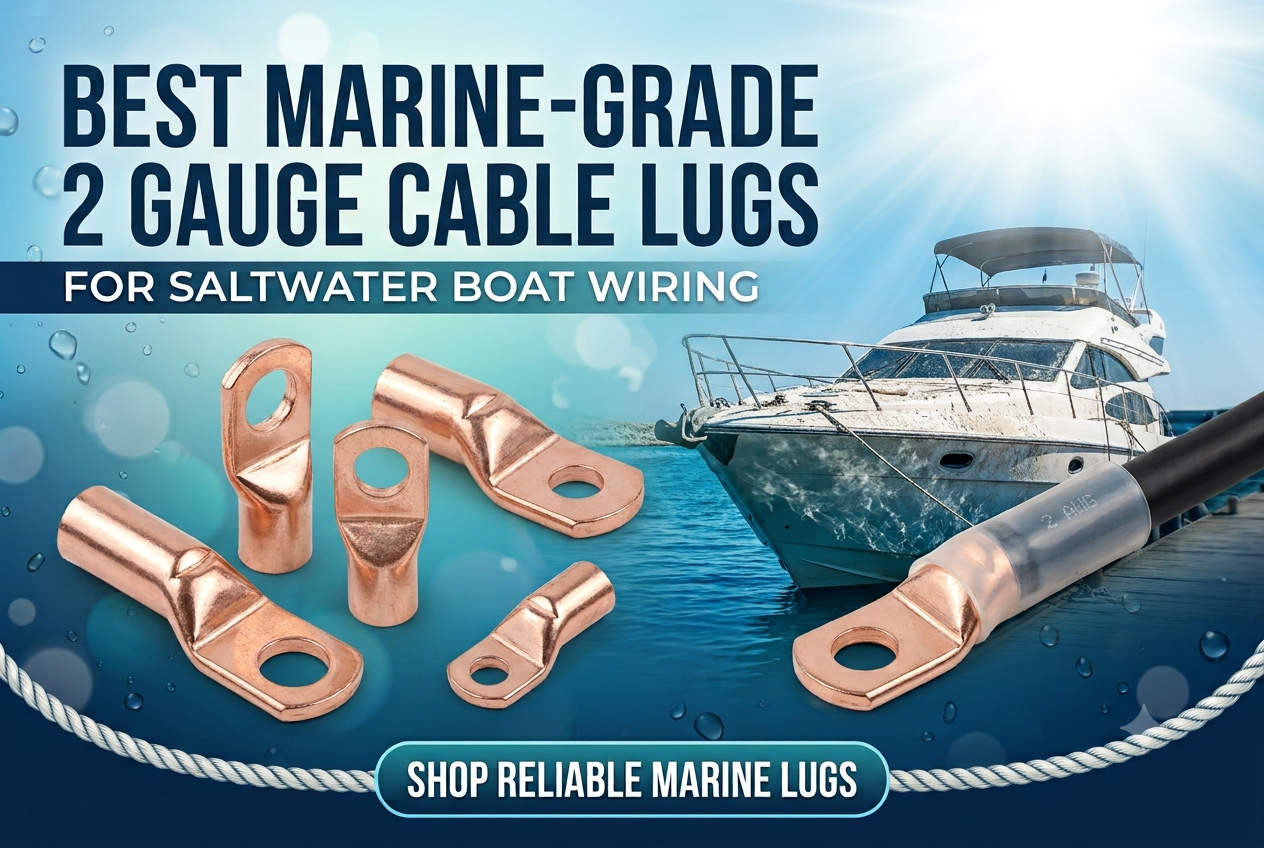

Boat electrical problems rarely announce themselves. A starter gets slower, a battery connection runs warm, or a piece of equipment suddenly cuts out. Quite often, the trouble is sitting at a cable connection that looked perfectly fine a few months earlier. Saltwater makes these small problems more likely. When working with larger battery cables, 2-gauge cable lugs need to be chosen with the boat's actual environment in mind, not just the cable size.
Saltwater Doesn't Give Electrical Connections Much of a Break
A boat is surrounded by moisture. Even when seawater never directly touches the battery terminals, salty air can find its way into the engine compartment and other enclosed spaces.
Then there is condensation. A boat that sits overnight can be cool in the morning and hot a few hours later. That repeated change leaves moisture around metal surfaces.
Corrosion can start underneath a terminal where you can't see it. By the time there is obvious buildup around the connection, the damage may have been there for a while.
This is one reason a connection can look alright during a quick inspection and still cause trouble under load. A little extra resistance at a high-current connection means heat, and heat is not something you want building up around battery wiring.
Tinned Copper Is Worth Considering
Copper is already a good conductor, which is why it is used so widely for battery and marine wiring. The problem is what happens to exposed copper when it spends years around salt and moisture.
Tinning changes that equation slightly.
The copper is covered with a thin layer of tin that helps protect the surface from the surrounding environment. It doesn't turn the connection into something that can be submerged and forgotten about. It simply gives the copper some added protection where corrosion is a concern.
That's useful on boats.
A properly made tinned connection can still corrode if seawater gets into it or if the cable has been poorly crimped. The coating isn't a substitute for a good installation. It is one more layer of protection in an environment that is already hard on electrical hardware.
Don't Confuse Cable Size With Stud Size
This is an easy mistake to make when ordering terminals.
A 2 AWG cable tells you the size of the conductor. The hole in the lug is a separate matter.
Look at the stud the cable will actually attach to. It could be 1/4 inch, 5/16 inch, 3/8 inch, or another size depending on the battery, busbar, switch, starter, or other equipment.
Checking this before cutting the cable saves a lot of frustration.
A terminal with the wrong stud opening can leave you trying to force a connection that was never going to fit properly. It is much easier to measure the hardware first and order the terminal around it.
SELTERM's range includes several stud options for 2 AWG connections, so there is room to match the terminal to the hardware already on the boat.
The Crimp Is Part of the Connection
A good terminal doesn't fix a bad crimp.
The cable needs to sit properly inside the lug barrel before it is compressed. If the fit is loose or the crimp isn't made correctly, the connection can develop resistance. Moisture can also find its way into the cable end.
That is particularly unpleasant on a boat because tracking down an electrical fault in a cramped battery compartment is nobody's idea of a good afternoon.
Use a crimping method appropriate for the terminal and cable. Once it has been crimped, give the cable a decent pull. The lug shouldn't move around the conductor.
It is a simple check, but it can catch a poor connection before the cable is put back into service.
When Bare Copper Makes Sense
Not every boat connection needs to be tinned.
Bare copper has been used for electrical connections for a very long time and can work perfectly well when the installation is protected from moisture and other harsh conditions.
For example, a connection inside a dry, well-protected enclosure has a different environment from one sitting near an engine compartment where salt air and condensation are common.
The choice really comes down to where the connection is going. If salt exposure is a regular part of the job, the extra protection from a tinned surface can be useful. If the connection is well protected, bare copper may be all that is needed.
Give the Cable Some Support
A thick battery cable isn't exactly light.
If it is left hanging from a terminal, the weight of the cable is constantly pulling on the connection. Add engine vibration and the movement of a boat on the water, and that connection gets a lot more movement than it would in a stationary installation.
Supporting the cable close to the terminal takes that strain away.
Don't bend the cable sharply right behind the lug either. Give it enough room to make the turn naturally. A cable that has been forced into position can put pressure on the crimp every time the boat moves.
None of this requires complicated hardware. It is mostly about giving the cable a sensible route instead of making the terminal do the work of holding everything in place.
Have a Look When You Service the Boat
You don't need a special maintenance day just for electrical terminals.
The next time you're already checking the batteries, take a look at the cable connections too.
Green buildup, white residue, dark spots, loose nuts, damaged insulation, or moisture around the terminal are all worth investigating. A little surface dirt is not necessarily a problem, but obvious corrosion shouldn't be ignored.
If a terminal is heavily corroded, simply cleaning the outside may not be enough. The connection may need to come apart so the cable end and the inside of the terminal can be checked.
Keeping saltwater away from the battery compartment in the first place is even better. Good cable routing, sensible protection, and a dry installation can save a lot of trouble later.
Pick the Terminal for the Boat, Not Just the Cable
There is no magic terminal that works for every connection on every boat.
Start with the cable size, then check the stud diameter. After that, think about where the connection will sit. A dry battery box and an exposed engine-bay connection are not facing the same conditions.
For boats that spend their time around saltwater, marine-grade tinned copper is a practical choice where corrosion protection matters. Match the terminal to the cable and stud, make the crimp properly, support the cable, and don't ignore corrosion when it first appears.
When choosing 2-gauge lugs, those details matter more than simply picking the biggest or cheapest terminal available. The lug is a small part of the boat's electrical system, but it is also the point where the cable meets the equipment. Getting that connection right can mean fewer surprises the next time you turn the key.
