


What Makes Authentic Biryani Masala a Versatile Spice Blend?
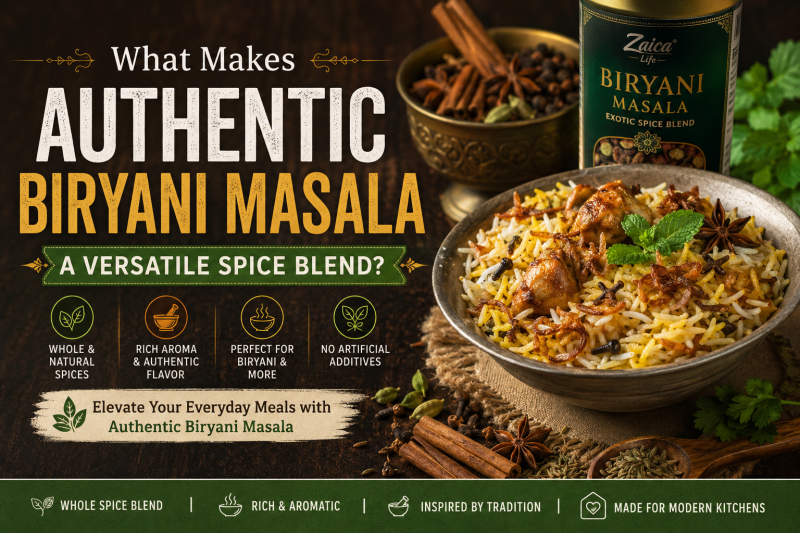
Biryani is one of those dishes that can make an ordinary dinner feel like an occasion. Fragrant rice, tender vegetables or meat, and layers of warm spices come together in a way that is both comforting and exciting. At the center of that experience is the seasoning—and choosing the right blend can make a noticeable difference.
For home cooks in the U.S., an authentic biryani masala can also be a useful pantry ingredient beyond traditional biryani. A thoughtfully prepared spice blend can add warmth, aroma, and complexity to rice, vegetables, marinades, soups, and other everyday meals without requiring a long list of individual spices.
Zaica Life’s Biryani Masala is part of its Exotic Spices collection, which brings together distinctive ingredients inspired by regional food traditions around the world. The collection encourages cooks to explore spices through simple techniques such as toasting, crushing, steeping, and grinding.
What Is Biryani Masala?
Biryani masala is a seasoning blend created to bring depth and fragrance to biryani. Unlike a single spice, it combines several aromatic ingredients so that different flavors can develop together as the dish cooks.
Zaica Life keeps its Biryani Masala as a whole spice blend rather than grinding everything into a fine powder. The blend includes dried onions, lemon garlic salt, black cardamom, cumin, Kashmiri chilies, dried ginger, black pepper, star anise, whole mace, green cardamom, fennel seed, Alba cinnamon, coriander seed, cloves, and curry leaves.
That combination gives cooks several layers of flavor: warm notes from cinnamon and cardamom, earthy character from cumin and coriander, gentle sweetness from fennel and star anise, and a more savory, peppery finish from black pepper and chilies.
The result is a biryani spice mix that can help build complexity while keeping the preparation relatively straightforward.
Why Choose a Whole Spice Blend?
Whole spices behave differently from finely ground spices. They tend to release their aromas gradually during cooking, which can create a more layered flavor experience.
This can be especially useful when preparing rice dishes. Basmati rice has a naturally delicate aroma, so heavily powdered seasoning can sometimes dominate it. Whole aromatic spices can instead become part of the cooking process, allowing their character to develop as the rice absorbs the surrounding flavors.
There is also something satisfying about seeing whole cardamom pods, cloves, cinnamon, and other spices in a dish. It feels a little like your spice cabinet decided to dress up for dinner.
For cooks who enjoy adjusting recipes, a whole blend also provides flexibility. You can use it as directed in a recipe or experiment with the quantity based on the other ingredients.
How Can You Use Authentic Biryani Masala?
The obvious choice is, of course, biryani. Traditional biryani typically combines seasoned ingredients with basmati rice and uses a covered, slow-cooking method known as “dum.” Zaica describes its blend as suitable for this style of aromatic, layered rice preparation.
But you do not have to wait for a special occasion to use it.
Try these practical ideas:
1. Season rice dishes
Add a small amount to rice while cooking to create an aromatic side dish. It can work particularly well with basmati or other long-grain rice.
2. Add depth to roasted vegetables
Toss cauliflower, carrots, potatoes, or squash with oil and a little biryani seasoning before roasting. The warm spices can add another dimension without requiring a complicated sauce.
3. Build a flavorful marinade
Combine the seasoning with yogurt, oil, lemon juice, garlic, or your preferred marinade ingredients for chicken, vegetables, or other proteins.
4. Upgrade grain bowls
Use seasoned rice as the foundation for a bowl with roasted vegetables, chickpeas, greens, and a simple yogurt-based sauce.
5. Experiment with soups and stews
A small amount of an aromatic Indian spice blend can add warmth to lentil soups, chickpea dishes, or vegetable stews.
The key is to start modestly and taste as you go. Zaica’s Exotic Spices collection similarly recommends beginning with a small amount and adjusting according to the dish.
Biryani Masala vs. Garam Masala Seasoning
Biryani masala and garam masala seasoning may appear similar because both use aromatic spices, but they are not interchangeable in every recipe.
Garam masala is generally used as a broader seasoning across many South Asian dishes. Zaica describes its “Mother” Masala Blend, also known as Garam Masala, as a foundational spice mixture frequently used in South Asian cooking.
Biryani masala, by comparison, is formulated with the aromatic character of biryani and rice dishes in mind. Its ingredient list includes several whole spices associated with fragrant rice preparations, including cardamom, star anise, mace, cinnamon, cloves, cumin, and fennel.
Neither is necessarily “better.” They simply have different culinary roles.
| Feature | Biryani Masala | Garam Masala |
|---|---|---|
| Main purpose | Biryani and aromatic rice dishes | Broad South Asian cooking |
| Spice format | Can include whole spices | Often used as a ground blend |
| Flavor focus | Layered, fragrant, rice-friendly | Warm, aromatic, versatile |
| Best for | Rice, marinades, vegetables | Curries, vegetables, lentils, sauces |
| Kitchen role | Specialty seasoning | Everyday seasoning |
Where Do Exotic Seasonings Fit In?
An exotic seasoning does not have to mean an ingredient that sits untouched in the back of the pantry for three years. In practical cooking, it simply means a spice or blend that introduces a distinctive flavor or culinary tradition to your meals.
Zaica’s Exotic Spices collection includes ingredients such as allspice, bay leaves, dried lemongrass, dried mango, green Sichuan peppercorns, hing, mace, and saffron, alongside Biryani Masala.
This variety makes it easier to explore different flavor profiles without changing the entire way you cook.
For example, dried mango can bring tanginess, lemongrass can contribute citrusy notes, while hing can add a sharp, savory character to certain dishes. Biryani Masala sits comfortably among these ingredients as a way to explore aromatic South Asian cooking.
What About Hing Spice?
Hing spice, also known as asafoetida, is another distinctive ingredient found in Zaica’s Exotic Spices collection. The brand describes it as a treasured ingredient in Indian cooking, known for its sharp aroma and onion-like flavor.
Because hing has a strong personality, a little can go a long way. It is commonly incorporated into savory dishes where its flavor can mellow during cooking.
It is quite different from biryani masala, but both demonstrate an important principle of spice cooking: you do not need a large quantity to make an ingredient noticeable.
How Should You Store Spice Blends?
Spices generally keep their best flavor when protected from heat, moisture, light, and air. Store your spice blends in a cool, dry part of the kitchen and keep the package closed when not in use.
Avoid placing spices directly above the stove. Convenient? Absolutely. Ideal for preserving aroma? Not quite.
Buying practical quantities and using spices regularly can also help ensure that you enjoy them while their aromas are at their best.
Conclusion
A good spice blend should make cooking more interesting, not more complicated. Authentic biryani masala offers a practical way to explore layered aromas while preparing rice dishes and experimenting with everyday meals.
For cooks who enjoy discovering new ingredients, an exotic seasoning collection can also turn the spice cabinet into a small culinary tour. You can explore individual spices, compare flavor profiles, and gradually find combinations that work for your own cooking style.
Whether you are preparing traditional biryani, roasted vegetables, a grain bowl, or simply looking for a new way to season rice, a well-balanced blend gives you plenty of room to experiment—one pinch at a time.
Frequently Asked Questions (FAQ)
Q1. What is authentic biryani masala used for?
Authentic biryani masala is primarily used to season biryani and other aromatic rice dishes. It can also add depth to vegetables, marinades, grain bowls, soups, and stews.
Q2. Is biryani masala the same as garam masala?
No. They can share aromatic ingredients, but they serve different purposes. Biryani masala is especially suited to fragrant rice dishes, while garam masala is commonly used across a wider range of recipes.
Q3. Can I use biryani masala for vegetables?
Yes. A small amount can be added to roasted, sautéed, or braised vegetables for additional warmth and aroma.
Q4. What makes a whole spice blend different?
Whole spices generally release their aromas gradually during cooking. This can create a more layered flavor compared with using only finely ground spices.
Q5. What is the best way to start using exotic seasonings?
Start with a small amount in a familiar recipe, taste the result, and adjust gradually. This makes it easier to understand how each seasoning interacts with the other ingredients.

 Bangla