

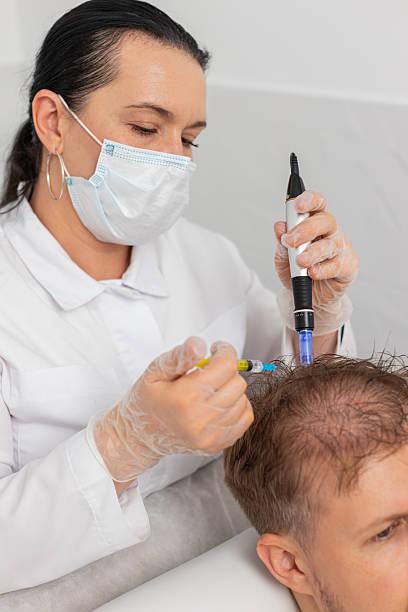

Thinning hair can develop gradually enough that patients may not notice the change until the scalp becomes more visible in photographs, under bright lighting, or around the parting. Exosome Hair Therapy in Dubai is one non-surgical option being considered for patients who want to support thinning hair while viable follicles remain present.
The key is determining whether the treatment matches the cause and stage of hair loss rather than treating every form of thinning in the same way.
Understanding Thinning Hair Before Treatment
Hair thinning is not a single diagnosis. It can reflect genetic pattern hair loss, hormonal changes, nutritional factors, stress-related shedding, scalp inflammation, medication effects, or a combination of causes.
The pattern can also provide useful clinical information.
Common presentations include:
- Diffuse thinning across the scalp
- Widening of the central part
- Reduced density around the crown
- Early recession at the temples
- Miniaturized hairs along the frontal hairline
- General reduction in hair caliber
Identifying the pattern helps determine whether the treatment should focus on preserving existing hair, improving the appearance of density, investigating an underlying cause, or considering surgical restoration.
Who May Consider Exosome Hair Therapy in Dubai?
Patients with early or moderate thinning may be considered for a regenerative-support treatment when there are still viable follicles within the affected area.
A consultation is particularly important when thinning is recent, rapidly progressing, patchy, or associated with scalp symptoms. In these situations, identifying the underlying condition is more important than simply selecting a cosmetic treatment.
When Another Approach May Be More Appropriate
Advanced hair loss with extensive areas of absent follicular growth may require a different strategy. Hair transplantation, medical management, or a combination approach may be considered depending on the individual's anatomy and diagnosis.
Exosome therapy should therefore not be presented as a universal replacement for established hair-restoration methods.
How the Treatment Area Is Assessed
A detailed scalp assessment may examine the frontal region, temples, mid-scalp, crown, and areas surrounding the thinning zone.
The clinician may also look at individual hair shafts. Miniaturized hairs can be particularly relevant because they may indicate that follicles are still producing hair but at a reduced caliber.
Why Hair Caliber Matters
A scalp with many fine hairs can appear significantly thinner than one with fewer but thicker strands. Improving the visual quality of existing hair can therefore influence the overall appearance of fullness.
This is one reason treatment planning should consider both follicle distribution and hair shaft characteristics.
What Happens During an Exosome Hair Therapy Session
The exact clinical protocol depends on the patient's assessment and the treating clinician's approach. The scalp is prepared before the treatment, and the selected areas are addressed using the prescribed technique.
A typical appointment may take approximately 40–60 minutes.
The treatment is performed without the incisions associated with hair transplantation, which makes it relevant to patients exploring non-surgical options.
Exosome Hair Therapy in Dubai and the Hair Growth Timeline
Patients should expect a gradual process rather than an immediate transformation.
Tajmeels Clinic information indicates that visible changes may begin around two months, although individual response times vary. The appearance of improvement depends on the natural hair cycle, follicular condition, and underlying cause of thinning.
| Period | Main Focus |
|---|---|
| Consultation | Diagnosis, scalp assessment, treatment suitability |
| Treatment day | Scalp preparation and clinical application |
| Early recovery | Follow prescribed aftercare and monitor the scalp |
| Around two months | Potential early visible changes |
| Later review | Assess density, hair caliber, and overall response |
| Ongoing care | Address continuing causes of hair loss and maintenance needs |
How Results Are Measured
A useful assessment should establish a baseline before treatment. Standardized photographs can help track changes that may otherwise be difficult to detect.
Clinicians may compare the:
- Frontal hairline
- Temple density
- Central part
- Crown coverage
- Overall scalp visibility
- Hair shaft thickness
Patients should also consider how their hair behaves during normal styling rather than judging results solely from a single photograph.
Aftercare and Everyday Hair Management
Aftercare instructions should be followed according to the clinician's specific protocol. Patients may be advised about washing, scalp products, exercise, heat exposure, and other activities depending on the treatment performed.
Dubai's environment can add practical considerations. High temperatures, outdoor sun exposure, humidity, and frequent air-conditioning can affect scalp comfort, so patients should follow individualized advice rather than assuming that all post-treatment routines are identical.
Supporting the Scalp Between Treatments
A treatment session should not be viewed in isolation. Gentle scalp care, appropriate cleansing, adequate nutrition, and management of diagnosed hair-loss conditions can all form part of a broader plan.
Patients with ongoing shedding should discuss it with their clinician rather than assuming that another cosmetic session is automatically the answer.
Exosome Therapy Compared With Other Hair-Loss Options
| Treatment | Main Role | Best Consideration |
|---|---|---|
| Exosome therapy | Non-surgical follicular support | Selected patients with viable thinning follicles |
| PRP | Autologous platelet-based treatment | Patients appropriate for platelet-based therapy |
| Medical treatment | Addresses specific hair-loss pathways | Diagnosed progressive hair-loss conditions |
| Hair transplantation | Moves follicles into areas of reduced density | Areas requiring surgical restoration |
| Scalp-focused care | Supports scalp condition | Patients with scalp-related concerns |
The right choice depends on the diagnosis, follicular reserve, expectations, and long-term goals.
Common Concerns About Exosome Hair Therapy
Can thinning hair become completely thick again?
Not necessarily. The degree of improvement depends on the condition of the follicles and the cause of hair loss. Treatment should be planned around realistic improvement rather than guaranteed complete restoration.
Is the treatment suitable for advanced baldness?
Advanced areas with little or no viable follicular activity may not respond in the same way as early thinning. A clinician can determine whether non-surgical treatment remains appropriate or whether transplantation should be discussed.
Can hair loss continue after treatment?
Yes. Exosome therapy does not automatically eliminate every underlying cause of hair loss. Progressive genetic, hormonal, medical, or nutritional factors may continue to influence hair density.
When a Consultation Becomes Especially Important
A professional assessment is particularly valuable when hair loss is:
- Rapidly progressing
- Patchy or unusual in pattern
- Associated with redness, scaling, or pain
- Accompanied by significant shedding
- Developing after a medication or major health change
- Occurring despite previous treatment
These features may require diagnostic investigation before proceeding with an aesthetic hair-restoration procedure.
Clinic note: The strongest treatment plan begins with diagnosis. Exosome therapy may be useful for selected patients with thinning hair, but the appropriate approach depends on the condition of the follicles and the reason the hair is becoming thinner.
Exploring Exosome Hair Therapy in Dubai
Patients considering advanced exosome scalp treatment in Dubai can use the consultation to understand whether their pattern of thinning is suitable for a non-surgical approach.
The consultation can also clarify realistic outcomes, expected timing, possible alternatives, and whether additional hair-loss management should form part of the plan.
A Personalized Approach to Thinning Hair
Thinning hair is easier to manage when it is assessed before significant follicular loss occurs. The most appropriate treatment is the one that matches the underlying diagnosis, remaining follicular activity, and patient's long-term objective.
For patients exploring personalized hair and aesthetic treatments in Dubai, Tajmeels Clinic provides a starting point for learning more about available treatment options.
