


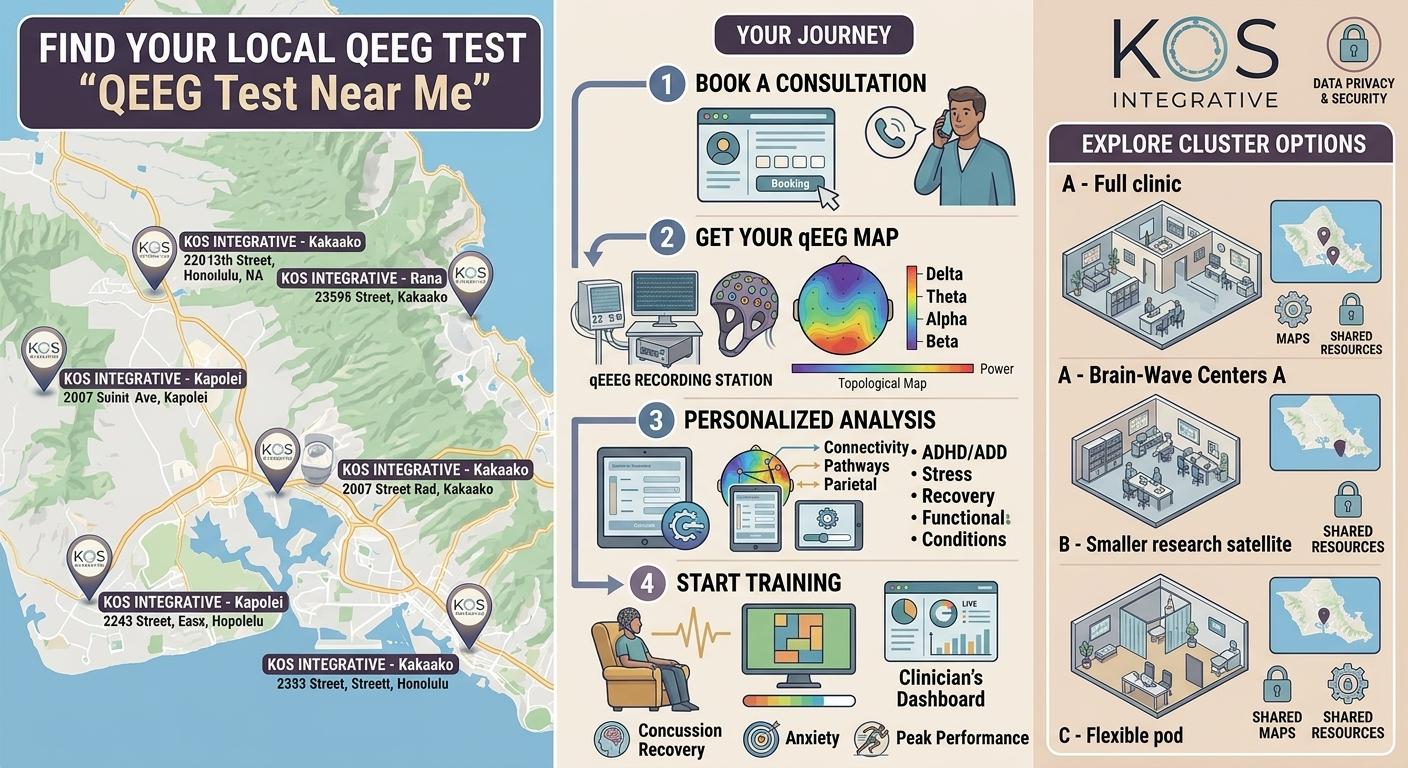
When researching brain health services, many people search online for a qEEG test near me to learn more about brain activity and brain mapping. Quantitative electroencephalography, commonly known as qEEG, is a method of analyzing electrical signals recorded from the scalp. It can provide information about brainwave patterns and may be used by qualified professionals as part of a broader assessment.
Understanding what a qEEG test involves, what it can and cannot tell you, and how to choose a provider can help you make an informed decision about your brain health.
What Is a qEEG Test?
A qEEG test uses data collected through electroencephalography (EEG). During the recording, sensors are positioned on the scalp to measure electrical activity produced by the brain. Software then processes the recorded signals and organizes them into information that a trained professional can interpret.
The term “quantitative” refers to the use of mathematical and computer-based analysis to examine EEG data. A qEEG assessment may show patterns across different brainwave frequencies and scalp locations.
A qEEG is not the same as an MRI or CT scan. It measures electrical activity rather than creating structural images of the brain. Results should be interpreted in context and should not be used alone to diagnose a medical or mental health condition.
Why Do People Look for a qEEG Test Near Me?
People may search for local qEEG testing because they want to understand their options for brain activity assessment, brain mapping, or neurofeedback-related services. Others may have been referred by a healthcare professional who wants additional information.
The reasons for considering an assessment vary. A provider can explain whether qEEG is relevant to your concerns and whether another evaluation or test may be more appropriate.
If you are experiencing new or concerning neurological symptoms, consult a qualified healthcare professional rather than relying on an online search or brain mapping test alone.
What Happens During a qEEG Assessment?
The process depends on the provider and the purpose of the assessment, but it commonly includes several steps:
-
Initial discussion: The provider asks about your concerns, relevant health history, and the purpose of the test.
-
Sensor placement: Sensors are positioned on the scalp to record electrical signals.
-
EEG recording: You may be asked to sit quietly, keep still, or follow specific instructions during the recording.
-
Data analysis: Software processes the recorded signals to identify measurable patterns.
-
Professional interpretation: A qualified professional reviews the results and explains their meaning and limitations.
Preparation instructions can vary. Ask the provider whether you should wash your hair beforehand or follow any other directions. Do not stop prescribed medication unless the clinician responsible for your care tells you to do so.
qEEG Test Near Me: Choosing the Right Provider
When searching for a qEEG test near me, consider more than location alone. Look for a provider who explains the process clearly, has appropriate qualifications, and describes how the results will be interpreted.
Before scheduling, ask these questions:
-
Who performs the test and interprets the results?
-
What is the purpose of the assessment?
-
What does the fee include?
-
How will the findings be explained?
-
Is the test appropriate for my particular concerns?
-
Will I receive a written report or a follow-up consultation?
A responsible provider should discuss limitations and avoid promising that a qEEG test will identify every cause of a symptom or determine a diagnosis on its own.
Understanding qEEG Results
A qEEG report may contain graphs, frequency measurements, and comparisons with reference data. These findings can be difficult to interpret without appropriate training and clinical context.
Brain activity can vary with factors such as alertness, sleep, movement, medications, and recording quality. As a result, an unusual pattern does not automatically mean that a person has a particular disorder.
A qualified professional should explain which findings are meaningful, which require caution, and whether further evaluation is needed. If you have already received a report, consider discussing it with the healthcare professional managing your care.
How qEEG Relates to Neurofeedback
qEEG assessment and neurofeedback are related in some service settings, but they are not the same procedure. qEEG analyzes recorded brain activity, while neurofeedback uses real-time feedback during training sessions.
Some providers may consider assessment findings when discussing possible neurofeedback protocols. However, the value of neurofeedback depends on the concern being addressed and the evidence supporting the specific approach. It is important to ask about realistic goals, expected time commitments, costs, and how progress will be measured.
Neurofeedback should not replace established medical or mental health treatment without guidance from an appropriate healthcare professional.
Exploring Brain Mapping Services in Honolulu
For individuals researching brain mapping in Honolulu, KOS Integrative Health is one provider you can contact to ask about available brain health services and whether qEEG assessment is offered. Confirm the current services, assessment process, professional qualifications, and pricing directly with the provider before scheduling.
Comparing providers and understanding what each assessment offers can help you choose a service that fits your needs. The best next step is to discuss your goals with a qualified professional and determine whether qEEG is suitable for your situation.
Conclusion
A qEEG test can provide quantitative information about electrical activity recorded from the scalp. For people exploring brain mapping or related services, understanding the test's purpose, process, and limitations is an important first step.
When choosing a local provider, prioritize appropriate qualifications, clear explanations, and realistic expectations. A qEEG assessment is most useful when interpreted carefully and considered alongside relevant clinical information. Readmore blogs

