


How to Choose the Right Architect Stamp for Your Professional Needs?
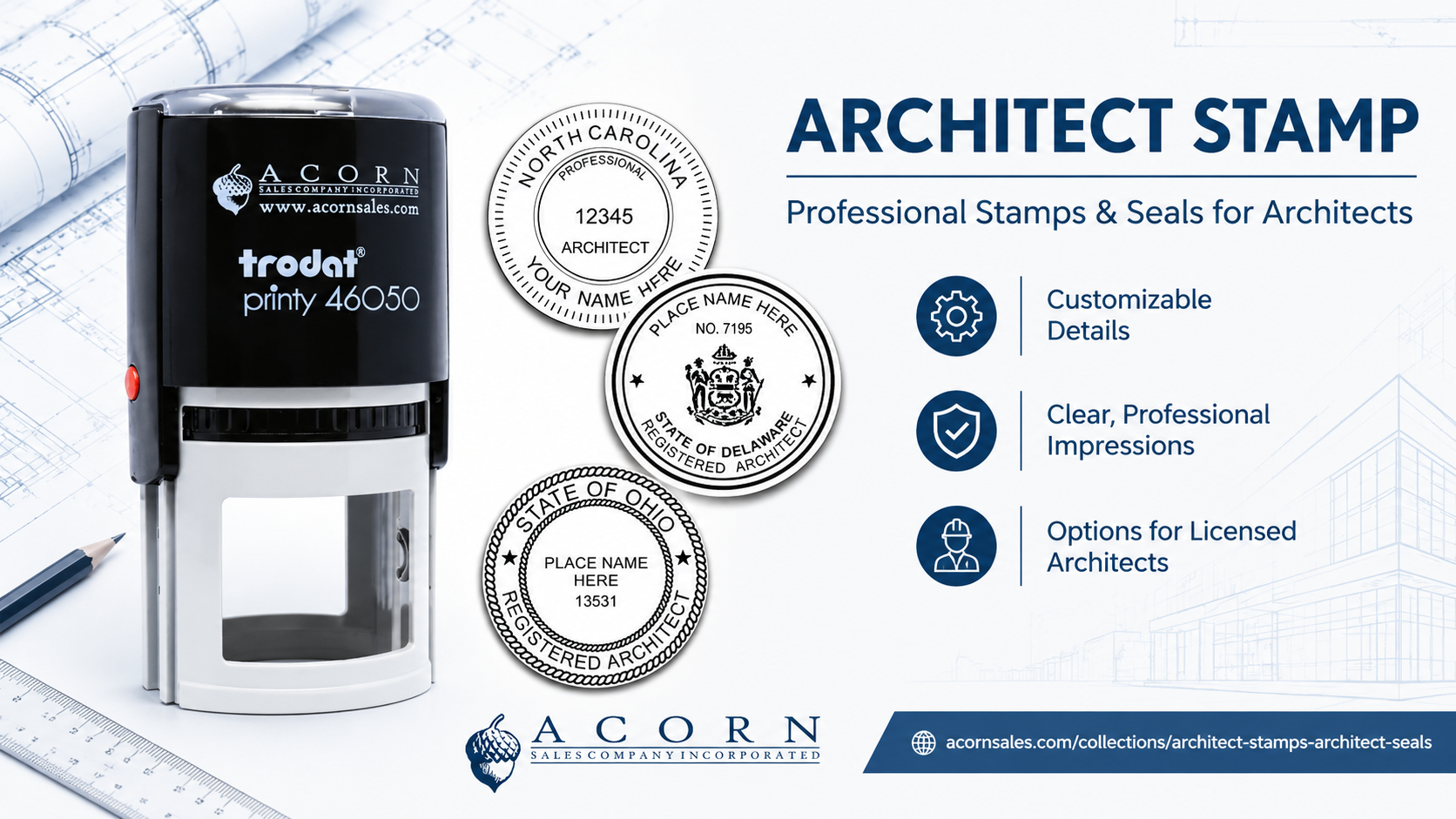
Choosing the right architect stamp is an important decision for licensed architects who prepare, review, and approve architectural documents. The right stamp should clearly display the required professional information, produce legible impressions, and meet the regulations of the state where the architect practices. Since stamp requirements can vary across the United States, selecting a design involves more than appearance or price.
Whether you are purchasing your first stamp or replacing an existing one, understanding the available formats, customization options, and compliance requirements can help you make a confident choice. This guide explains what to look for when selecting a custom architect stamp, how to compare different formats, and which features matter most for everyday professional use.
What Is an Architect Stamp?
An architect stamp is a professional marking tool used by licensed architects to identify architectural documents in accordance with applicable licensing rules. Depending on the jurisdiction and document type, stamped documents may include building plans, construction drawings, specifications, and other professional records.
An architect's stamp or seal commonly contains the architect's name, license number, and other information prescribed by the relevant licensing board. Some jurisdictions also require specific wording, dimensions, symbols, signatures, or dates.
A stamp does not automatically make a document compliant or authorize its use. Architects must follow the applicable state regulations and accept responsibility for documents they are legally permitted to seal.
1. Check Your State's Architect Stamp Requirements
Before ordering a stamp, review the rules established by your state licensing board. Requirements are not identical nationwide, so a design suitable for one state may not meet another state's specifications.
When researching architect stamp requirements, check the following details:
-
Required professional title and licensed architect's name.
-
License or registration number.
-
Required seal wording, border, and graphic elements.
-
Prescribed stamp dimensions or impression format.
-
Rules for signatures, dates, and electronic seals.
-
Restrictions on how and when professional documents may be sealed.
For example, the California Architects Board provides specific guidance regarding the required architect stamp, while New York publishes its own requirements for professional identification and sealing. Always consult the current rules for your jurisdiction rather than relying on a generic template.
If you practice in multiple states, verify each state's requirements before using the same stamp design across different projects.
2. Choose Between an Architect Rubber Stamp and an Embossing Seal
One of the first purchasing decisions is whether you need an ink-based architect rubber stamp or an embossing seal. The appropriate choice depends on your licensing board's rules, the documents you handle, and your preferred workflow.
A rubber stamp applies an ink impression and can be convenient for marking documents quickly. An embossing seal creates a raised impression in paper, giving the document a different appearance without relying on ink.
An architect embossing seal may be suitable where permitted, but it should not be assumed to replace an ink stamp in every state. Some jurisdictions prescribe a particular format.
Consider the following questions before making your decision:
-
Does your licensing board permit the format?
-
Will you primarily mark paper drawings or other documents?
-
Do you need a portable tool for office visits and project meetings?
-
Is a clear, repeatable impression important for frequent use?
The best option is the one that satisfies your professional obligations while fitting your everyday work.
3. Consider a Custom Architect Stamp
A custom architect stamp allows you to select a design that incorporates the information required for your professional practice. Customization can be useful when standard templates do not match your state's specifications or when your license details need to be included accurately.
Before approving a design, confirm that the name, license number, wording, and other required elements are correct. Review a proof carefully, paying attention to spelling, spacing, and legibility.
A well-designed stamp should make essential information easy to read without overcrowding the impression. Decorative elements should never take priority over required details.
For architects who want a tailored format, a personalized architect stamp can provide a practical solution. However, customization does not guarantee regulatory compliance. Verify the finished layout against the current requirements before placing your order.
4. Verify the Architect Stamp With License Number
The license number is one of the most important details to check when ordering a professional stamp. An architect stamp with license number should reproduce the number accurately and clearly, following the applicable state's formatting rules.
Even a small typing error can create confusion when documents are reviewed. Before submitting your order, compare the proposed stamp layout with your official licensing information.
Use this simple checklist:
-
Confirm your name matches the required professional record.
-
Verify every digit of your license number.
-
Check that the professional title and required wording are correct.
-
Review the final proof before production.
-
Confirm whether a signature, date, or additional information is required.
If your registration details change or you become licensed in another state, check whether you need a new stamp or a revised design.
5. Evaluate Stamp Size, Readability, and Build Quality
A professional stamp should produce a clear impression that remains readable on the documents you use most often. The correct size depends on the specifications set by your licensing board, so do not choose dimensions based only on convenience.
Look for a design that balances readable text with the required layout. Fine lettering, cramped spacing, and inconsistent impressions can make important information difficult to distinguish.
For a frequently used rubber stamp, consider the handle, stamping surface, ink compatibility, and ease of operation. If you choose a self-inking model, check whether its format meets your requirements and whether replacement ink or maintenance supplies are available.
For an embossing seal, consider comfortable operation and the ability to create a clean impression on suitable paper. In either case, durability and ease of use are valuable, but compliance should remain the deciding factor.
Feature & Benefit Table
| Feature | Benefit | What to check |
|---|---|---|
| Required professional details | Supports clear identification | Name, title, and license number |
| State-compliant layout | Helps meet applicable rules | Official licensing board specifications |
| Legible lettering | Makes impressions easier to read | Text size, spacing, and contrast |
| Customization options | Accommodates professional details | Proof accuracy before production |
| Durable construction | Supports repeated daily use | Handle, stamping surface, and materials |
| Appropriate stamp format | Fits permitted document workflows | Rubber stamp, embossing, or electronic format |
6. Compare Prices Without Overlooking Compliance
Price matters, especially for professionals who use stamps regularly. However, the least expensive option may not be the best value if its layout is difficult to read, its construction is unsuitable for frequent use, or it does not meet your state's specifications.
Compare products based on customization, durability, ease of use, impression quality, and available replacement supplies. Check what is included in the purchase and whether the seller provides a proof for reviewing personalized information.
Acorn Sales offers an architect stamps and seals collection for professionals exploring different marking solutions. Review the available options and confirm that your selected format matches the rules applicable to your license.
Conclusion
Choosing the right architect stamp starts with understanding your professional responsibilities and your state's licensing rules. Once you confirm the required format and information, compare customization options, impression quality, readability, and durability to find a stamp that suits your workflow.
A carefully selected custom architect stamp can make professional document preparation more convenient, but accuracy and compliance should always come first. Review the official requirements, verify your license details, and examine the final design before ordering. Acorn Sales provides an architect stamps and seals collection to help you explore options for your professional marking needs.
Frequently Asked Questions (FAQ)
1. How do I choose the right architect stamp?
Start by checking your state's licensing requirements. Then compare permitted stamp formats, required information, readability, size, customization options, and durability before ordering.
2. What information should an architect stamp include?
Common details include the architect's name and license number, along with prescribed wording or other identifying elements. Exact requirements vary by jurisdiction.
3. Can I order a custom architect stamp online?
Yes. Online suppliers offer customized options, but you should verify the layout, license information, and state requirements before approving production.
4. Is an architect rubber stamp better than an embossing seal?
Neither is universally better. A rubber stamp provides an ink impression, while an embossing seal creates a raised impression. The permitted format depends on your jurisdiction and document requirements.
5. Do architect stamp requirements differ by state?
Yes. States can prescribe different wording, dimensions, formats, and usage rules. Check your licensing board's current guidance before purchasing a stamp.
6. Should my architect stamp include my license number?
Architect stamps commonly include a license number, and many jurisdictions require it. Verify the exact requirements and ensure the number is reproduced correctly.
7. How often should I replace my architect stamp?
Replace or update it when it becomes difficult to read, is damaged, or no longer reflects your required professional information. Check whether changes in state rules require a new design.

 Bangla