

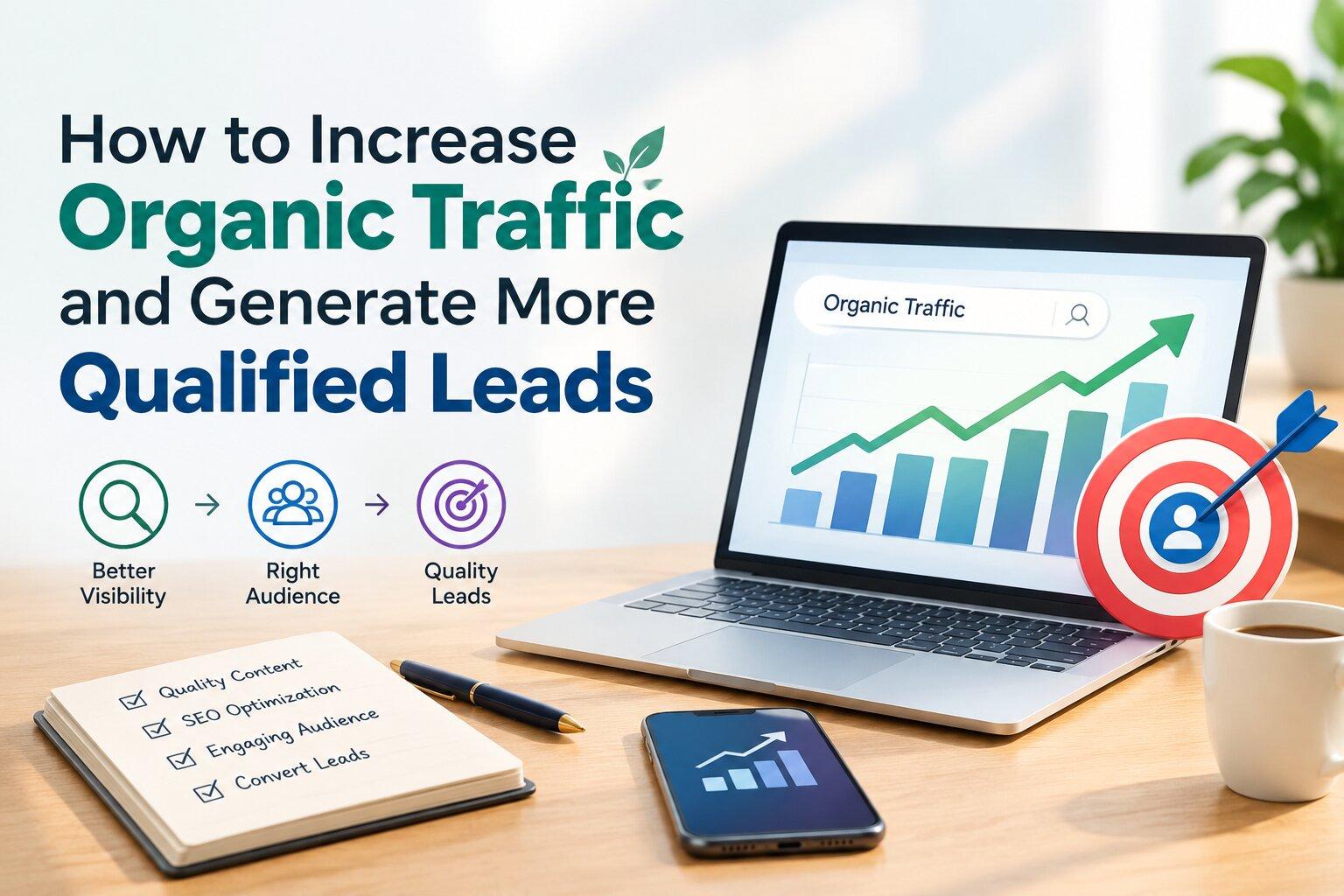

Getting more visitors to your website is useful, but traffic alone does not guarantee business growth. The real opportunity is attracting people who are actively looking for your products, services, or solutions and turning that interest into enquiries or sales.
A strong organic growth strategy connects search visibility with useful content, technical improvements, clear landing pages, and conversion-focused experiences.
Start With the Traffic That Can Actually Become Customers
A common SEO mistake is focusing on traffic volume without considering its relevance.
A website may receive thousands of visitors every month, but if those visitors have no interest in buying, booking, contacting, or requesting a service, the business may see little commercial value.
When evaluating SEO services in Karachi, therefore, businesses should look beyond promises of higher traffic and ask whether the strategy targets the searches that matter to their customers.
Start by identifying:
- The products or services that generate the highest value for the business and deserve stronger search visibility.
- The customer groups most likely to need those products or services and the problems they are trying to solve.
- The search terms people use before making a purchase, requesting a quote, or contacting a service provider.
- The locations, industries, and customer segments that should be prioritized based on actual business opportunities.
- The pages that already attract relevant visitors but are not generating enough enquiries, calls, purchases, or other conversions.
This establishes a stronger foundation by aligning SEO efforts with business objectives rather than focusing solely on increasing website traffic.
Build Your Strategy Around Search Intent
People searching for the same topic may have very different intentions.
Someone searching for "office chairs" may only be researching options. Another person searching for "office chairs supplier Karachi" may already be comparing suppliers.
These searches require different types of content.
Informational Searches
These searches usually indicate that someone wants an answer, explanation, guide, or solution.
Useful content can include:
- Detailed guides that answer common customer questions and explain important considerations in simple, practical language.
- Problem-solving articles that address issues customers experience before they start comparing specific products or services.
- Educational resources that explain industry terms, processes, specifications, or common purchasing considerations.
Commercial Searches
These searches often indicate that a person is comparing solutions before taking action.
Useful pages may include:
- Comparison pages that clearly explain differences between products, services, features, pricing models, or available solutions.
- Service pages that explain what the company provides, who it serves, and why the solution may fit specific customer requirements.
- Industry pages that connect a company's products or services with the needs of specific customer groups and business sectors.
Transactional Searches
These searches are closer to an action such as purchasing, booking, requesting a quote, or contacting a business.
These pages should make the next step obvious.
A visitor should quickly understand:
What do you offer?
Is it suitable for me?
Why should I consider your business?
What should I do next?
That clarity can make the difference between a visitor leaving the website and becoming a qualified lead.
Fix the Pages Already Close to Performing
Producing more pages is not always where your SEO efforts should start.
Many websites already have pages ranking on the second or third page of Google, attracting impressions, or receiving some organic clicks.
These pages can represent opportunities.
Instead of immediately publishing another article, review pages that already show signs of search visibility.
Look for:
- Pages receiving impressions but few clicks, which may need stronger titles and descriptions aligned with the search intent.
- Pages ranking near the first page that could benefit from better coverage, internal links, clearer structure, or stronger supporting content.
- Pages attracting traffic but generating few enquiries, suggesting that the content or conversion path may need improvement.
- Pages with outdated information that no longer fully answers what customers are currently searching for.
- Pages competing for similar queries where consolidation or clearer keyword targeting may reduce internal competition.
This approach can often make existing organic visibility more productive.
Create Content Around Customer Problems
Publishing articles simply because a keyword has search volume can lead to a large website with little commercial value.
Instead, build content around problems your customers actually face.
Suppose a company provides commercial solar solutions.
Its potential customers may want information about:
- Energy costs
- System sizing
- Installation
- Maintenance
- Inverter selection
- Panel efficiency
- Commercial applications
- Return on investment
- Government requirements
- Battery storage
These topics can support different stages of the buying journey.
The main service page can target customers who are ready to enquire, while supporting content can answer questions from people who are still researching.
This builds a structured content network instead of a collection of unrelated blog articles.
Strengthen Your Internal Linking Structure
Internal links are often treated as a minor SEO task, but they can have a major role in connecting your website's information.
A strong internal linking system guides visitors from useful information toward relevant product and service pages.
For example:
Blog Article → Related Guide → Service Page → Case Study → Contact Page
This path can help turn informational visitors into potential customers.
Place internal links where they make navigation easier and provide relevant information to visitors.
Avoid placing extra internal links when they do not provide meaningful value to the visitor.
Anchor text should also clearly describe the destination so users understand what they will find after clicking.
Make Your Service Pages More Conversion-Focused
Getting a service page to rank is only one part of achieving meaningful results.
The page must also persuade the right visitor to take the next step.
A strong service page should quickly communicate:
- The service being offered and the specific customer problem it is designed to address.
- The types of businesses, industries, locations, or customers that can benefit from the service.
- The main features, processes, deliverables, or areas of support included within the service.
- Evidence that helps visitors assess the company's experience, such as case studies, results, reviews, or relevant credentials.
- A clear next step such as requesting a quote, booking a consultation, calling the business, or submitting an enquiry.
Avoid making visitors search through several paragraphs before finding out what your company actually does.
Improve Website Performance and Technical SEO
Organic growth can be limited when search engines struggle to access, process, or understand important pages.
A strong technical SEO setup supports the other elements of your overall SEO strategy.
Check Indexing and Crawlability
Search engines need to find, crawl, and properly process the pages that matter most.
Review:
- XML sitemaps and whether they contain the URLs that should actually be indexed and presented in search.
- Robots directives to make sure important sections are not accidentally blocked from search engine crawlers.
- Canonical tags to reduce confusion when similar or duplicate URLs exist across the website.
- Broken links and error pages that can create poor user experiences and interrupt important navigation paths.
- Redirects to ensure old URLs lead visitors and search engines toward the correct current destinations.
Improve Page Experience
A slow or difficult website can create friction before a visitor ever becomes a lead.
Pay attention to:
- Mobile usability across important landing pages and conversion paths.
- Page loading performance, especially for users arriving through organic search on mobile devices.
- Large images and unnecessary scripts that can increase loading time without providing meaningful user value.
- Layout stability so buttons, forms, navigation, and content remain easy to use while pages load.
Technical improvements should help search engines access the site while making the experience easier for visitors.
Develop Topic Depth With Purposeful Content
Search engines need context about what your business knows and offers.
A website with one article about a topic may not provide the same depth as a website with a well-organized collection of useful resources.
For example, a company selling industrial fabrics could build connected content around:
Fabric Types → Applications → Product Specifications → Industry Uses → Buying Guides → Care → Comparisons
Each piece can support the others.
This helps create a stronger subject structure while giving potential customers more information throughout their research process.
However, topical authority does not mean publishing dozens of thin articles.
Every page should have a clear purpose.
Use Data to Find Better Lead Opportunities
SEO decisions should not rely entirely on assumptions.
Your website's analytics and search data can reveal where opportunities are being missed.
Look at:
- Search queries that bring visitors to pages but do not currently have dedicated or well-optimized content.
- Landing pages with strong organic traffic but unusually low conversion rates compared with other important pages.
- Search terms where the website receives impressions but attracts fewer clicks than expected from relevant audiences.
- Geographic areas where relevant searches exist but the business has limited location-focused visibility or supporting content.
- User journeys revealing where organic visitors drop off before submitting enquiries, making purchases, booking appointments, or completing other important actions.
Analytics should do more than generate performance reports.
It should help determine what to improve next.
Turn Organic Visitors Into Qualified Leads
Increasing traffic is only half the equation.
If the goal is lead generation, your website needs a clear conversion system.
Give Visitors a Relevant Next Step
Different visitors need different calls to action.
A visitor exploring an introductory article may not yet be prepared to ask for pricing.
A person visiting a detailed service page may be much closer to taking action.
Match the CTA with the visitor's likely intent.
Examples include:
- Offering an informative resource to visitors who are exploring their challenges and evaluating different approaches.
- Requesting a quotation when the visitor already understands the service and wants pricing or project information.
- Booking a consultation when the purchase decision requires discussion, planning, or expert recommendations.
- Contacting a sales representative when the product or service involves technical specifications, customization, or business requirements.
This creates a smoother path between organic discovery and commercial action.
Use Trust Signals Where They Matter
A visitor may find your website through Google but still hesitate to contact you.
Trust signals can reduce that uncertainty.
Useful elements may include:
- Customer reviews that provide genuine experiences and help potential buyers understand what working with the company is like.
- Case studies that explain actual projects, challenges, solutions, and outcomes rather than making broad unsupported claims.
- Client logos where permission has been granted and the relationship is relevant to the service or industry being promoted.
- Certifications and professional credentials that are current, verifiable, and directly related to the company's services.
- Clear company information that explains who operates the business, where it is based, and how potential customers can get in touch.
Trust should support the buying decision without overwhelming the page with unnecessary promotional claims.
Combine SEO With Other Acquisition Channels
Organic search is powerful, but businesses do not have to treat every marketing channel separately.
SEO can work alongside:
Google Ads: Paid campaigns can generate immediate visibility while organic pages are being developed and optimized.
Social Media: Social content can distribute useful resources, strengthen brand recognition, and bring visitors back to important website pages.
Email Marketing: Existing prospects and customers can be directed toward new guides, product information, case studies, and useful resources.
Remarketing: Visitors who are not ready to convert on their first visit can potentially be brought back through appropriate paid campaigns.
This creates multiple touchpoints around the same customer journey.
How Artxpro Can Connect Traffic With Business Growth
Artxpro approaches SEO as part of a wider digital growth strategy rather than treating rankings as the final objective.
Its SEO services cover technical SEO, on-page optimization, off-page work, local SEO, international SEO, ecommerce SEO, content SEO, AEO, GEO, and search engine marketing.
This broader approach allows SEO activity to connect with other digital requirements.
For example, a business may need to improve its technical foundation before creating content. Another company may already have strong traffic but need better landing pages and conversion paths.
An ecommerce business may require product and category optimization alongside paid campaigns, social media, and ecommerce management.
The important part is identifying where the current growth process is breaking down.
Why Website Visitors Fail to Become Leads
A website can rank well and still produce disappointing business results.
Several problems can create this gap.
The Wrong Audience Is Finding You
High traffic from unrelated searches may look positive in an analytics report but produce little commercial value.
Matching relevant search intent matters more than simply trying to increase website traffic.
The Landing Page Does Not Match Visitor Expectations
A visitor may click a result expecting one type of information and arrive on a page focused on something else.
Visitors may abandon the page quickly when its content does not match what they expected to find.
The Conversion Path Is Complicated
Too many form fields, unclear CTAs, difficult navigation, or missing contact options can create unnecessary friction.
The Page Does Not Build Enough Confidence
Visitors may hesitate when a business provides little information about its experience, process, products, services, or customer outcomes.
Fixing these problems can make existing traffic more valuable without requiring a huge increase in visitor numbers.
What Should You Measure Every Month?
A useful organic growth report should show more than keyword rankings.
Track metrics that connect visibility with actual business performance.
Important areas include:
- Organic traffic growth segmented by landing page, location, device, and search intent to understand where useful visitors are coming from.
- Qualified leads generated through organic search, including forms, calls, bookings, purchases, and other meaningful conversion actions.
- Organic conversion rate to understand whether increasing search traffic is also improving the percentage of visitors who take action.
- Commercial keyword visibility for searches closely connected with products, services, locations, and customer problems.
- Landing-page performance to identify pages that attract visitors but need stronger content, trust signals, or conversion paths.
- Indexed-page and technical health trends to confirm that important website improvements are actually being recognized by search engines.
These measurements create a much clearer picture of whether organic growth is helping the business.
How to Choose the Right Digital Marketing Agency
The best digital marketing agency in Karachi for one business may not be the right fit for another.
The ideal partner should recognize your industry's needs, customer decision process, website limitations, market competition, and revenue targets.
Before choosing a partner, ask:
- What is the agency's process for understanding the business, customers, competitors, and existing search performance?
- Will the strategy focus on qualified traffic and conversions rather than only increasing rankings and website sessions?
- How will technical issues, content gaps, internal links, and conversion problems be identified and prioritized?
- What reporting will be provided, and will it connect SEO performance with leads, sales, or other business outcomes?
- How often will the strategy be reviewed and adjusted based on search data, website performance, and changing business priorities?
A clear process is usually more useful than a long list of generic promises.
A Practical Roadmap for Organic Growth
If your website needs a structured starting point, use this sequence.
Step 1: Audit the Existing Website
Review technical SEO, indexing, content quality, search visibility, landing pages, internal links, and conversion paths.
Step 2: Identify Commercial Opportunities
Find products, services, locations, and customer problems that can generate meaningful business value through organic search.
Step 3: Map Search Intent
Group relevant searches according to informational, commercial, and transactional intent before deciding which pages need optimization or creation.
Step 4: Improve Existing Pages
Focus first on pages with existing search visibility, visitor activity, rankings, or conversions, and address their biggest performance gaps.
Step 5: Build Supporting Content
Create useful content around customer questions and connect those resources with relevant service, product, category, and location pages.
Step 6: Strengthen Conversion Paths
Improve CTAs, forms, contact options, trust signals, page structure, and navigation so relevant visitors have a clear route toward taking action.
Step 7: Measure and Refine
Review organic traffic, qualified leads, conversions, rankings, technical health, and landing-page performance before deciding what to improve next.
Conclusion
Growing organic visibility involves more than creating additional articles or targeting a wider range of search terms.
The stronger approach is to attract the right audience, understand their search intent, build useful content, improve technical performance, strengthen important landing pages, and create clear paths toward conversion.
Qualified leads come from the connection between visibility and relevance.
When your website answers real customer questions, communicates your value clearly, provides useful evidence, and makes the next step easy, organic traffic is more likely to translate into meaningful business activity.
The goal should not be to chase traffic for its own sake. Build a search presence that reaches the right people, solves their problems, and gives them a clear reason to take the next step.
FAQs
How Soon Can You Expect Organic Traffic Growth?
The timeframe varies depending on competition, website condition, authority, content quality, technical issues, and the amount of SEO work being completed. Results usually require consistent optimization.
Can SEO generate qualified leads for a small business?
Yes. A small business can attract relevant leads by targeting specific services, locations, customer problems, and commercial search intent instead of competing broadly for high-volume terms.
Is publishing more blog posts enough to increase organic traffic?
No. Content is only one part of SEO. Technical health, search intent, internal linking, page quality, authority, and conversion optimization also influence overall organic performance.
How Can You Identify High-Quality Traffic From Organic Search?
Review the searches, landing pages, locations, engagement, and conversion actions associated with organic visitors. Qualified traffic should be meaningfully relevant to your products or services.
What should an SEO report include?
An effective report may cover organic visits, qualified enquiries, conversion results, commercial keyword visibility, landing-page metrics, technical issues, content updates, and upcoming priorities.
