

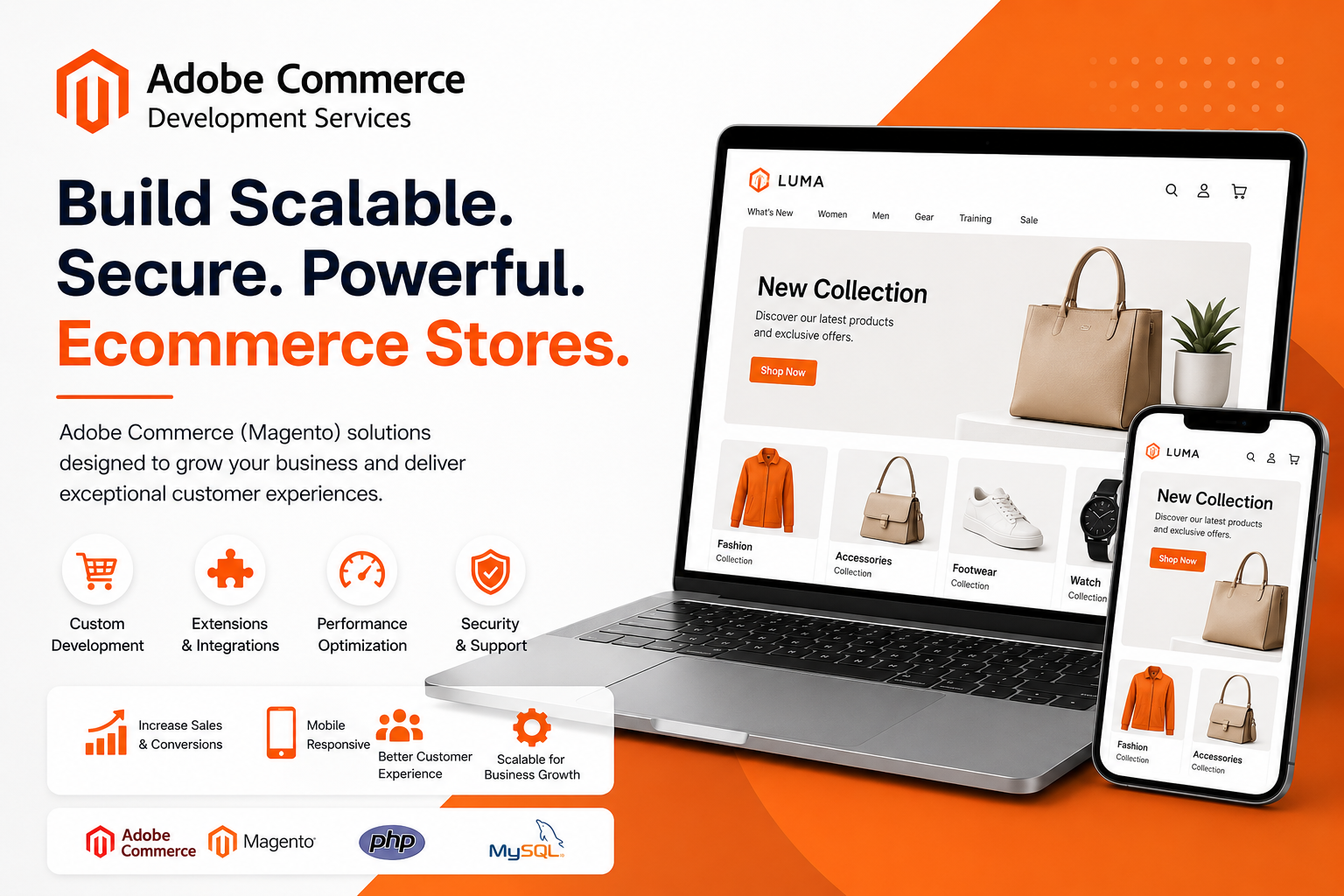

Adobe Commerce Website Development Services for U.S. Businesses
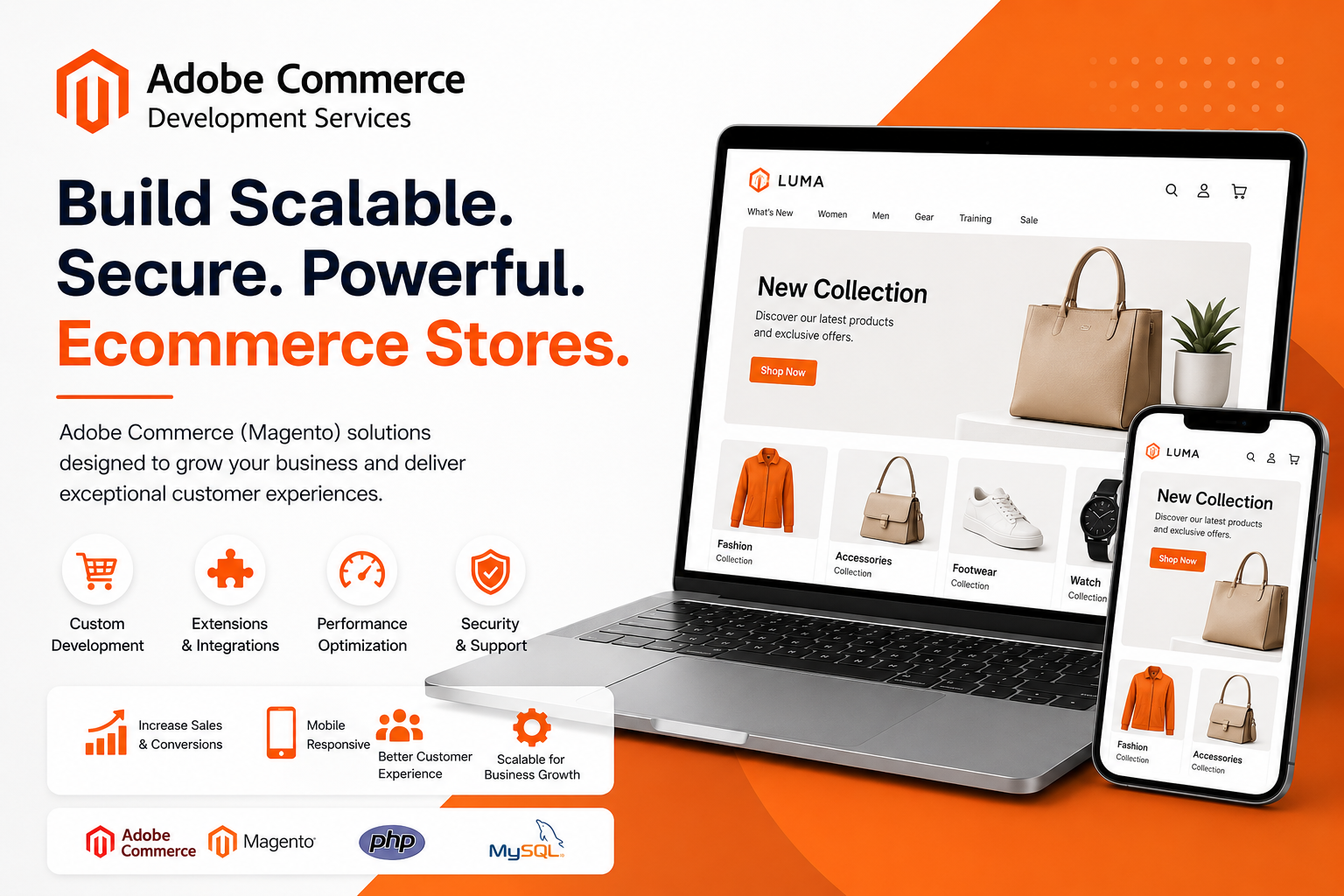
Businesses with growing online sales often need more than a standard ecommerce website. They may require customized shopping experiences, complex product catalogs, connected business systems, and tools that support multiple sales channels. Adobe Commerce website development services help businesses build and manage ecommerce stores around these requirements while supporting long-term growth.
For U.S. retailers, manufacturers, and B2B companies, the right Adobe Commerce solution can simplify online operations, improve the customer experience, and create a stronger foundation for digital commerce.
What Are Adobe Commerce Website Development Services?
Adobe Commerce website development services involve designing, building, customizing, and maintaining ecommerce websites using Adobe Commerce, the enterprise ecommerce platform associated with Magento.
These services can include custom storefront development, catalog configuration, checkout customization, third-party integrations, migration, performance optimization, and ongoing technical support.
The exact implementation depends on business needs. A B2B supplier may require customer-specific pricing and account permissions, while a consumer brand may prioritize product discovery, personalized shopping experiences, and a streamlined checkout.
Key Adobe Commerce Development Services for Growing Businesses
Custom Ecommerce Store Development
A custom-built storefront can align product pages, navigation, category structures, and checkout flows with your business model. Developers can configure the store to support different product types, customer groups, and operational workflows.
Adobe Commerce Theme and Feature Customization
Businesses can customize storefront layouts and selected platform features to create a consistent brand experience. The objective is to make the website easier to use without adding unnecessary complexity or compromising maintainability.
Third-Party Integrations
Ecommerce websites often need to exchange data with inventory management systems, enterprise resource planning software, customer relationship management platforms, payment providers, and shipping tools. Proper integrations can reduce manual work and help maintain consistent information across business systems.
Migration and Platform Upgrades
Moving from an existing ecommerce platform requires careful planning. Product data, customer records, order history, URLs, and relevant SEO elements should be reviewed before migration. Testing and appropriate redirects can help reduce disruption to customers and organic search visibility.
Performance and Technical SEO
Page speed, mobile usability, crawlability, and site structure all influence the overall shopping experience. Developers can review caching, image optimization, code efficiency, internal linking, metadata, and indexation settings to address technical issues.
Why U.S. Businesses Choose Adobe Commerce
Adobe Commerce can be a suitable option for organizations that need extensive customization and more complex ecommerce functionality.
Key potential benefits include:
- Flexible customization: Adapt storefront features and business workflows to specific requirements.
- Complex catalog management: Organize large product catalogs and multiple product variations.
- B2B capabilities: Support business-oriented purchasing workflows where the relevant features and configuration are available.
- Integration flexibility: Connect ecommerce operations with compatible business systems.
- Growth planning: Build an architecture that can evolve as product ranges, sales channels, and customer needs change.
However, Adobe Commerce may require more technical resources and investment than a simpler hosted ecommerce platform. Businesses should assess licensing, hosting, development, maintenance, and integration costs before choosing it.
Adobe Commerce vs. Other Web Development Solutions
The best technology depends on your requirements, budget, and internal resources.
- Shopify Web Development Company: Shopify development can be a practical choice for businesses seeking a hosted ecommerce platform with integrated store management and a broad app ecosystem.
- custom magento development services: Magento-based development can address specialized ecommerce requirements, including customized catalogs, workflows, and integrations. Adobe Commerce builds on the Magento ecosystem with additional enterprise-oriented capabilities.
- Wix Website Development Services: Wix can suit smaller businesses that want a visual website builder and straightforward ecommerce management.
- mern stack web development services: MERN development uses MongoDB, Express.js, React, and Node.js to build custom web applications. It can be appropriate when a business needs a tailored application architecture rather than a traditional platform-led ecommerce setup.
These options serve different needs. Compare customization, ownership costs, available integrations, maintenance requirements, and future scalability before making a decision.
How to Choose the Right Adobe Commerce Development Partner
Selecting a development partner requires more than comparing project estimates. Look for experience with Adobe Commerce architecture, customization, integrations, performance testing, and ecommerce migration.
Before signing a contract, ask for:
- Relevant project examples and technical experience.
- A clear scope of work with defined deliverables.
- An estimate covering development, integrations, hosting, and ongoing support.
- A testing plan for functionality, security, and performance.
- A documented post-launch maintenance and troubleshooting process.
A reliable partner should explain technical trade-offs clearly and recommend features based on business value rather than unnecessary complexity. Businesses evaluating providers such as Webiators should compare their service capabilities with the project's actual requirements and long-term goals.
How Adobe Commerce Development Supports SEO and AI Search
SEO should be considered throughout the development process. Search-friendly URLs, descriptive page titles, useful category content, optimized product images, logical internal links, and accurate structured data can help search engines interpret an ecommerce website.
For AI-powered search experiences, provide clear product information, explain important features directly, and answer common customer questions using concise, factual language. Consistent business information and a technically accessible website also help make content easier to understand.
These practices can strengthen the site's search foundations, but rankings and AI Overview inclusion depend on many factors and cannot be guaranteed.
Conclusion
Adobe Commerce website development services can help U.S. businesses build customized ecommerce experiences, connect essential business systems, and manage complex online operations. The right solution depends on your catalog, customer requirements, integration needs, budget, and long-term growth plans.
Define your priorities, compare suitable platforms, and choose a development partner that can deliver reliable functionality, maintainable code, and a clear post-launch support plan.
FAQs
1. What do Adobe Commerce website development services include?
They can include custom store development, theme customization, integrations, migration, performance optimization, technical SEO, and ongoing maintenance.
2. Is Adobe Commerce suitable for large ecommerce businesses?
It can be suitable for businesses with complex catalogs, advanced customization needs, and demanding integrations, provided they have the budget and technical resources to support it.
3. What is the difference between Magento and Adobe Commerce?
Adobe Commerce is the commercial enterprise platform built on the Magento ecosystem. Magento Open Source is a separate open-source edition with a different feature and support model.
4. How much do Adobe Commerce development services cost?
Costs depend on project complexity, custom features, integrations, hosting, migration, and maintenance. Request an itemized estimate based on your requirements.
5. Can Adobe Commerce websites be optimized for SEO?
Yes. Developers can improve technical SEO foundations, site structure, page performance, metadata, internal linking, and structured data where appropriate.
