

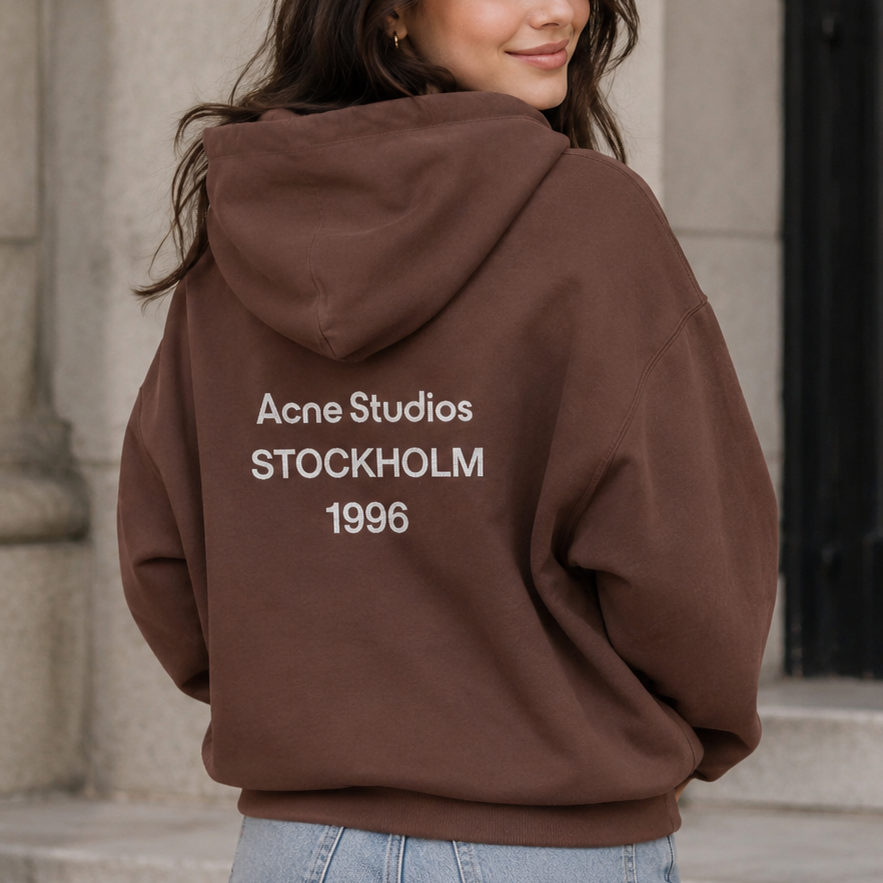
The modern luxury streetwear landscape is defined by stark stylistic juxtapositions. On one end of the spectrum sits Acne Studios, renowned for its clean Scandinavian minimalism anchored by the iconic, deadpan "Face" patch logo. On the other end lies Enfants Riches Déprimés (ERD), a brand rooted in high-end punk subversion, elitist counterculture, and raw, distressed grunge. Comparing these two forces reveals how completely different emotional languages—playful irony versus dark, chaotic rebellion—can dominate contemporary wardrobes.
The Minimalist Irony of the Acne Studios Face Patch
Introduced as a recurring emblem inspired by Swedish lagom (the concept of "just enough"), Acne Studios' acnestudioswear.com minimalist expression patch features two dots and a straight line. Often slapped onto beanies, cardigans, and heavyweight basics, the Face patch introduces a subtle, tongue-in-cheek touch of approachability to otherwise pristine, structurally sleek garments. It represents a controlled, wearable pop-minimalism that balances luxury tailoring with lighthearted everyday wear.
The Radical Subversion of ERD Punk
In sharp contrast, Enfants Riches Déprimés (ERD) rejects all notions of playful minimalism in favor of an uncompromised, aristocratic punk ethos. Founded on French new wave references, 1970s punk nihilism, and intellectual grunge, ERD’s aesthetic relies on heavy hand-distressing, crude graphic treatments, and erratic, luxury-tier tailoring. Where Acne uses a neat embroidered patch to signal relaxed modernity, ERD uses intentional decay, holes, and provocative imagery to communicate an air of reclusive, counter-cultural exclusivity.
Materiality and Craftsmanship Philosophies
The physical construction of garments enfantrichesdeprime.com from these two brands further highlights their philosophical divide. Acne Studios focuses on uniformity, durable French terry cottons, clean garment dyeing, and immaculate stitching designed to last as versatile wardrobe staples. ERD, conversely, treats its fabrics as canvases for aggressive aging processes—utilizing vintage washes, manual fraying, and custom treatments that ensure no two pieces look entirely identical, prioritizing artistic imperfection over corporate consistency.
Key Highlights of the Acne vs. ERD Contrast:
-
Design Philosophy: Acne Studios champions playful, deadpan Scandinavian minimalism; ERD embodies dark, elite punk nihilism and raw grunge.
-
Branding and Logos: Acne utilizes its clean, uniform embroidered "Face" patch; ERD relies on chaotic, distressed graphics, custom branding, and vintage text.
-
Garment Treatment: Acne maintains clean, structured lines and durable manufacturing; ERD embraces intentional decay, pre-distressed holes, and artisanal washes.
-
Styling Application: Acne anchors minimalist, high-low everyday wardrobes; ERD acts as a loud, theatrical statement piece for avant-garde collectors.
The Role of Sizing and Silhouettes
Proportion plays a critical part in how each brand presents itself. Acne Studios cuts its apparel with controlled, wearable oversized lines and approachable boxy structures that easily integrate into standard luxury wardrobes. ERD pushes silhouettes to dramatic extremes, featuring heavily cropped bodies, exaggerated sleeves, and slouchy, unkempt draping that forces the wearer to fully commit to an uncompromising, rebellious stance.
Cultural Impact and Consumer Demographics
The audiences for these two fashion houses look for entirely different psychological rewards. Consumers who lean toward Acne Studios appreciate smart, understated design, artistic accessibility, and clean urban functionality. Those drawn to ERD are typically luxury collectors seeking extreme scarcity, high-end subversion, and a wearable piece of counter-cultural history that deliberately stands apart from mainstream fashion trends.
Maintenance and Garment Longevity
Caring for pieces from these distinct stylistic worlds requires tailored approaches. Acne's structured cottons and patch details demand gentle washing to keep colors crisp and avoid twisting seams. ERD garments, due to their fragile, pre-distressed nature and delicate vintage treatments, require extreme caution (such as specialized dry cleaning or careful hand-washing) to prevent intentional wear from turning into accidental damage.
Choosing Your Aesthetic Identity
Ultimately, choosing between the playful irony of an Acne Studios Face patch item and the raw punk intensity of an ERD piece comes down to your personal narrative. If your style favors refined, witty minimalism and everyday luxury, Acne provides the perfect anchor. If you crave absolute artistic rebellion, counter-cultural depth, and uncompromised avant-garde expression, ERD stands alone.
Frequently Asked Questions (FAQs)
Q1: What does the Acne Studios Face patch represent?
A: The Face motif is a deadpan emoticon designed to represent the Swedish concept of lagom—not too much, not too little—adding a playful, understated touch of irony to minimal luxury basics.
Q2: How does ERD's pricing compare to Acne Studios?
A: ERD generally commands a much higher retail and secondary market price point due to extreme scarcity, limited production runs, and intensive artisanal distress treatments, whereas Acne Studios functions more traditionally as a contemporary luxury brand.
Q3: Can you mix minimalist pieces like Acne Studios with punk items like ERD?
A: Yes. Pairing a clean, structured Acne outerwear piece with heavily distressed ERD layers creates a compelling high-low contrast that balances out chaotic textures with sharp architectural lines.

