

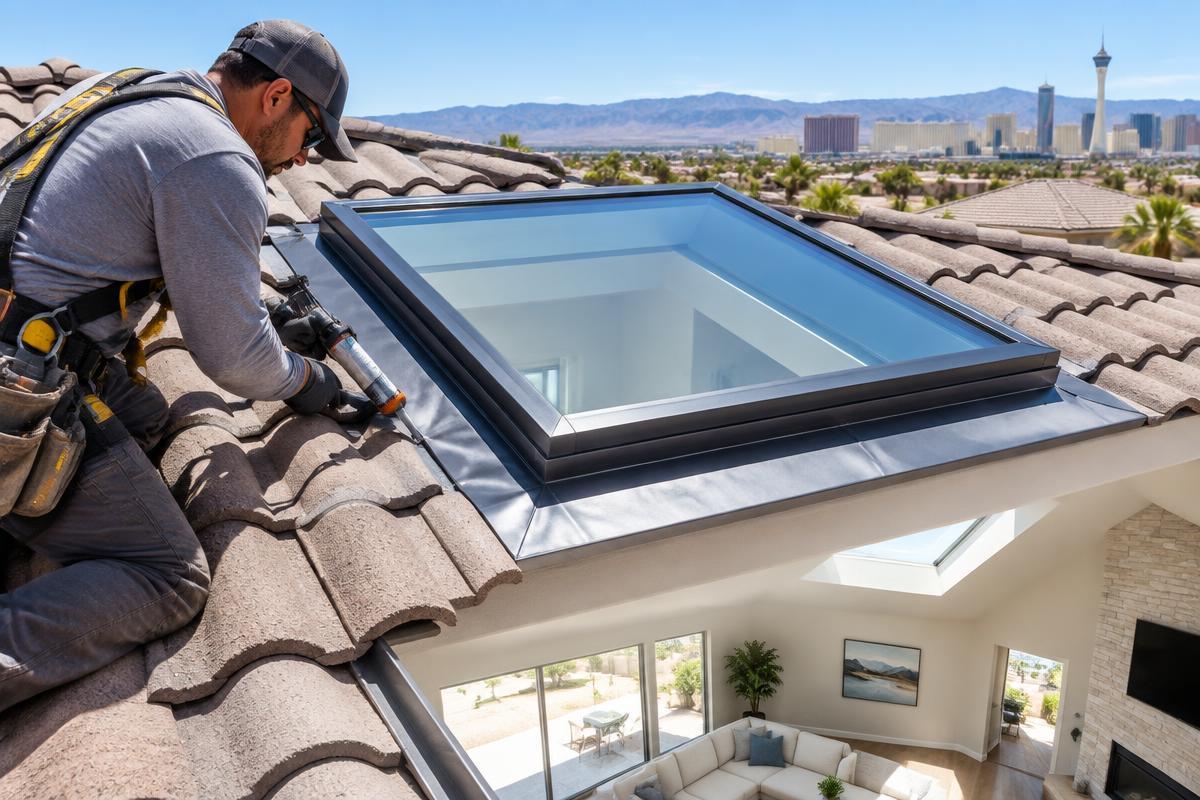
What Should Henderson Homeowners Know Before Replacing a Skylight and Its Flashing?

Skylights bring natural daylight into rooms that might otherwise depend on artificial lighting throughout the day. They can make kitchens, bathrooms, hallways, and living spaces feel more open. However, when a skylight begins leaking, develops condensation between its panes, or shows signs of deterioration, homeowners must determine whether the problem can be repaired or whether replacement is the more practical solution.
In Henderson, Nevada, roof conditions deserve particular attention. Intense sunlight, high summer temperatures, seasonal wind, and occasional heavy rain can put stress on roofing materials and the seals surrounding roof openings. A skylight that appears intact from inside the house may still have deteriorating flashing or compromised connections beneath the surrounding roofing materials.
Understanding the relationship between the skylight, its flashing, and the roof assembly helps homeowners make better decisions. A successful replacement involves more than installing a new window in the roof. It requires careful assessment, compatible materials, proper water management, and attention to the details that prevent future leaks.
How Can Homeowners Recognize a Skylight That Needs Replacement?
Not every skylight problem requires a complete replacement. Some issues originate in the flashing, sealant, or surrounding roof materials, while others indicate that the skylight itself has reached the end of its useful service life.
Recognizing the difference can help homeowners avoid unnecessary work while addressing problems before they cause additional damage.
Persistent leaks and water stains
Brown ceiling stains, peeling paint, bubbling drywall, or damp insulation near a skylight can indicate water intrusion. The location of a stain does not always reveal the precise entry point because water can travel along roof decking, framing, and other building materials before becoming visible indoors.
Recurring leaks deserve particular attention, especially when temporary sealant applications have failed to solve the problem. Repeatedly covering an apparent opening without identifying the underlying cause can leave damaged materials in place.
Cracked glazing and deteriorated components
Cracked glass, damaged plastic glazing, loose frames, and failed seals can compromise a skylight's weather resistance. Some insulated glass units also develop persistent fogging between panes, suggesting that the seal separating the glass layers has failed.
The appropriate solution depends on the skylight's construction, age, condition, and compatibility with replacement components. In some cases, a manufacturer-supported repair is possible. In others, replacing the complete unit may offer a more dependable long-term approach.
Excessive heat and unwanted moisture
A skylight that allows excessive heat into a room or develops recurring condensation may have glazing, insulation, ventilation, or installation issues. Condensation is not automatically proof of a roof leak, so its timing and location should be evaluated carefully.
Homeowners should distinguish moisture forming on the interior glass surface from water entering around the frame. Those problems can have different causes and require different corrective measures.
Why Is Skylight Flashing So Important in Henderson?
Flashing is the system of metal or other compatible waterproofing components that directs water away from vulnerable roof joints. Because a skylight interrupts the otherwise continuous roofing surface, its perimeter must be integrated carefully with the surrounding materials.
Even a high-quality skylight can leak when its flashing is poorly installed, damaged, or incompatible with the roof covering.
Managing water around the roof opening
Proper flashing creates a layered drainage path that directs water downhill and away from the skylight opening. The exact arrangement depends on the roof slope, roofing material, skylight design, and manufacturer installation requirements.
Installers must pay attention to the upper portion of the skylight, where runoff approaches the unit, as well as the sides and lower edge. Incorrect overlaps, obstructed drainage channels, or poorly fitted components can allow water to move beneath the roofing system.
Replacing deteriorated flashing without addressing related installation defects may leave the original problem unresolved. A thorough assessment should examine the entire perimeter rather than focusing exclusively on the most visible leak.
Accounting for desert weather conditions
Henderson's strong sunlight and substantial temperature fluctuations can accelerate the deterioration of exposed sealants, gaskets, and certain roofing components. Materials expand and contract as temperatures change, placing repeated stress on joints and connections.
Occasional intense rainfall creates another challenge. Roof openings must be prepared to handle water efficiently when rainfall exceeds ordinary conditions.
These factors make material compatibility and installation quality especially important. Sealant alone should not be treated as a substitute for a properly designed flashing system, and any replacement materials should be suitable for the roof assembly and local exposure conditions.
What Happens During a Professional Skylight Replacement?
A well-planned replacement begins with diagnosis, not demolition. The installer needs to understand why the existing unit is failing and whether nearby roofing materials have sustained damage.
Homeowners researching skylight replacement and flashing services in Henderson can use that distinction when evaluating roofing options and discussing the work required for their property.
Inspecting the existing skylight and roof
The assessment should consider the glazing, frame, seals, flashing, surrounding shingles or other roof covering, and visible interior damage. The roof's slope and the skylight's dimensions also influence which replacement products are appropriate.
If water has entered the roof assembly, the inspection should look for deteriorated decking, damaged insulation, and other moisture-related concerns. Concealed damage cannot always be confirmed during an initial visual assessment, so homeowners should ask how unexpected findings will be documented and addressed.
The installer should also determine whether the existing opening can accommodate the replacement unit or requires modification. Confirming dimensions and product compatibility before ordering materials helps prevent avoidable installation complications.
Removing the old unit carefully
Removing a skylight requires attention to the surrounding roofing system. Excessive damage to shingles, underlayment, roof decking, or interior finishes can increase the scope of the project.
Once the old unit is removed, the exposed opening provides an opportunity to inspect areas that were previously concealed. Any damaged structural or roofing components should be evaluated before the new skylight is installed.
Homeowners should clarify whether disposal, interior protection, cleanup, and repairs to any discovered damage are included in the proposed scope of work.
Installing the replacement and integrating the flashing
The new skylight must be installed according to its manufacturer's instructions, including the specified fastening method, compatible underlayment, flashing configuration, and sealing details.
The flashing must work with the existing roof covering rather than simply sit on top of it. Correct integration helps maintain the intended drainage path and reduces the risk of water becoming trapped around the frame.
Interior insulation and air sealing also matter. Gaps around the opening can contribute to unwanted heat transfer and condensation, even when the exterior flashing is functioning correctly.
After installation, the contractor should inspect the completed work and explain any maintenance recommendations that apply to the selected product.
Which Skylight Materials and Features Deserve Attention?
Replacement is an opportunity to evaluate whether the existing skylight still suits the room and the property's environmental conditions. The best choice depends on the roof configuration, daylight requirements, ventilation preferences, and product specifications.
Glazing, energy performance, and solar exposure
Different glazing options provide different combinations of visible light transmission, insulation, and solar heat control. Low-emissivity coatings, insulated glass, and appropriate glazing configurations can help manage unwanted heat gain.
In Henderson's sunny climate, homeowners should consider how much direct sunlight reaches the skylight and whether the room becomes uncomfortable during the afternoon. A product designed for the opening's exposure may provide a better balance between daylight and indoor comfort.
Energy-performance ratings should be evaluated in context. A feature that works well for one roof orientation or room may not offer the same benefits in another setting.
Fixed or ventilating designs
A fixed skylight provides daylight without opening for ventilation. A ventilating model can allow warm indoor air to escape when conditions are suitable, but it introduces additional operating components and seals that require proper maintenance.
Homeowners should consider whether ventilation is genuinely useful for the room and how the unit will be operated. Bathroom installations, for example, may require a broader moisture-management strategy that includes suitable ventilation and control of indoor humidity.
How Can Homeowners Evaluate a Skylight Contractor?
Choosing a contractor involves more than comparing the initial estimates. The quality of the installation details, clarity of the proposed work, and ability to address unexpected conditions can influence the project's long-term performance.
Compare the scope of work, not just the price
A useful estimate should identify the proposed skylight, removal procedures, flashing and underlayment work, treatment of damaged materials, and cleanup responsibilities. It should also explain whether interior repairs and any necessary roof modifications are included or priced separately.
Two estimates may differ because one includes comprehensive flashing replacement while another addresses only the skylight unit. Comparing these details provides a more meaningful basis for evaluating cost.
Homeowners should also ask how concealed damage will affect the final price and whether additional work requires approval before proceeding.
Verify relevant experience and warranty terms
Ask whether the contractor has experience working with the specific skylight design and roof covering installed on the property. Verify applicable licensing and insurance requirements, and request written information about workmanship coverage and manufacturer warranties.
Warranty conditions can vary by product and installation method. Homeowners should understand which party handles a defect, what exclusions apply, and whether particular maintenance practices are required to preserve coverage.
A clear written agreement is preferable to relying on informal assurances about future performance.
How Can Homeowners Protect a New Skylight After Installation?
Routine observation can help identify developing problems before they cause extensive interior damage. Homeowners should periodically examine ceilings around the skylight for discoloration, bubbling paint, or unusual moisture.
From a safe viewing position, they can also look for visible damage to nearby roofing materials. Walking onto a roof without appropriate training and safety equipment is not advisable, particularly when the surface is hot, steep, or slippery.
Keep interior glass clean using products recommended by the manufacturer, and follow any instructions for operating ventilating models. Do not apply additional sealant indiscriminately around the frame, since an inappropriate product or application can interfere with drainage or conceal a developing defect.
After severe weather, unusual moisture, or recurring condensation, arrange an inspection when the cause is uncertain. Prompt investigation is generally more useful than repeatedly treating visible symptoms without identifying their source.
What Is the Best Way to Make a Long-Term Skylight Decision?
The most reliable skylight replacement addresses the complete roof opening, not simply the visible glass or frame. For Henderson homeowners, that means considering solar exposure, temperature changes, rainfall drainage, flashing compatibility, and the condition of the surrounding roof.
A repair may be appropriate when the skylight remains sound and the problem is limited to a correctable component. Replacement may make more sense when the unit is damaged, its seals have failed, compatible parts are unavailable, or the existing design no longer meets the household's needs.
The deciding factor should be a clear diagnosis supported by a practical scope of work. When the skylight, flashing, underlayment, and surrounding roofing materials function together as intended, homeowners have a stronger foundation for protecting their interiors and maintaining the roof over time.
