

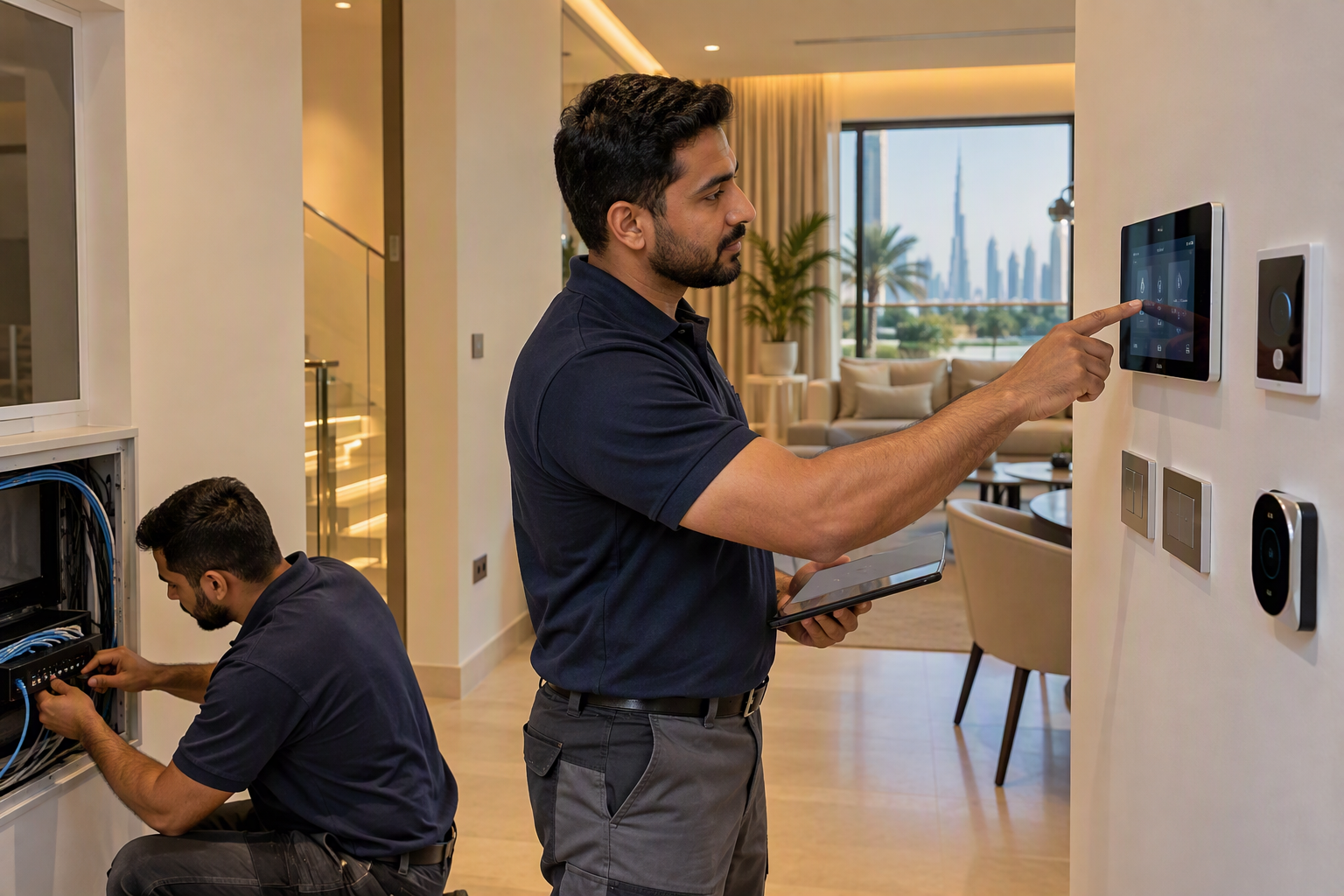

When comparing Home Automation Companies, it is important to understand what an installation quote covers before making a decision. A quote should explain the work, equipment, installation costs, and services included in the project. Two quotes may show different prices because they include different devices or levels of work. Checking each detail helps homeowners understand the total cost and avoid unexpected charges during installation.
1. List of Devices and Equipment
A home automation quote should include a clear list of the devices required for the property. These may include smart lights, sensors, thermostats, control panels, smart switches, security devices, and motorised curtain controls.
Each item should have its quantity, model, and basic specifications. For example, if the project includes smart lighting, the quote should explain how many switches or lighting controllers are needed and which areas they will control.
This information makes it easier to compare different quotes. If one quote includes more devices than another, the price difference may be reasonable. Homeowners should also check whether the listed equipment matches their daily needs.
2. Installation and Labour Costs
The quote should clearly show the cost of installation and labour. These costs may depend on the size of the property, the number of devices, the wiring required, and the complexity of the system.
Installing smart devices in a home that is still under construction may involve different work from adding automation to an existing property. An existing home may need extra wiring, changes to electrical fittings, or additional installation time.
Ask whether the labour cost covers the complete installation or only selected tasks. This helps you understand what is included in the quoted price and whether additional work could increase the final bill.
3. Wiring and Other Materials
Some home automation systems can use wireless connections, while others require wired connections. The quote should explain which method will be used and whether the necessary cables, connectors, mounting parts, and other materials are included.
For a new home, wiring may be planned during construction. For an existing home, the installer may need to check the current electrical layout before suggesting a suitable solution.
It is also useful to ask whether cable routing, wall changes, and repairs are included. These tasks may be charged separately, so clear details can help prevent confusion later.
4. System Design and Compatibility
A home automation system often connects several devices so they can work together. The quote should explain how the main components will communicate and how the system will be controlled.
For example, homeowners may want to manage lighting, air conditioning, curtains, and selected security devices through one application or control panel. The quote should identify the required controllers, hubs, software, or other components.
Compatibility is especially important when a property already has smart devices. Ask whether the existing equipment can connect to the proposed system. If extra devices or replacements are needed, those requirements should be explained before the project begins.
5. Programming and Configuration
Installing the devices is only one part of home automation. The system may also need programming so that devices follow schedules and respond to specific actions.
For example, a homeowner may want selected lights to switch off at bedtime or curtains to open at a set time. These functions may require additional configuration.
The quote should state whether programming and the setup of automation routines are included. It should also explain whether the installer will customise the controls according to the homeowner's needs or provide only basic settings.
6. Testing and Handover
After installation, the system should be tested to check that the connected devices work correctly. The quote should clarify whether testing and final checks are included in the project.
Testing may cover lighting controls, sensors, curtain motors, air conditioning controls, mobile applications, and communication between connected devices.
A proper handover should also explain how to use the system. Homeowners may need help learning how to change schedules, add users, adjust settings, or respond to basic errors. Ask whether user training is included and whether any operating instructions will be provided.
7. Warranty and Technical Support
Warranty details should be clearly stated in the quote. Check the warranty period for the equipment and whether installation work has separate coverage.
It is also important to understand what happens if a device stops working or the system needs adjustment after installation. Some support services may be included for a limited period, while other visits may involve additional charges.
Ask whether remote assistance, on-site visits, maintenance, and software updates are covered. Clear support terms help homeowners understand their responsibilities after the installation is complete.
8. Payment Terms and Additional Charges
The quote should show the total estimated cost and explain the payment schedule. It may include an advance payment, payments during installation, and a final payment after completion.
Check whether taxes, delivery, software fees, and other charges are included. The quote should also explain how extra work will be priced if the project changes.
Before accepting the quote, ask for written approval of any additional costs. This creates a clear record of the agreed work and helps avoid disagreements.
When reviewing proposals from Home Automation Companies, compare the equipment, labour, wiring, programming, testing, warranty, and payment terms rather than looking at the total price alone. A detailed quote makes it easier to understand what you will receive, plan your budget, and choose a system that fits your home and daily routine.

