

How to Find a Job in the Gulf in 2026: A Practical Guide for Freshers and Experienced Professionals
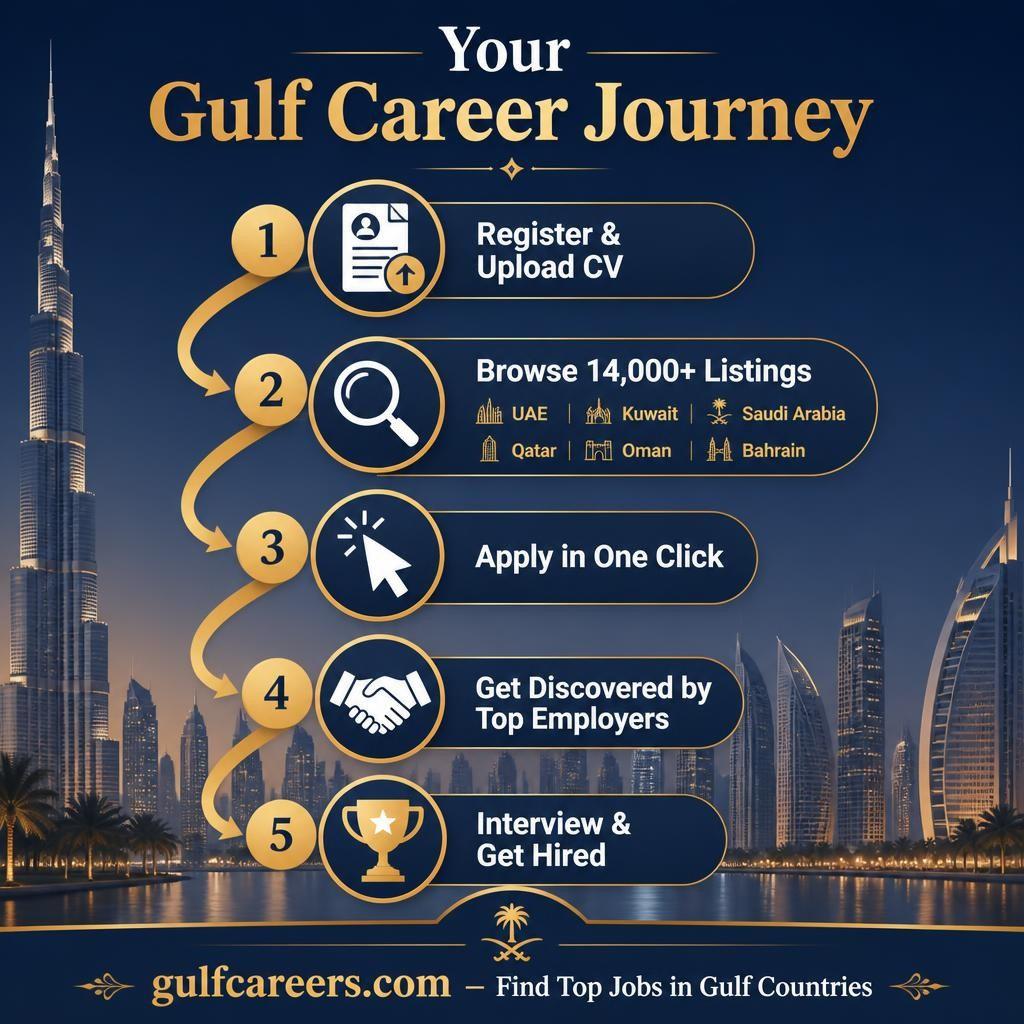
Every year, thousands of graduates, skilled workers, and experienced professionals consider moving to the Gulf in search of better career opportunities. The UAE, Saudi Arabia, Qatar, and other Gulf countries continue to attract international talent because of their growing economies, expanding industries, competitive employment packages, and opportunities to gain international work experience.
For some job seekers, the attraction is the possibility of earning a tax-free salary. For others, it is the opportunity to work in internationally connected cities such as Dubai, Abu Dhabi, Riyadh, and Doha. Young graduates may see the Gulf as a way to start their careers, while experienced professionals may be interested in advancing into higher-level positions.
However, knowing that opportunities exist in the Gulf is very different from knowing how to successfully find and secure a job there.
The Gulf employment market can be highly competitive, and hiring practices vary from one country to another. A CV that works well for a position in Dubai may need to be adjusted for an employer in Riyadh. Some companies may complete their recruitment process within a few weeks, while others may take considerably longer. Job seekers must also be careful because fraudulent job advertisements and fake recruitment offers are common online.
This guide explains how to approach the Gulf job market, where to search, how to improve your applications, and what fresh graduates and experienced professionals should consider before applying.
Why Are So Many People Interested in Working in the Gulf?
The Gulf region has become an important destination for international workers because of the wide range of industries operating across countries such as the UAE, Saudi Arabia, and Qatar.
Major sectors including construction, finance, energy, logistics, tourism, healthcare, technology, retail, real estate, and infrastructure regularly require skilled employees.
Another attraction is the overall employment package. Depending on the employer, position, and level of experience, workers may receive benefits such as housing allowances, transportation allowances, medical insurance, annual airfare, bonuses, or other benefits in addition to their salary.
International experience is another major reason professionals consider the region.
Working in the Gulf can expose employees to multicultural teams, international customers, different business practices, and large-scale projects. A few years of relevant experience in the region can add valuable international exposure to a professional CV.
If your goal is to work in UAE, it is useful to approach your job search like a structured project. Instead of applying randomly to hundreds of unrelated positions, decide which country, city, industry, and type of position you want to target.
You should also decide how much time you can realistically spend searching and applying every week. A focused job search is generally more useful than sending the same application to every vacancy you see.
Understanding UAE Job Vacancies
The UAE remains one of the major employment destinations in the Gulf and offers opportunities across a broad range of industries.
Dubai, Abu Dhabi, Sharjah, and other emirates have employers hiring in areas such as construction, hospitality, engineering, healthcare, banking, retail, sales, administration, information technology, logistics, and real estate.
When searching through UAE job vacancies, you will encounter several different types of employers and recruiters. Some vacancies are posted directly by companies, while others are advertised by recruitment agencies, staffing companies, consultants, or businesses operating within free zones.
It is important to understand who is advertising the position. Direct employers may handle the recruitment process themselves, while recruitment agencies may be representing several companies and could consider your CV for multiple openings.
A dedicated job portal can make this process easier by bringing different opportunities together.
For example, on Gulf Careers, candidates can search for vacancies based on country, city, job category, and experience level. This can be more convenient than checking many different websites individually when you are trying to find jobs in UAE.
Timing is also important.
Some Gulf vacancies can attract many applications quickly, particularly in areas such as hospitality, sales, retail, and project-based employment. Checking the latest job vacancies in UAE regularly allows you to identify new positions before they have been open for a long time.
Instead of sending twenty generic applications at once, consider spending time each day reviewing newly posted jobs and submitting two or three applications that genuinely match your qualifications.
You should also be careful when you see vacancies in UAE advertised through social media posts, WhatsApp groups, or forwarded messages. While legitimate opportunities can appear on social platforms, fraudulent advertisements can spread quickly through these channels.
Whenever possible, verify the vacancy through the employer's official website or a reputable job portal before providing personal information or paying any fees.
Finding Jobs in the UAE as a Fresher
For graduates entering the job market for the first time, finding employment can be challenging. Many job descriptions ask for previous experience, even when the position appears relatively junior.
However, this does not mean that fresh graduates have no opportunities.
Employers in the UAE recruit entry-level candidates in areas including sales, customer service, administration, marketing, operations, banking, hospitality, retail, and technology.
If you are searching for a UAE job vacancy for freshers, your search strategy should be slightly different from that of an experienced professional.
Use Appropriate Job Search Keywords
When searching for beginner-friendly positions, look for terms such as:
- Graduate
- Trainee
- Junior
- Associate
- Entry-level
- Executive
- 0–1 year experience
- Fresh graduate
The word "executive" can sometimes be misleading because, in Gulf job titles, it may refer to an entry-level professional rather than a senior executive.
Use Internships and Projects as Experience
If you have never held a full-time position, do not assume that your CV has nothing valuable to show.
Internships, university projects, freelance assignments, volunteer work, certifications, and practical projects can demonstrate useful skills.
Rather than simply listing an internship or project, explain what you actually accomplished. Mention what you created, improved, analyzed, managed, or delivered.
Be Open to Your First Opportunity
Your first job does not necessarily have to be your final career destination.
A graduate interested in marketing, for example, might begin in sales, customer service, administration, or another related role and later move into marketing after developing professional experience.
The initial goal should be to develop useful skills, understand workplace expectations, and establish a professional track record.
Candidates searching for jobs in UAE for freshers should also understand the hiring process. Recruitment can involve applications, screening calls, interviews, offer letters, work permits, medical requirements, and Emirates ID procedures.
Understanding these steps can make the process less confusing. Gulf Careers also provides information about the UAE job hiring process from application to work visa.
Entry-Level Industries to Consider
There are several areas where graduates may find opportunities:
- Sales and telesales: Communication skills, motivation, and confidence can be important.
- Customer service and administration: These roles can provide valuable experience in business operations.
- Digital marketing and content: Portfolios and practical work can sometimes be as important as formal qualifications.
- Banking and finance support: Junior accounting, credit processing, and related positions can provide a starting point for finance careers.
- Hospitality and retail: These sectors recruit large numbers of employees and may offer opportunities for career progression.
When evaluating your first offer, salary should not be the only consideration. Training, management quality, responsibilities, career development, and future opportunities can also affect the value of an entry-level position.
Before negotiating, it can be useful to understand the difference between immediate salary expectations and longer-term career growth. Gulf Careers discusses this topic in its guide to salary versus career growth for freshers in the UAE.
IT Careers and High-Paying Jobs in the UAE
Technology professionals have a wide range of opportunities across the UAE.
IT jobs in UAE include software development, cybersecurity, cloud computing, data analysis, network engineering, technical support, ERP systems, and systems administration.
As organizations continue adopting digital technologies, candidates with practical technical skills can have opportunities across both government and private-sector organizations.
For technology candidates, a few things can strengthen a CV.
A GitHub account, portfolio, technical projects, certifications, or documented examples of your work can help demonstrate practical ability.
Relevant certifications in areas such as cloud computing, networking, or cybersecurity can also strengthen an application.
Most importantly, your CV should explain what you accomplished rather than simply providing a long list of technologies.
For example, instead of listing ten programming languages without context, explain how you used a particular technology to build a project, solve a problem, reduce processing time, or improve a system.
Many job seekers also search for the highest paying jobs in UAE. Salaries vary significantly according to industry, company, qualifications, experience, and seniority, so there is no single fixed list.
Higher-paying opportunities are commonly associated with senior positions in areas such as finance, banking, specialized engineering, project management, healthcare, technology, cybersecurity, and executive leadership.
These roles generally require substantial experience, professional qualifications, specialized knowledge, or management responsibilities.
If your long-term objective is a higher salary, focus on building expertise rather than simply changing countries. Certifications, specialization, measurable achievements, and relevant professional experience can all contribute to progression into more senior salary levels.
Dubai Job Opportunities and Competition
Dubai is one of the most internationally recognized business centers in the Gulf. It attracts companies, professionals, entrepreneurs, and job seekers from many countries.
This creates a large number of opportunities, but it also means that competition can be intense.
Understanding Dubai job hiring patterns can help you organize your search.
Hospitality, retail, tourism, and events may experience increased recruitment around major tourism and shopping periods. Corporate positions, finance roles, and professional services may follow different hiring cycles, while construction and real estate recruitment can be influenced by project activity.
When looking at job opportunities in Dubai, do not limit your search to famous multinational companies.
Dubai has a large number of small and medium-sized businesses, specialist companies, free zone organizations, and growing firms. These employers can provide valuable career experience and may advertise positions through job portals rather than highly visible corporate career websites.
You can explore current Dubai job openings by category across areas such as sales, engineering, finance, administration, and other sectors.
Your location and availability can also matter.
Clearly state where you are currently based and, if relevant, how quickly you can attend an interview or start work. Employers may want to understand whether a candidate is already in the UAE or would need to relocate.
Abu Dhabi Job Opportunities
Dubai often receives the most attention from international job seekers, but Abu Dhabi should not be ignored.
The capital has a strong employment base connected to energy, government-related organizations, finance, healthcare, education, logistics, industry, and large infrastructure projects.
Because of the nature of many organizations in Abu Dhabi, some recruitment processes can be structured around long-term projects and established institutions.
Candidates looking to find job in Abu Dhabi should search according to their professional field rather than treating the city as one single job market.
An engineer, finance professional, healthcare worker, and education specialist will naturally need to target different types of employers.
There are also jobs in Abu Dhabi for freshers, particularly in administration, sales, customer service, accounting support, technical positions, and junior engineering roles.
Strong communication skills and a willingness to learn can help graduates compete for entry-level opportunities.
Before accepting a role, consider the practical side of relocating or working in Abu Dhabi. Accommodation, transportation, commuting time, and everyday expenses can differ from other UAE locations.
When searching for job opportunities in Abu Dhabi or checking job vacancies in Abu Dhabi, keep track of your applications.
A simple spreadsheet containing the company name, position, application date, contact person, and follow-up date can prevent you from losing track of opportunities.
If there has been no response after a reasonable period, a short and professional follow-up message may help reopen the conversation.
You can begin your search with the Gulf Careers page for Abu Dhabi jobs.
Sharjah Jobs and Employment Opportunities
Sharjah is another important location for job seekers in the UAE.
The emirate has employment opportunities in education, manufacturing, logistics, trading, media, administration, and small businesses.
Some professionals also choose to live in Sharjah while working in Dubai because housing and living costs can differ between the two locations.
Candidates monitoring job hiring in Sharjah should consider industrial companies, trading businesses, logistics organizations, and technical employers.
For someone starting a career, a Sharjah-based opportunity may provide useful experience while allowing them to live in a location that fits their budget and lifestyle.
Accountant Jobs Across the Gulf
Accounting and finance remain important employment categories throughout the Gulf because businesses of all sizes require professionals to manage their financial operations.
Accountants may be responsible for accounts payable and receivable, financial reporting, auditing, tax compliance, budgeting, payroll, and other financial functions.
If you are looking for accountant jobs in Gulf countries, there are several areas worth strengthening.
Develop Software Skills
Employers frequently mention accounting platforms such as Tally, QuickBooks, SAP, and Oracle in job descriptions.
Being comfortable with relevant accounting software can make your CV more competitive.
Understand Local Tax and Compliance Requirements
Knowledge of UAE VAT, corporate tax, or equivalent regulations in other Gulf countries can be valuable.
Employers often want accountants who understand the regulatory environment in which the company operates.
Highlight Professional Qualifications
Professional certifications and qualifications such as ACCA, CMA, CPA, and CA can be valuable for finance professionals and may support progression into more advanced roles.
Demonstrate Accuracy
Accounting requires attention to detail and reliability.
Your own CV should reflect that standard. Spelling mistakes, inconsistent dates, incorrect figures, and formatting errors can create an unfavorable impression for finance-related positions.
Looking Beyond the UAE: Qatar and Saudi Arabia
The UAE is a major Gulf employment market, but it is not the only option.
Depending on your qualifications and industry, Qatar and Saudi Arabia may also offer relevant career opportunities.
Jobs in Qatar are available across sectors including energy, construction, engineering, aviation, hospitality, and services.
Large projects and national development initiatives can create demand for technical professionals, skilled workers, engineers, and specialists.
Some employers may organize structured recruitment campaigns with specific interview schedules, so candidates should pay attention to application deadlines.
Saudi Arabia is also undergoing significant economic and industrial development.
Jobs in Saudi Arabia are available across traditional industries as well as expanding areas such as tourism, entertainment, technology, healthcare, infrastructure, and renewable energy.
The country's Vision 2030 program has supported diversification and investment across multiple sectors.
Within Saudi Arabia, jobs in Riyadh are particularly relevant for professionals interested in the country's capital and major business and government center.
Riyadh has opportunities in consulting, finance, technology, project management, and organizations connected to government and major development initiatives.
Other cities, including Jeddah and Dammam, also have opportunities based on their particular industries.
Job seekers should not assume that the same CV or application strategy will work equally well across every Gulf country.
Read each job description carefully and adjust your application to match the employer's requirements.
Job Application Tips for the Gulf
Regardless of which Gulf country you target, several basic practices can improve the quality of your applications.
1. Customize Your CV
Avoid using exactly the same CV for every job.
Read the job description and identify the skills, qualifications, responsibilities, and keywords that genuinely apply to your experience.
Applicant tracking systems and recruiters often look for relevant terms, so tailoring your CV can make it easier for your application to demonstrate its relevance.
2. Keep Your CV Clear
For most applications, a concise CV with clear sections is easier to review.
Use straightforward headings and focus on measurable achievements where possible.
Your contact information should be accurate, and your email address should look professional.
3. Explain Your Current Status
Depending on the position, employers may want to know your current location, nationality, notice period, and visa status.
Providing this information clearly can help recruiters understand your availability.
4. Prepare for Video Interviews
Many companies conduct an initial interview online.
Test your internet connection, camera, microphone, and lighting before the interview. Dress appropriately, research the company, and be prepared to discuss your experience and the requirements of the position.
Being technically prepared can prevent avoidable problems during an interview.
5. Maintain a Professional Online Profile
A complete LinkedIn profile can help recruiters understand your background and may increase your visibility to employers searching for candidates.
Keep your employment history, education, skills, and contact information up to date.
6. Follow Up Professionally
Following up does not mean sending repeated messages every day.
A short and polite follow-up after an interview or after a reasonable period following an application can demonstrate continued interest.
How to Protect Yourself From Gulf Job Scams
The large number of people searching for Gulf jobs has also created opportunities for scammers.
Job seekers should be cautious whenever an offer seems unusually easy or requires money upfront.
Here are several basic precautions.
Never pay someone simply to obtain a job. Legitimate recruitment processes should not require candidates to pay suspicious "job placement" fees. UAE labor rules generally prohibit charging job seekers recruitment fees.
Be careful with unsolicited offers. If someone contacts you unexpectedly and promises a highly paid position without conducting a meaningful interview or assessment, verify the opportunity carefully.
Research the company. Check the company's website, business information, physical presence, and official email domain.
Read the employment contract. Before resigning from your existing job, purchasing travel tickets, or relocating, make sure the employment terms are clearly documented.
Check the salary, working hours, responsibilities, benefits, contract period, and other important conditions.
Use established job platforms. Organized job portals and official company career pages provide a better starting point than random advertisements forwarded through messaging applications.
If an offer appears suspicious, take time to verify it rather than feeling pressured to act immediately.
Final Thoughts: Building a Successful Gulf Job Search
Finding employment in the Gulf requires more than simply sending applications.
The most useful approach is to identify your target market, understand the industries hiring ther
