

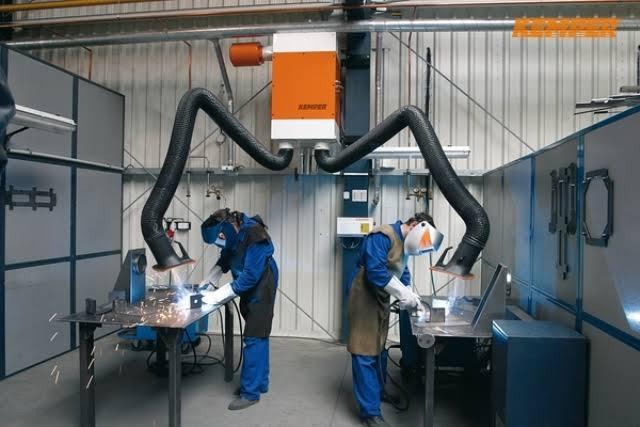

Industrial workplaces need effective ways to remove dust, fumes, and smoke from the air. Woodworking shops, factories, and workshops produce airborne pollutants during cutting, grinding, welding, and other tasks. Without proper extraction, these pollutants can affect air quality, collect on equipment, and create health and safety risks. A well-designed industrial ductwork system carries polluted air away from its source and directs it to suitable collection or exhaust equipment. The right setup depends on the type of pollutant, the work process, and the required airflow. Poor design can reduce extraction performance and increase running costs.
Here, we will explain the main system components, available options, installation steps, and maintenance needs to help you make an informed decision.
How Does Industrial Ductwork Work?
Industrial ductwork carries contaminated air from workstations to a suitable collection or exhaust point. It works with extraction hoods, fans, and filters to control airborne pollutants.
The process involves four main steps.
-
Capture. A hood collects dust or fumes near their source.
-
Transport. Ducts carry the polluted air through the system.
-
Filtration. Suitable equipment removes particles or other contaminants.
-
Discharge. The treated air is released outdoors or returned indoors only when appropriate and permitted.
Capturing pollutants near their source is often more effective than removing them after they spread throughout the room.
What Are the Main Components of an Extraction System?
Each component affects system performance and must suit the work being carried out.
Extraction Hoods and Ducts
Hoods capture dust and fumes before they spread. For example, a woodworking machine may need a hood close to its cutting area, while a welding station may need an extraction arm near the welding plume.
Ducts connect these pickup points to the collection equipment. Keep the layout practical, with suitable duct sizes and fewer unnecessary bends, to limit airflow resistance.
Fans, Collectors, and Filters
Fans move air through the duct network. Their capacity must match the airflow needs and resistance of the complete system.
Dust collectors remove solid particles, using options such as cartridge filters, bag filters, or cyclones. The right choice depends on particle size, dust levels, and material properties. Dust filters do not necessarily remove harmful gases or vapors, which may need separate treatment.
Read Also: What’s the Best Time of Year for Air Duct and HVAC Cleaning?
Which Industrial Ductwork System Should You Choose?
The best option depends on the number of workstations, the type of process, available space, and future needs.
|
System type |
Main benefit |
Suitable use |
|
Central extraction |
Serves several workstations |
Larger factories and workshops |
|
Dedicated extraction |
Serves one machine or process |
Small workshops or specialist tasks |
|
Modular extraction |
Allows future changes |
Workplaces planning expansion |
A central system can reduce the need for separate collectors, but it requires careful airflow planning. A dedicated unit may be easier to manage for one machine, although several units can take up more space. A modular system offers flexibility, but adding branches can change airflow throughout the network. Have the system checked whenever equipment or extraction points change.
How Do You Choose the Right Duct Material?
Duct material affects durability, cleaning, and cost. Consider the following options.
-
Galvanized steel. Suitable for many general ventilation and dust extraction applications.
-
Stainless steel. Useful where corrosion resistance or demanding cleaning conditions matter, although it usually costs more.
-
Flexible ducting. Helps connect moving equipment or adjustable pickup points. Long flexible sections can increase airflow resistance.
-
Specialist materials. Certain chemicals, corrosive fumes, or high temperatures may require materials designed for those conditions.
Check the material’s resistance to corrosion, wear, and temperature before choosing it. Combustible dust may also require specific fire and explosion controls.
What Should You Check Before Installation?
Follow these steps to plan a suitable system and avoid costly design problems.
-
Identify the pollutants. List the dust, fumes, and vapors produced by each task. Review safety data sheets where available.
-
Map extraction points. Mark the machines and work areas that need ventilation. Consider worker positions and material movement.
-
Calculate airflow. Ask a ventilation specialist to determine the airflow required at each hood and the pressure needed across the system.
-
Plan the duct route. Check duct lengths, bends, branches, cleaning access, and space for equipment.
-
Select collection equipment. Match filters and collectors to the pollutants and process.
-
Test the system. Measure airflow and pressure after installation to confirm that the system performs as designed.
Do not select a fan based only on its advertised airflow rating. It must deliver suitable airflow against the resistance of the complete duct network.
What Common Problems Should You Avoid?
Poor planning and maintenance can reduce extraction performance.
-
Blocked filters. Check filters regularly and clean or replace them according to manufacturer instructions.
-
Leaking joints. Inspect connections for damage that could reduce airflow.
-
Incompatible materials. Do not connect different processes without checking chemical, fire, and explosion risks.
-
Poor cleaning access. Include suitable inspection points so workers can maintain the system safely.
Industrial workplaces handling hazardous pollutants should have a qualified specialist assess the system and applicable safety requirements.
How Should You Maintain Industrial Ductwork?
Regular checks help identify faults before they affect production or workplace safety.
-
Check airflow and compare readings with the original design values.
-
Inspect ducts, joints, and fittings for leaks or damage.
-
Check fans and motors for unusual noise or vibration.
-
Clean collectors and filters according to manufacturer instructions.
-
Record inspections, repairs, and filter changes.
Inspection frequency depends on the materials handled, operating hours, and system requirements. If airflow drops, investigate the cause rather than simply increasing fan speed. Businesses that need this type of building ventilation maintenance can contact MMI Home Improvement Pro’s Commercial Air Duct Cleaning Service. They have the best option for commercial air duct cleaning in Cumming and nearby areas. Ask the team about the areas covered, the cleaning method, and the scope of work before booking.
Summary
Effective industrial ductwork captures pollutants near their source, maintains suitable airflow, and uses collection equipment suited to the process. Before installation, identify the pollutants, assess extraction points, and confirm airflow and safety needs. Proper testing and regular maintenance help keep the system working reliably.
