

How Pest Control Companies Can Reduce Pesticide Use Through Integrated Pest Management

Pest control companies are increasingly looking for practical ways to manage infestations while minimizing unnecessary pesticide applications. Integrated Pest Management (IPM) provides a structured approach that combines inspection, pest identification, preventive maintenance, monitoring, and targeted treatments to deliver more sustainable results. Rather than relying on routine spraying, professionals can identify the underlying causes of infestations and select control methods based on evidence.
For example, a tick exterminator in Illinois can use IPM principles to assess tick habitats, identify areas of high activity, manage vegetation, and recommend appropriate targeted treatments when necessary. This approach helps address pest problems while considering the surrounding environment, property conditions, and the safety of people and pets.
For pest management businesses, adopting eco-friendly pest control practices can also improve service quality, strengthen customer trust, and support long-term prevention. The objective is not to eliminate pesticide use in every situation. Instead, it is to use pesticides responsibly when monitoring and other control methods indicate that treatment is necessary.
Table of Contents
-
What Is Integrated Pest Management?
-
Why Pest Control Companies Should Reduce Pesticide Use
-
7 Ways to Reduce Pesticide Use Through IPM
-
IPM Methods for Common Pests in Illinois
-
Comparing Traditional Pest Control and IPM
-
How to Measure the Success of an IPM Program
-
Common Challenges and Practical Solutions
-
Frequently Asked Questions
What Is Integrated Pest Management?
Integrated Pest Management is a science-based approach that combines multiple pest control methods to manage infestations effectively while minimizing risks to people, property, and the environment.
According to the U.S. Environmental Protection Agency, IPM involves setting action thresholds, monitoring and identifying pests, preventing infestations, and selecting suitable control methods. Pesticides remain an option, but they are not automatically the first response to every pest sighting.
US EPA
+1
A professional IPM program typically includes:
-
Inspection: Identifying pest activity, entry points, moisture problems, and potential nesting areas.
-
Accurate identification: Determining the pest species and understanding its behavior.
-
Monitoring: Tracking pest activity and assessing whether intervention is necessary.
-
Prevention: Improving sanitation, sealing entry points, and removing conditions that attract pests.
-
Targeted control: Selecting the most appropriate combination of physical, mechanical, biological, and chemical methods.
-
Evaluation: Reviewing results and adjusting the plan to prevent recurring infestations.
These steps help pest control professionals make informed decisions instead of relying on repeated pesticide applications that may not address the source of a problem.
Why Should Pest Control Companies Reduce Pesticide Use?
Reducing unnecessary pesticide use can benefit customers, service providers, and the environment. However, successful pest management must still protect public health and prevent property damage.
Minimize Unnecessary Exposure
Pesticides must be selected and applied carefully. Reducing unnecessary applications can help limit avoidable exposure for occupants, pets, technicians, and other non-target organisms.
This is especially important in schools, childcare facilities, restaurants, healthcare environments, and residential properties where people may have different exposure concerns.
Protect Beneficial Organisms
Broad pesticide applications can affect beneficial insects and other non-target organisms. Targeted treatments and habitat management can help preserve organisms that contribute to ecological balance, provided the selected methods are appropriate for the situation.
Improve Long-Term Pest Prevention
Repeatedly treating visible pests without addressing their food sources, breeding conditions, or entry points may allow infestations to return. IPM focuses on correcting these underlying conditions, helping businesses develop more sustainable pest prevention plans.
Build Customer Confidence
Customers increasingly want to understand why a treatment is necessary, which methods will be used, and how future infestations can be prevented. Clear explanations, inspection records, and evidence-based recommendations help demonstrate professional accountability.
7 Ways Pest Control Companies Can Reduce Pesticide Use Through IPM
1. Conduct Detailed Inspections Before Treatment
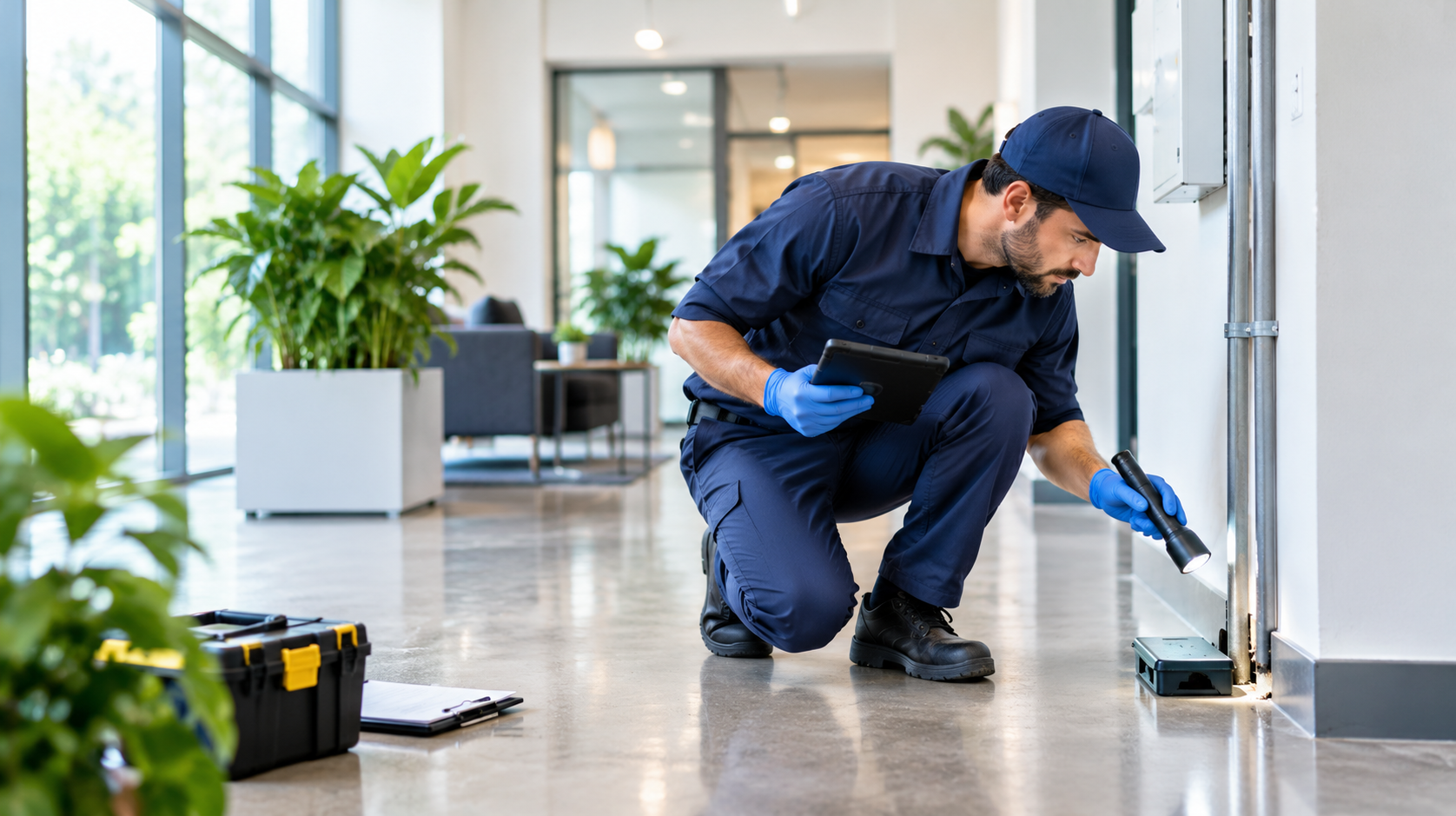
Every effective pest management plan should begin with a property inspection. Technicians need to determine which pests are present, where they are active, and what conditions are supporting their survival.
An inspection may include:
-
Checking cracks, gaps, doors, and window screens.
-
Examining kitchens, storage areas, basements, and crawl spaces.
-
Identifying leaks, standing water, and damp materials.
-
Looking for droppings, nesting materials, insect activity, and other signs of infestation.
-
Inspecting outdoor vegetation and potential pest harborage areas.
The findings help technicians select a suitable treatment instead of applying pesticides across areas where pest activity has not been identified.
2. Use Monitoring to Guide Treatment Decisions
Monitoring helps professionals understand whether pest populations are increasing, decreasing, or remaining stable. Glue boards, insect traps, rodent monitoring devices, and regular visual inspections can provide useful evidence.
Companies should maintain records of pest sightings, trap locations, activity levels, and previous treatments. These records allow technicians to identify recurring problems and determine when additional action is justified.
For example, if monitoring indicates that cockroach activity is limited to one cabinet area, the technician can investigate that location and apply an appropriate targeted control method rather than automatically treating the entire property.
3. Improve Sanitation and Remove Pest Attractants
Pests often enter properties in search of food, water, and shelter. Improving sanitation can reduce the conditions that allow infestations to develop.
Professional recommendations may include:
-
Storing food in sealed containers.
-
Cleaning food preparation and storage areas regularly.
-
Emptying waste containers and securing their lids.
-
Repairing leaking pipes and removing standing water.
-
Reducing clutter in storage rooms and utility areas.
-
Cleaning grease and food residue from difficult-to-reach surfaces.
In commercial kitchens, warehouses, and food processing facilities, sanitation should be incorporated into the regular maintenance schedule. These measures can reduce pest pressure and make other control methods more effective.
4. Seal Entry Points and Improve Pest Exclusion
Exclusion prevents pests from entering buildings or moving between vulnerable areas. It is particularly useful for rodents, ants, cockroaches, and other pests that exploit small openings.
Pest control technicians can identify gaps around pipes, damaged screens, poorly sealed doors, foundation cracks, and other potential entry points. Property owners can then arrange appropriate repairs, install door sweeps, and improve structural sealing.
Exclusion is a long-term prevention strategy because it addresses how pests enter rather than simply killing pests after they arrive.
5. Prioritize Mechanical and Physical Control Methods
Mechanical and physical techniques can reduce pest populations without depending entirely on chemical treatments.
Examples include:
-
Using appropriately placed traps for rodents.
-
Removing accessible nests when safe and legally appropriate.
-
Installing screens and physical barriers.
-
Vacuuming certain indoor pests where suitable.
-
Using heat or cold treatments when effective for the target pest.
-
Removing infested materials when appropriate.
The right method depends on the pest species, infestation severity, and property conditions. Some infestations require a combination of physical controls and professional pesticide treatment to achieve reliable results.
6. Use Targeted, Lower-Risk Pesticide Applications When Needed
IPM does not mean that every pesticide must be avoided. When preventive measures and nonchemical controls are insufficient, a suitable pesticide may be necessary.
Pest control companies can reduce unnecessary applications by:
-
Selecting products specifically labeled for the target pest and treatment location.
-
Applying products only where justified by inspection and monitoring.
-
Using appropriate baits, gels, or crack-and-crevice treatments when suitable.
-
Following label directions and applicable regulations.
-
Avoiding unnecessary broad-area spraying.
-
Providing customers with clear treatment and re-entry instructions when applicable.
The safest and most effective choice depends on the pest, product label, exposure conditions, and site requirements. A product described as natural or botanical should not automatically be considered harmless.
The EPA recommends choosing appropriate control methods based on effectiveness and risk, with less risky options considered before broader pesticide treatments.
US EPA
+1
7. Educate Customers and Schedule Follow-Up Visits
Customer cooperation is essential to long-term pest prevention. Even an effective professional treatment may produce limited results if occupants continue to leave food exposed, ignore leaks, or leave entry points unrepaired.
Technicians should explain what they discovered, which corrective actions are needed, and how customers can help prevent future infestations.
Follow-up inspections can establish whether the pest population has declined and whether the original treatment remains effective. If activity continues, the company can reassess the situation rather than repeating the same treatment without investigating the cause.
IPM Methods for Common Pests in Illinois
Different pests require different management strategies. Pest control companies should adapt their IPM programs to the pest species and the environment in which it is found.
|
Pest type |
Preventive measures |
Potential control methods |
|
Ticks |
Maintain lawns, reduce leaf litter, and manage suitable habitat |
Monitoring, habitat modification, and targeted labeled treatments when needed |
|
Ants |
Remove food sources and seal entry points |
Baits, localized treatment, and colony-focused control |
|
Cockroaches |
Improve sanitation and repair moisture problems |
Monitoring traps, baits, and targeted applications |
|
Rodents |
Secure waste and seal structural gaps |
Exclusion, trapping, and monitoring |
|
Mosquitoes |
Remove standing water and maintain drainage |
Source reduction and targeted control where appropriate |
For tick management, Illinois homeowners and professionals should pay particular attention to vegetation, leaf litter, wooded edges, and areas where wildlife or pets may move through the property. The Illinois Department of Public Health recommends habitat management and notes that labeled insecticides may be appropriate for limited high-risk areas when needed.
dph.illinois.gov
+1
A professional tick exterminator in Illinois should assess the property before recommending treatment, since tick activity and suitable control methods vary by location and site conditions.
Traditional Pest Control vs. Integrated Pest Management
|
Factor |
Conventional pesticide-focused approach |
Integrated Pest Management |
|
Initial response |
May prioritize pesticide application |
Begins with inspection and identification |
|
Prevention |
May receive less attention |
Focuses on sanitation, exclusion, and habitat management |
|
Treatment decisions |
May follow a routine schedule |
Based on monitoring and defined thresholds |
|
Pesticide use |
May involve unnecessary applications if poorly managed |
Uses targeted applications when justified |
|
Follow-up |
Often focuses on additional treatment |
Evaluates results and adjusts the plan |
|
Long-term goal |
Control the immediate pest problem |
Manage pests while reducing recurring problems and unnecessary chemical use |
IPM is not automatically pesticide-free. Its value lies in making pest control decisions based on evidence, effectiveness, and risk rather than relying on a single treatment method.
How to Measure the Success of an IPM Program
Pest control companies need measurable indicators to determine whether their strategies are working. Simply counting the number of treatments performed does not provide a complete picture of performance.
Useful indicators include:
-
Pest activity: Changes in trap counts, sightings, and other monitoring results.
-
Pesticide usage: The number of applications and quantities used, interpreted alongside pest pressure and treatment outcomes.
-
Recurring infestations: How frequently customers report the same pest problem after treatment.
-
Prevention progress: The number of identified entry points, leaks, and sanitation issues corrected.
-
Customer satisfaction: Feedback about service quality, communication, and pest activity.
-
Treatment effectiveness: Whether pest activity declines to an acceptable level and remains controlled.
Companies should review these indicators regularly. If pest activity remains high, technicians may need to reassess identification, sanitation, exclusion, or treatment selection.
Common Challenges and Practical Solutions
Customer Expectations for Immediate Results
Some customers expect every pest to disappear after one visit. However, certain infestations require monitoring, follow-up treatments, or changes to the property.
Technicians should explain realistic timelines and clarify why prevention is an important part of successful pest management.
Limited Access to Problem Areas
Clutter, inaccessible voids, structural damage, and shared walls can complicate inspections and treatments.
Companies should document access limitations and coordinate with property owners or facility managers to correct them.
Persistent Pest Activity
If pests return, repeating the same treatment may not solve the underlying issue. Professionals should review monitoring records, confirm the pest species, and investigate possible re-entry routes or untreated breeding sites.
Staff Training Requirements
IPM requires technicians to understand pest biology, inspection procedures, monitoring tools, pesticide labels, and nonchemical control methods.
Regular training helps employees make consistent, evidence-based decisions and explain recommendations clearly to customers.
Frequently Asked Questions
1. What is Integrated Pest Management in pest control?
Integrated Pest Management combines inspection, monitoring, prevention, and targeted treatments to manage pests while minimizing unnecessary pesticide use.
2. Can pest control companies eliminate pesticide use completely?
Not always. Some infestations require pesticides, but IPM helps professionals use them selectively when other measures are insufficient.
3. How does IPM reduce pesticide applications?
It identifies pest activity, removes attractants, seals entry points, and uses monitoring to determine when treatment is necessary.
4. Is eco-friendly pest control effective for commercial properties?
Yes. When properly implemented, IPM can manage commercial pest problems through sanitation, exclusion, monitoring, and appropriate targeted treatments.
5. How can Illinois homeowners reduce ticks without excessive pesticide use?
Homeowners can maintain lawns, remove leaf litter, manage suitable tick habitats, and limit conditions that attract wildlife. Targeted treatments may be necessary in areas with persistent tick activity.
6. How often should an IPM program be reviewed?
Companies should review monitoring results during routine service visits and reassess the overall plan whenever pest activity, property conditions, or treatment outcomes change.
Conclusion
Integrated Pest Management gives pest control companies a practical framework for reducing unnecessary pesticide use without compromising effective pest management. By combining thorough inspections, accurate pest identification, sanitation, exclusion, monitoring, and targeted treatments, professionals can address the conditions that allow infestations to persist.
The approach also helps businesses demonstrate responsible service practices, improve communication with customers, and make treatment decisions based on documented results.

