

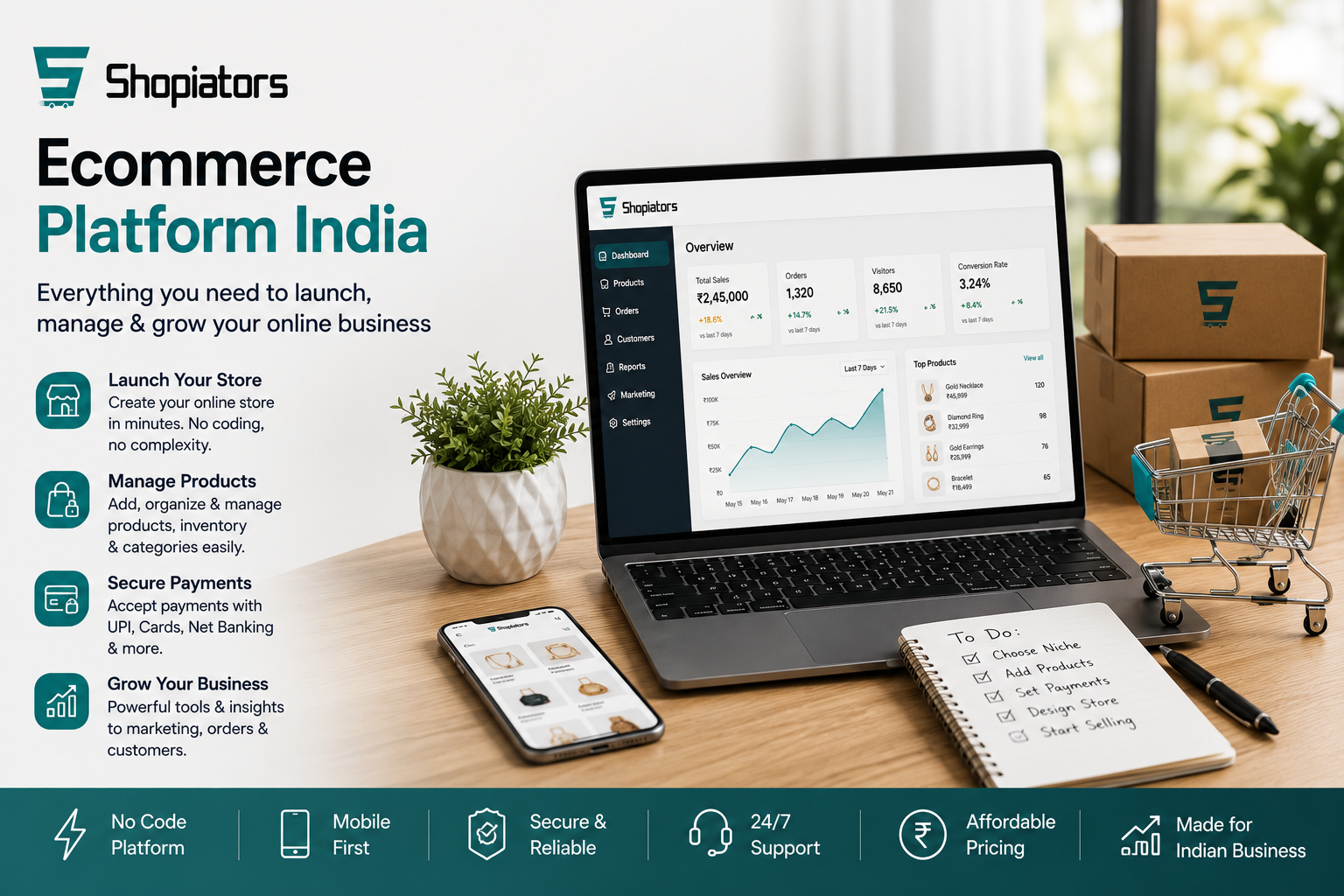
Ecommerce Platform India: A Complete Guide to Choosing the Right Online Selling Solution
India's growing digital economy has made online selling an opportunity for retailers, entrepreneurs, creators, and small businesses. Whether you want to sell clothing, jewellery, electronics, handmade products, or digital goods, choosing the right Ecommerce Platform India solution is an important step toward building your online business.
An ecommerce platform helps you create a website, display products, accept payments, manage orders, and organize inventory. The right solution should make these tasks easier while giving your business enough flexibility to grow.
What Is an Ecommerce Platform?
An ecommerce platform is a digital system that allows businesses to create and manage online stores. It provides the tools needed to display products, process purchases, and manage everyday selling activities.
Most ecommerce platforms offer features such as:
-
Website and storefront creation
-
Product listings and categories
-
Inventory management
-
Online payment integration
-
Order processing
-
Customer management
-
SEO tools
-
Mobile-friendly website layouts
-
Sales reports and analytics
The features you need depend on your business size, product category, budget, and future plans. A new seller may need a simple setup, while an established retailer may require advanced inventory and customization options.
How to Choose the Best Ecommerce Platform in India
Finding the best ecommerce platform in india requires more than comparing subscription prices. Businesses should consider how easily a platform supports their daily operations.
Ease of Use
Choose a platform that allows you to add products, update prices, edit pages, and manage orders without requiring technical assistance for every small change.
Payment Options
Check whether the platform supports payment methods suitable for your target customers. Indian businesses may need options such as UPI, cards, net banking, and other supported payment methods.
Inventory and Order Management
Good inventory tools help track available stock and reduce errors. Order management features should make it easy to review purchases and monitor fulfillment.
Customization
Your website should reflect your brand identity. Look for options to customize layouts, product pages, categories, colors, and other storefront elements.
Pricing and Scalability
Review the complete cost, including subscriptions, transaction fees, payment processing, integrations, and premium features. The platform should also support your business as the product catalog and order volume increase.
AI Ecommerce Website Builder: Create Stores More Efficiently
An AI Ecommerce Website Builder combines website-building tools with artificial intelligence to simplify parts of the store creation process.
Depending on the platform, AI may help generate initial website sections, draft product descriptions, suggest content, organize product information, and speed up repetitive tasks.
For example, a clothing seller launching a new collection can use AI to prepare initial product descriptions and then review them before publishing.
AI can save time, but it does not eliminate the need for human review. Product specifications, pricing, shipping details, and return policies must remain accurate.
What Is an AI Ecommerce Platform?
An AI ecommerce platform combines ecommerce management features with AI-assisted capabilities. Rather than focusing only on website design, it may help businesses manage several parts of the online selling process.
Useful capabilities can include content generation, product organization, workflow assistance, and tools that simplify routine store management.
When evaluating an AI-powered platform, check which tasks are genuinely automated and which still require manual work. Also consider whether the platform provides essential ecommerce features such as payments, inventory, order management, SEO, and customer support.
AI should make your business easier to manage, not introduce unnecessary complexity.
How to Start Online Store in India
If you are researching How to Start Online Store options, following a clear process can help you launch with fewer complications.
Step 1: Choose Your Products
Decide what you want to sell and identify your target customers. Research competitors, pricing, product demand, and expected costs.
Step 2: Select a Business Name
Choose a name that is easy to remember, pronounce, and associate with your products. Check domain availability and relevant trademark considerations before finalizing it.
Step 3: Choose an Ecommerce Platform
Compare platforms based on ease of use, product management, payment options, customization, pricing, and scalability.
Step 4: Build Your Store
Create the main pages, organize categories, upload product photographs, and write clear descriptions. Include important information about shipping, returns, and customer support.
Step 5: Configure Payments and Orders
Set up the available payment methods and establish a process for managing inventory, order confirmation, packaging, and delivery.
Step 6: Test Before Launch
Check your website on mobile devices and desktops. Test product pages, navigation, checkout, payment processing, and contact information before promoting the store.
No Code Ecommerce Platform India for Beginners
A no code ecommerce platform india solution allows users to build and manage online stores through visual tools instead of writing programming code.
This approach can help entrepreneurs who do not have an in-house development team. Store owners can use dashboards to add products, edit pages, organize categories, and manage orders.
No-code tools can reduce technical barriers, but businesses should still check customization options, integrations, SEO controls, and the ability to support future growth.
Best Ecommerce Platform for Beginners: What Matters Most?
The best ecommerce platform for beginners should make everyday tasks easy to understand.
Look for straightforward onboarding, simple product management, clear pricing, payment integration, mobile-friendly layouts, basic SEO tools, and accessible support.
Before making a decision, try adding a product, changing its price, creating a category, editing a page, and checking the checkout process. These practical tests help reveal whether the platform suits your working style.
Avoid choosing a platform based only on popularity or a long list of features. Focus on the tools you will actually use.
Ecommerce Platform for Small Business: Managing Costs and Growth
An ecommerce platform for small business should balance affordability, usability, and functionality.
Small businesses often have limited time and resources. A platform that simplifies inventory, order processing, website updates, and customer communication can help reduce routine work.
However, the lowest advertised price is not always the best value. Consider the cost of additional features, payment processing, domain registration, integrations, and future customization.
Also evaluate whether the platform can support new product categories, increased traffic, and higher order volumes as your business expands.
Shopify Alternatives India: Compare Before Choosing
Businesses exploring Shopify Alternatives India should compare platforms according to their own requirements.
Consider these factors:
-
Total monthly and annual costs
-
Store design and customization
-
Product and inventory management
-
Payment options
-
SEO functionality
-
AI-assisted tools
-
No-code capabilities
-
Customer support
-
Integrations and scalability
A practical comparison is more useful than relying on a single feature or advertised price. Test the workflows that matter most to your business before committing.
Common Mistakes to Avoid When Selecting a Platform
One common mistake is focusing entirely on website appearance while ignoring payments, inventory, checkout, and order management.
Another is selecting a platform without calculating its total operating cost. Businesses should also avoid publishing unverified AI-generated product information or launching without testing the customer journey.
Finally, think beyond the initial launch. Choosing a platform that fits your current needs and anticipated growth can reduce the difficulty of migrating later.
Conclusion
Choosing the right Ecommerce Platform India solution means finding a balance between cost, ease of use, functionality, and long-term flexibility.
An AI Ecommerce Website Builder can simplify store creation, while an AI ecommerce platform can assist with selected content and management tasks. A no code ecommerce platform india solution can help beginners launch without extensive programming knowledge.
Whether you are exploring How to Start Online Store options or comparing the best ecommerce platform for beginners, evaluate product management, payments, SEO, mobile performance, and total costs. Businesses looking for an ecommerce platform for small business should also consider future requirements before making a final decision.
Shopiators combines AI-assisted features and no-code ecommerce tools to help businesses create and manage online stores with less technical complexity.
