

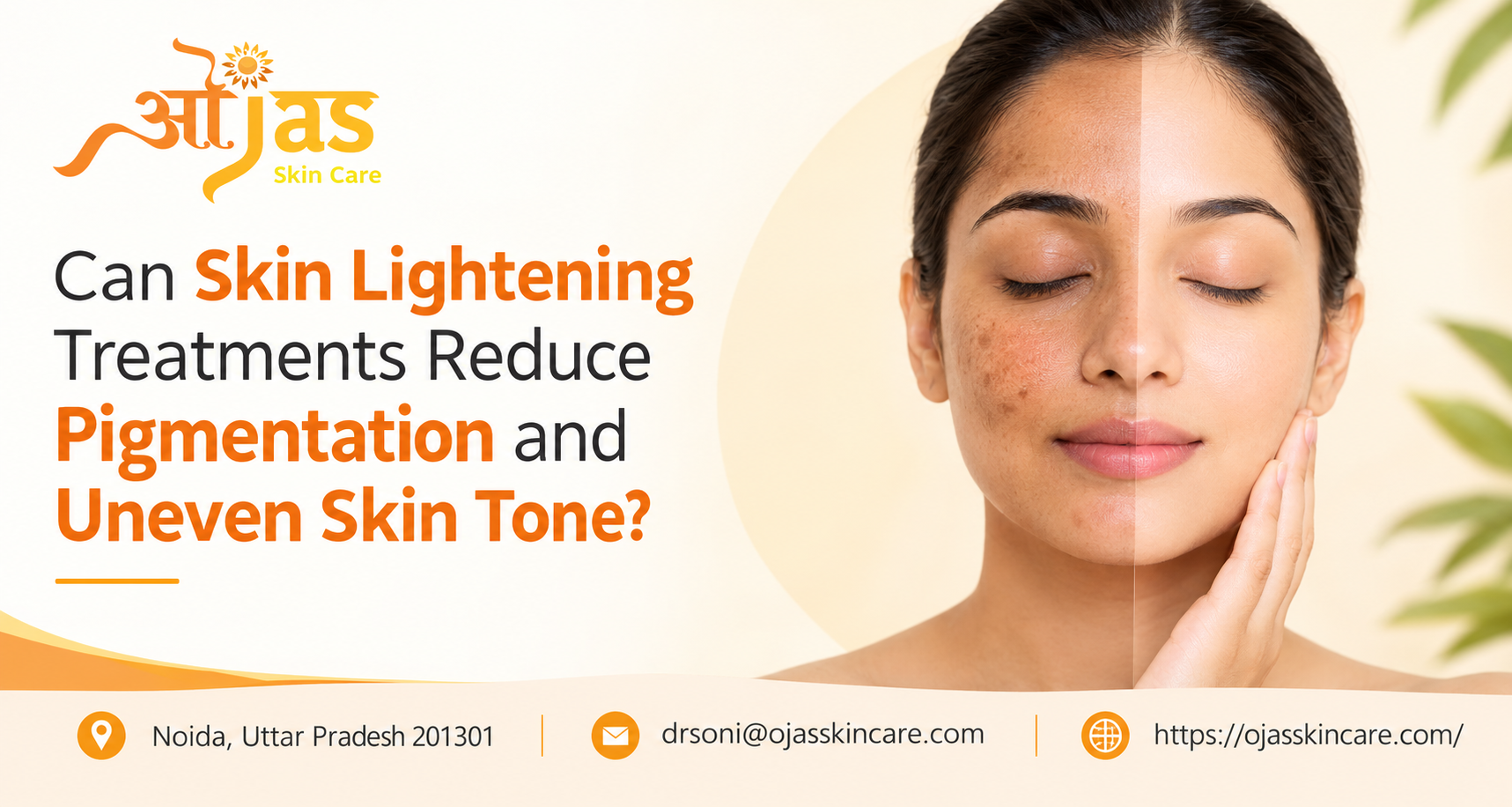
Have you ever noticed dark spots on your face, acne marks that take months to fade, or patches that make your skin tone look uneven? Pigmentation is a common concern that can affect people of different ages and skin types. Best Skin Lightening Treatment in Noida Sun exposure, hormonal changes, acne, and skin inflammation are some of the reasons these marks develop.
The good news is that certain skin lightening treatments can help reduce the appearance of pigmentation and improve uneven skin tone. However, the right treatment depends on the cause of pigmentation, your skin type, and the depth of the discolouration.
At Ojas Skin Care, Sector 27, Noida, patients can explore professional treatment options for pigmentation and other skin concerns.
What Causes Pigmentation and Uneven Skin Tone?
Melanin is the natural pigment that gives your skin its colour. When melanin builds up unevenly, dark spots or patches may appear on the face and other areas of the body.
Some common causes include:
-
Sun exposure: UV radiation can increase melanin production and make dark spots more noticeable.
-
Acne marks: Inflammation after pimples can leave brown or dark marks on the skin.
-
Hormonal changes: Melasma can cause persistent patches, particularly on the cheeks, forehead, and upper lip.
-
Ageing: Long-term sun exposure can contribute to age spots and uneven skin tone.
-
Skin irritation: Harsh products or inflammation may trigger post-inflammatory pigmentation.
Identifying the cause is important because not every type of pigmentation responds to the same treatment.
Can Skin Lightening Treatments Really Reduce Pigmentation?
Yes, selected professional treatments can help improve certain types of pigmentation and uneven skin tone. However, results vary depending on the skin condition, treatment method, and individual response.
For example, some superficial dark spots may respond to targeted treatments, while melasma can be more difficult to manage and may require long-term care. A dermatologist may recommend topical skincare, laser treatment, a chemical peel, or a combination of approaches.
At Ojas Skin Care, available options include Fine Beam Q-Switch Laser and Cosmelan peel for selected pigmentation concerns. The appropriate choice should be made after assessing the skin rather than selecting a procedure based only on its popularity.
Which Treatments Can Help Improve Pigmentation?
1. Fine Beam Q-Switch Laser
Q-Switch Laser delivers short pulses of laser energy that target selected pigment in the skin. Depending on the type of pigmentation and the laser settings, it may help reduce the appearance of certain dark spots and sun-related pigmentation.
Ojas Skin Care offers Fine Beam Q-Switch Laser as part of its skin treatment services. Before starting treatment, a dermatologist should evaluate the pigmentation, skin type, and risk of developing additional dark marks.
The number of sessions required varies from person to person. Temporary redness, swelling, and changes in pigmentation are possible, so professional guidance and appropriate aftercare are important.
2. Cosmelan Peel
Cosmelan peel is a specialised depigmentation treatment used for concerns such as hyperpigmentation and uneven skin tone.
Ojas Skin Care offers Cosmelan peel as part of its pigmentation treatment options. The procedure involves professional application and a prescribed home-care routine. Depending on the individual's skin, peeling, irritation, and sensitivity may occur during recovery.
It is not suitable for everyone, so a dermatologist should assess your skin before recommending this treatment.
3. Medifacials for Dull Skin
Sometimes, skin looks uneven or tired because of dehydration, dryness, or surface buildup rather than significant pigmentation.
Ojas Skin Care also offers Aqua Shine, a treatment described by the clinic as using jet-spray water technology for cleansing and moisturisation. A medifacial may help improve the appearance of dull skin, but it should not be considered a replacement for medical treatment when persistent pigmentation is the main concern.
Why Choose Ojas Skin Care for Skin Lightening Treatment in Noida?
Choosing a skin clinic involves more than finding a treatment that promises quick results. Understanding the cause of pigmentation, selecting an appropriate procedure, and receiving professional aftercare are all important parts of the process.
Ojas Skin Care provides skin, hair, and aesthetic treatments at its Sector 27, Noida clinic. Its treatment services include Fine Beam Q-Switch Laser, skin lightening treatments, acne and scar care, and medifacials.
Dr. Soni Nanda, MD in Dermatology, is a gold medallist from Maulana Azad Medical College. According to Ojas Skin Care's official website, she has more than 20 years of experience in dermatology and cosmetology, including experience performing laser-based skin surgeries. The clinic's website also states that she has performed thousands of filler procedures and participates in national and international dermatology conferences and hands-on workshops to stay updated with developments in the field.
This background in dermatology and aesthetic procedures is relevant when discussing treatment options for different skin concerns. Pigmentation can have several underlying causes, and the most suitable approach depends on an individual's skin condition rather than a one-size-fits-all solution.
For anyone researching the Best Skin Lightening Treatment in Noida, Ojas Skin Care offers an opportunity to discuss pigmentation concerns with a qualified professional and understand the available treatment options, expected benefits, and aftercare requirements.
How Can You Prevent Pigmentation From Returning?
Even after pigmentation improves, new dark spots may develop if the underlying triggers remain. A consistent skincare routine and sun protection can help maintain results.
Here are a few practical steps:
-
Apply broad-spectrum SPF 30 or higher sunscreen every day.
-
Reapply sunscreen approximately every two hours when outdoors and after swimming or heavy sweating.
-
Use a gentle cleanser and moisturiser suitable for your skin.
-
Avoid harsh scrubs and unverified skin-lightening creams.
-
Follow your dermatologist's instructions after laser treatment or a chemical peel.
-
Seek professional advice if pigmentation appears suddenly, changes, or worsens.
Remember, the goal of treatment should be to improve unwanted pigmentation and achieve a more even-looking complexion while protecting your skin's health.
Final Thoughts
Skin lightening treatments can help improve certain types of pigmentation and uneven skin tone, but no single procedure works for everyone. Fine Beam Q-Switch Laser, Cosmelan peel, and medifacials serve different purposes, so the right option depends on the cause of your skin concern.
At Ojas Skin Care, a professional consultation can help you understand which treatments may be appropriate for your skin. Combining suitable treatment with daily sun protection and consistent aftercare can support healthier-looking skin over time.
FAQ’s
1. Can skin lightening treatments reduce pigmentation?
Yes, selected treatments can improve certain types of pigmentation, depending on the cause and severity.
2. Which treatment is suitable for dark spots?
Q-Switch Laser or a depigmentation peel may be considered after a professional skin assessment.
3. Can pigmentation return after treatment?
Yes. Sun exposure, hormonal changes, and other underlying triggers can cause pigmentation to return.
4. Is skin lightening treatment safe?
Safety depends on the procedure, skin type, and professional assessment. Side effects are possible, so appropriate supervision is important.
5. Where can I get pigmentation treatment in Noida?
Ojas Skin Care offers pigmentation-related treatments at its Sector 27, Noida clinic.
