

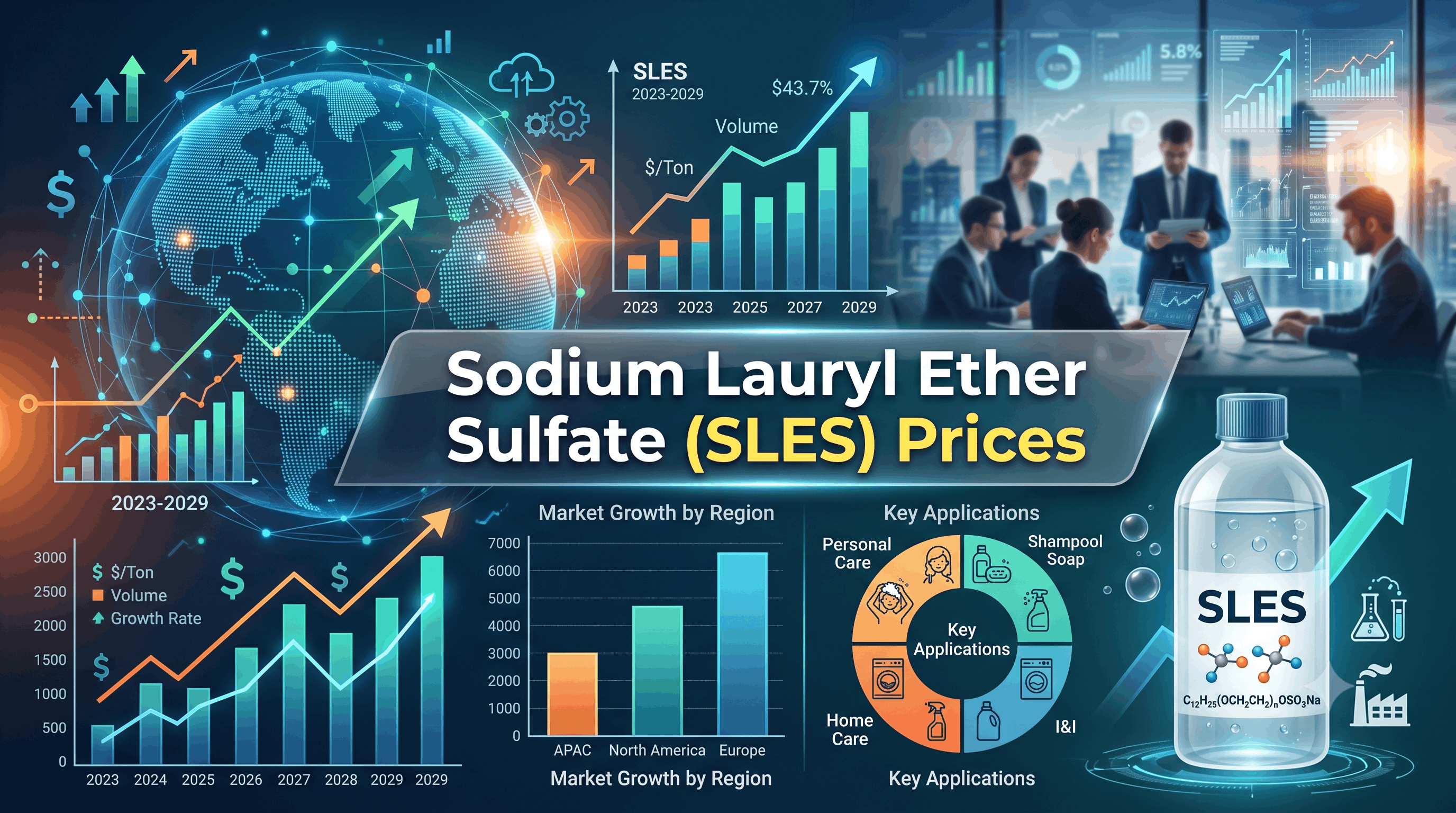
Sodium Lauryl Ether Sulfate (SLES) Prices Index and Trend Chart with Quarterly Forecast Prices

Sodium Lauryl Ether Sulfate (SLES) Prices showed notable regional differences in Q3 2026, with Germany recording the highest reported price at USD 1435/MT, followed by China at USD 1045/MT. South Korea stood at USD 966/MT, while the USA recorded USD 927/MT and Indonesia had the lowest price at USD 914/MT. These variations reflect differences in feedstock economics, production costs, regional supply structures, transportation expenses, and downstream market conditions.
SLES is an important anionic surfactant used in personal care products, household detergents, and industrial cleaning formulations. Its pricing is influenced by the availability and cost of fatty alcohols and ethylene oxide, manufacturing conditions, and demand from consumer goods producers. The Q3 regional price spread highlights the value of monitoring the IMARC Price Index and comparing sourcing options to manage procurement costs and maintain reliable supply.
For detailed insights, charts, and forecasts, explore:
https://www.imarcgroup.com/sodium-lauryl-ether-sulfate-pricing-report/requestsample
Regional Sodium Lauryl Ether Sulfate (SLES) Prices Outlook – Q3 2026: Where Are Prices Highest?
- USA: USD 927/MT
- China: USD 1045/MT
- Germany: USD 1435/MT
- South Korea: USD 966/MT
- Indonesia: USD 914/MT
Germany recorded the highest reported price at USD 1435/MT, while Indonesia had the lowest at USD 914/MT. This difference can reflect variations in manufacturing and energy costs, feedstock sourcing, import requirements, distribution expenses, and local supply-demand conditions. Price comparisons should also account for product concentration, grade, and delivery terms when these differ between suppliers.
China's reported price was higher than those in the USA, South Korea, and Indonesia, while South Korea occupied an intermediate position. These regional levels illustrate why buyers should evaluate total delivered costs, supplier reliability, and product specifications rather than basing sourcing decisions on a single headline price.
Regional Price Analysis of Sodium Lauryl Ether Sulfate (SLES) Prices – Q3 2026
USA
The USA recorded SLES prices of USD 927/MT. Pricing can be influenced by ethylene oxide and fatty alcohol costs, domestic production economics, import availability, and transportation expenses. Demand from household cleaning products, personal care formulations, and industrial cleaning supports recurring consumption. Procurement teams can compare domestic offers with imported material while considering lead times and delivered costs.
China
China reported prices of USD 1045/MT. Its substantial chemical manufacturing base and downstream detergent and personal care industries make production conditions, feedstock costs, and export demand relevant to market pricing. Buyers may benefit from monitoring producer availability, inventory conditions, and export quotations when assessing purchasing opportunities.
Germany
Germany recorded the highest reported regional price at USD 1435/MT. Production and distribution costs, energy expenses, feedstock sourcing, and regional supply arrangements can contribute to its price position. Demand from household care, cosmetics, and industrial cleaning formulators remains important. Buyers should assess supplier contracts, delivery terms, and product specifications when evaluating alternatives.
South Korea
South Korea recorded prices of USD 966/MT. The regional market is influenced by feedstock availability, chemical manufacturing economics, domestic consumption, and trade flows across Asia. Demand from personal care and household cleaning producers can support regular purchasing, while changes in export availability and logistics may affect procurement costs. Buyers should review supplier quotations against delivery requirements and inventory needs.
Indonesia
Indonesia reported the lowest price among the five regions at USD 914/MT. Local access to palm-derived feedstocks can be relevant to surfactant production economics, although the effect depends on actual input costs, processing conditions, and sourcing arrangements. Household detergents, personal care products, and cleaning formulations provide important downstream outlets. Buyers should consider supplier consistency, quality specifications, and freight when evaluating Indonesian material.
Supply and Demand Overview – Q3 2026
SLES production generally involves ethoxylating fatty alcohols and subsequently sulfating and neutralizing the resulting intermediate. The availability and cost of fatty alcohols, ethylene oxide, and other processing inputs influence production economics. Plant operating rates, inventories, trade flows, and transportation conditions can affect regional availability, although the supplied quarterly price levels do not independently confirm any specific shortage or surplus.
Demand intensity across key downstream sectors can be characterized qualitatively as follows:
- Personal care: Established demand from shampoos, body washes, and liquid soaps.
- Household cleaning: Recurring demand from laundry detergents, dishwashing liquids, and surface cleaners.
- Industrial cleaning: Demand linked to commercial, institutional, and manufacturing applications.
- Cosmetics and toiletries: Formulation demand influenced by product mix and manufacturing schedules.
- Institutional hygiene: Consumption associated with cleaning and sanitation products.
The regional price spread suggests that procurement conditions differ across markets. Buyers should monitor feedstock prices, supplier availability, import costs, and downstream order patterns to understand whether changes in quoted prices reflect production costs, regional competition, or delivery economics.
Key Factors Affecting Prices – Quarterly Perspective
- Raw Material Availability: Fatty alcohols and ethylene oxide are important production inputs. Changes in their availability or cost can influence SLES manufacturing expenses and supplier quotations.
- Downstream Demand: Personal care, household detergents, and industrial cleaning products support SLES consumption. Stronger restocking may increase purchasing requirements, while weaker consumer-goods production can reduce demand.
- Logistics: Freight rates, port handling, storage, and inland transportation influence delivered costs. Longer lead times can also affect the timing and volume of buyer orders.
- Energy Costs: Energy contributes to chemical processing, utilities, and transportation expenses. Higher operating costs can place upward pressure on prices, depending on market competition and cost pass-through.
- Trade Dynamics: Import and export flows shape regional availability and supplier competition. Exchange rates, shipping conditions, and sourcing alternatives can affect the relative attractiveness of regional suppliers.
Recent Developments (Q3 2026 Highlights)
- Industry conditions: Regional SLES pricing continued to reflect differences in production economics, feedstock exposure, and downstream market structures.
- Supply conditions: Access to fatty alcohols and ethylene oxide remains an important consideration for producers seeking to maintain consistent manufacturing and supply.
- Logistics: Freight, port operations, and inland distribution can influence delivery schedules and total procurement costs, particularly for internationally sourced material.
- Demand and production: Household detergents, personal care products, and industrial cleaners provide recurring demand, while changes in manufacturing schedules and inventory policies can influence order patterns.
Sodium Lauryl Ether Sulfate (SLES) Price Chart Analysis – Quarterly Movement
The Q3 2026 data provides one reported price per region, enabling comparison of regional price levels but not a detailed reconstruction of price movements within the quarter. No separate early-, mid-, or late-quarter observations were supplied.
- Early Q3: No separate early-quarter price observations are available to establish the initial price direction.
- Mid-Q3: The supplied data does not confirm whether prices rose, declined, or remained stable during the middle of the quarter.
- Late Q3: The reported Q3 price levels provide a regional comparison but do not establish a specific late-quarter movement.
For procurement managers, price charts help identify changing regional price relationships, compare supplier quotations, and assess potential sourcing alternatives. Reviewing quarterly data alongside feedstock costs, freight, and supplier lead times can support contract negotiations, inventory planning, and purchasing decisions.
Sodium Lauryl Ether Sulfate (SLES) Price Index & Historical Analysis
The Q3 2026 regional price observations range from USD 914/MT in Indonesia to USD 1435/MT in Germany. Without comparable earlier-quarter figures in the supplied data, the magnitude of historical changes and the direction of the overall quarterly index cannot be quantified. The regional spread nevertheless highlights the importance of considering local production costs and sourcing structures.
Three structural drivers are particularly relevant:
- Raw material availability: Fatty alcohol and ethylene oxide costs influence manufacturing economics and the price levels producers may seek to maintain.
- Production and processing capacity: Operating rates, maintenance requirements, and the availability of processing inputs affect supply flexibility and delivery reliability.
- Downstream manufacturing cycles: Detergent, personal care, and industrial cleaning production influence SLES consumption and the timing of customer orders.
For historical analysis, procurement teams should compare consistent product grades, active matter concentrations, delivery terms, and regional benchmarks. This approach helps distinguish genuine market changes from differences in product specifications or transaction conditions.
What Is Sodium Lauryl Ether Sulfate (SLES)?
Sodium Lauryl Ether Sulfate, commonly abbreviated as SLES, is an anionic surfactant widely used for its cleansing, foaming, and emulsifying properties. It is generally manufactured by ethoxylating fatty alcohols, followed by sulfation and neutralization. Its performance, solubility, and compatibility with formulation ingredients make it a common component in personal care and cleaning products.
Its primary applications include:
- Shampoos and body washes: Provides cleansing and foam formation in personal care formulations.
- Liquid soaps: Supports cleansing performance and lather in handwashing and bathing products.
- Household detergents: Serves as a surfactant in dishwashing liquids and selected laundry and surface-cleaning products.
- Industrial and institutional cleaning: Contributes to cleaning formulations used in commercial and industrial settings.
- Cosmetics and toiletries: Supports cleansing and foaming functions in selected consumer formulations.
SLES is an important formulation ingredient for manufacturers seeking reliable cleansing performance at commercially viable costs. Consistent quality, supply reliability, and competitive sourcing are therefore important considerations for producers and distributors.
Sodium Lauryl Ether Sulfate (SLES) Price Forecast – Next 12 Months
Over the next 12 months, SLES prices may remain sensitive to feedstock costs, production availability, logistics, and downstream purchasing activity. The Q3 2026 regional price levels provide a useful baseline for comparison, but they do not establish a definite future direction. Buyers should monitor developments across individual markets rather than assume that prices will move uniformly.
Key growth drivers include:
- Higher fatty alcohol costs: Increases in lauric feedstock and fatty alcohol prices could raise production expenses.
- Ethylene oxide cost pressure: Tighter availability or higher prices for ethylene oxide may increase manufacturing costs.
- Personal care demand: Greater production of shampoos, body washes, and liquid soaps could support consumption.
- Household cleaning demand: Consistent replenishment of detergents and dishwashing products can sustain purchasing requirements.
- Supply constraints: Reduced availability, longer lead times, or limited supplier flexibility could strengthen regional offers.
Potential risks include:
- Lower feedstock prices: Cheaper fatty alcohols or ethylene oxide could ease manufacturing cost pressure.
- Weak downstream consumption: Slower production of personal care and household cleaning products could reduce demand.
- Ample inventories: Comfortable stocks may limit urgent buying and constrain suppliers' pricing power.
- Increased competition: Additional supply or more competitive import offers could pressure regional prices.
- Higher logistics uncertainty: Freight volatility and delivery disruptions may complicate procurement and reduce sourcing flexibility.
The overall outlook is conditional on the balance between feedstock costs, available production, and downstream demand. Procurement teams should review regional quotations, input-cost trends, inventory coverage, and supplier lead times regularly. Contract flexibility and diversified sourcing can help manage exposure to unexpected changes.
FAQs About Sodium Lauryl Ether Sulfate (SLES) Prices Insights & Market Analysis
What does the Sodium Lauryl Ether Sulfate (SLES) Price Index indicate in Q3 2026?
The supplied Q3 2026 observations show Germany at USD 1435/MT, China at USD 1045/MT, South Korea at USD 966/MT, the USA at USD 927/MT, and Indonesia at USD 914/MT. These figures demonstrate regional price differences, but a historical comparison is required to establish the index's direction over time.
How does the Sodium Lauryl Ether Sulfate (SLES) Price Chart help procurement managers?
A price chart enables buyers to compare regional benchmarks, assess supplier quotations, and track changing cost relationships. When combined with feedstock, logistics, and inventory information, it supports purchasing schedules, contract negotiations, and sourcing decisions.
What is the sodium lauryl ether sulfate (SLES) price forecast for the next 12 months?
Prices may vary by region depending on fatty alcohol and ethylene oxide costs, downstream demand, supply availability, and logistics. Higher input costs or tighter supply could support prices, while weaker consumption, lower feedstock costs, or greater competition could exert downward pressure. The supplied data does not support a precise future price estimate.
How IMARC Pricing Database Can Help
The latest IMARC Group study, "Sodium Lauryl Ether Sulfate (SLES) Prices, Trend, Chart, Demand, Market Analysis, News, Historical and Forecast Data 2026 Edition," provides a detailed analysis of Sodium Lauryl Ether Sulfate (SLES) price trends and global market dynamics. The report covers price movements, regional developments, demand patterns, supply conditions, and the factors influencing current and future prices.
The analysis examines the relationship between raw material costs, production conditions, downstream demand, logistics, trade flows, and regional market developments. By exploring the interaction between supply and demand, the pricing analysis provides businesses with useful insights into current market conditions and future pricing dynamics.
Get Real-Time Sodium Lauryl Ether Sulfate (SLES) Price Analysis
Access regional pricing intelligence to compare market benchmarks, monitor input-cost changes, and assess procurement risks. Understanding supply-demand conditions and regional price differences can help businesses strengthen sourcing strategies and make informed purchasing decisions.
Explore pricing intelligence across 500+ commodities:
https://www.imarcgroup.com/pricing-intelligence
About Us:
IMARC Group is a global management consulting firm that provides a comprehensive suite of services to support market entry and expansion efforts. The company offers detailed market assessments, feasibility studies, regulatory approvals and licensing support, and pricing analysis, including spot pricing and regional price trends. Its expertise spans demand-supply analysis alongside regional insights covering Asia-Pacific, Europe, North America, Latin America, and the Middle East and Africa. IMARC also specializes in competitive landscape evaluations, profiling key market players, and conducting research into market drivers, restraints, and opportunities. IMARC's data-driven approach helps businesses navigate complex markets with precision and confidence.
Contact us:
IMARC Group
134 N 4th St. Brooklyn, NY 11249, USA
Email: [email protected]
Tel No: (D) +91 120 433 0800
United States: +1-201971-6302
