

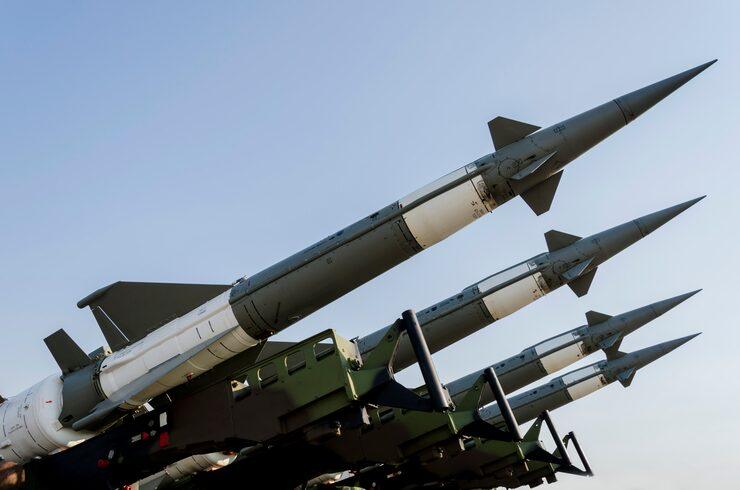

Military radar systems are becoming increasingly important to Europe’s defense infrastructure as governments strengthen airspace surveillance, early-warning capabilities, and protection against emerging aerial threats. These systems help military forces detect, track, and assess aircraft, missiles, and unmanned aerial vehicles (UAVs). Their role is expanding as European countries modernize defense networks and seek more coordinated responses to evolving security challenges.
According to the Europe Military Radar Market report by Markntel Advisor, the sector was valued at USD 4.89 billion in 2025 and is projected to reach USD 9.28 billion by 2032, registering a CAGR of 9.58% during 2026–2032. Early-warning and long-range surveillance radars accounted for approximately 35% of the sector in 2025, while land-based platforms held around 65%. France led the country-level landscape with an estimated 14% share, reflecting its established defense industry and radar technology capabilities.
Rising Demand for Early-Warning and Surveillance Systems
Early-warning radar systems help military operators identify potential threats at extended distances, providing additional time to assess situations and coordinate responses. These systems are particularly important for monitoring national airspace and supporting layered air and missile defense architectures. Their capabilities can complement shorter-range systems designed to track specific targets or support tactical operations.
European governments are increasingly focused on connecting radar sensors with command-and-control systems, interceptor platforms, and other surveillance assets. This approach can improve the speed and consistency of information sharing across defense networks.
The NATO Integrated Air and Missile Defence framework emphasizes interconnected sensors, command-and-control assets, and weapons systems. This framework illustrates why radar modernization involves more than acquiring individual systems: interoperability, continuous monitoring, and coordination across national capabilities are also essential.
Land-Based Platforms Maintain a Leading Position
Land-based radar platforms represent the largest segment identified in the Markntel Advisor report. Fixed installations can provide persistent surveillance, while mobile systems allow military forces to reposition sensors according to operational requirements. Together, these capabilities support airspace monitoring, early warning, and battlefield awareness.
Ground-based systems also contribute to layered air defense by supplying detection and tracking information to other defense assets. Their effectiveness depends on factors such as radar coverage, terrain, mobility, reliability, and integration with command networks.
However, land-based systems are not the only important platform. Airborne radar can provide surveillance from elevated positions, while naval radar supports maritime awareness and the protection of ships and coastal approaches. The appropriate combination depends on geographic conditions, mission requirements, and national defense priorities.
Counter-Drone Detection Expands Requirements
The increasing use of drones has created additional challenges for military surveillance. Small, low-flying UAVs may have different detection characteristics from conventional aircraft, requiring radar systems capable of identifying targets with relatively small radar signatures amid ground clutter and other sources of interference.
As a result, counter-unmanned aircraft system capabilities are becoming an important consideration in radar procurement. Military operators require sensors that can contribute to detecting and tracking aerial objects while supplying useful information to wider command and defense networks.
This requirement also encourages greater coordination between radar, electro-optical sensors, electronic surveillance, and other detection technologies. Combining information from different sources can help operators develop a clearer understanding of potential threats, although performance depends on sensor quality, environmental conditions, and effective data integration.
AESA Technology and Multi-Band Capabilities
Active electronically scanned array (AESA) radar technology is an important development in modern military surveillance. Electronic beam steering can support rapid changes in radar coverage and help systems manage multiple surveillance and tracking tasks. Solid-state components can also contribute to reliability and operational flexibility, depending on system design.
Multi-band radar architectures provide another area of development, allowing defense organizations to consider different frequency characteristics for particular detection and tracking requirements. The selection of radar technology depends on intended range, target characteristics, operating environment, mobility needs, and integration with existing systems.
Modernization is therefore not limited to replacing older equipment. It also involves improving processing capabilities, data sharing, maintenance arrangements, and the ability to incorporate new sensors into established defense networks.
Investment and Industrial Challenges
Military radar systems require substantial investment in research, specialized components, testing facilities, and skilled engineering personnel. Long development cycles and demanding performance requirements can create barriers for manufacturers, while procurement schedules and government budgets influence the timing of new projects.
European defense organizations must also balance domestic industrial priorities with the need for interoperability among allied forces. Shared standards and compatible systems can improve coordination, but integrating equipment from different suppliers requires technical planning, testing, and sustained support.
The competitive landscape identified in the Markntel Advisor report includes Thales Group, BAE Systems, Leonardo S.p.A., Saab, HENSOLDT AG, Indra, Blighter Surveillance Systems, RETIA, Weibel Scientific, and Terma A/S. These companies operate across radar development, surveillance technologies, and defense electronics.
Outlook for Europe’s Military Radar Sector
Europe’s military radar sector is expected to remain closely linked to air defense modernization, counter-drone requirements, and investment in integrated surveillance networks. Early-warning capabilities and land-based platforms are positioned to remain important, while advances in AESA technology, data processing, and sensor integration may influence future procurement priorities.
Long-term progress will depend on balancing technological development with affordability, manufacturing capacity, interoperability, and maintenance requirements. As European defense organizations continue to strengthen surveillance and response capabilities, radar systems will remain a core component of regional air and missile defense infrastructure.
