

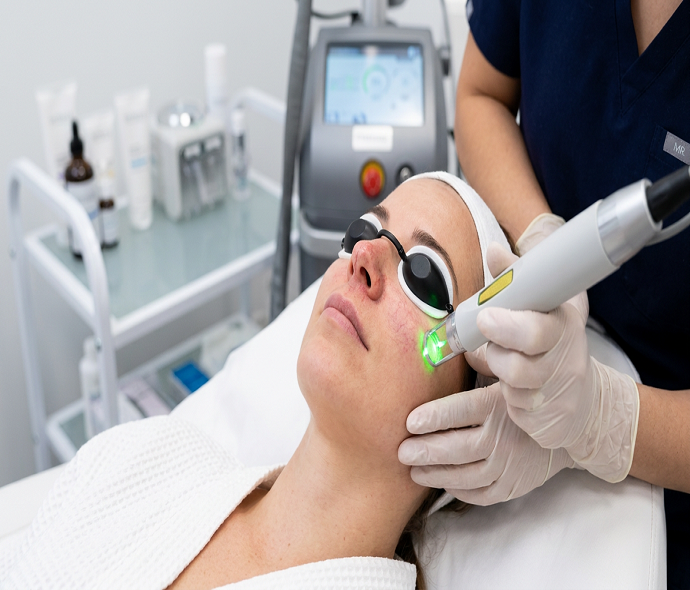
The consultation is the most consequential part of the entire treatment journey — more important, arguably, than the laser session itself. It is where your skin is assessed, your goals are tested against clinical reality, and the decision to treat or not is made. This article explains what a thorough consultation for laser facial treatment in Dubai typically covers, what the clinician is looking for, and how to tell whether the assessment you received was genuinely individualized or merely a sales conversation.
Laser Facial Treatment in Dubai: Setting Up the Appointment Correctly
Before the appointment, prepare useful information. Bring a list of current medications and supplements, details of previous cosmetic procedures, and any relevant medical history. If you have been using prescription topicals such as retinoids, note how often and when you last applied them.
Arrive without heavy makeup if possible and avoid booking the consultation immediately after intense sun exposure, since tanned skin changes how the clinician assesses your baseline. Honest disclosure from the first minute makes the assessment more accurate.
How the Clinician Begins the Assessment
A structured consultation usually opens with an open question about your concern. The clinician listens for specificity: what bothers you, when it appeared, how it has changed, and what you hope treatment will achieve. Vague answers are not a problem at this stage, but they will shape the conversation.
The clinician then examines your skin under appropriate lighting, often with magnification. Fitzpatrick skin typing, assessment of the skin barrier, and identification of the dominant concern — pigment, vascular, textural, or a combination — follow naturally.
Laser Facial Treatment in Dubai: The Questions You Will Be Asked
Expect detailed questioning. Medical history comes first: skin conditions, autoimmune disease, bleeding disorders, keloid tendency, and current or recent pregnancies. Medication review follows, with particular attention to photosensitizing drugs and isotretinoin use.
Your cosmetic history matters just as much. Recent fillers, threads, peels, or other laser sessions can interact with treatment. Sun exposure habits, occupation, and upcoming travel or events also enter the discussion. Each of these answers influences whether treatment proceeds, is modified, or is postponed.
What the Clinician Is Looking For Clinically
Beyond the surface concern, the clinician assesses healing capacity and risk profile. An intact skin barrier suggests good tolerance; active inflammation or barrier disruption suggests delay. Pigment patterns need differentiation — melasma, post-inflammatory hyperpigmentation, and sun damage may look similar to a patient but behave very differently under laser energy.
In our clinical experience, the most common finding during consultation is that the patient's stated concern differs from the clinically dominant one. A patient may focus on pores while the clinician identifies underlying photoaging as the more significant issue. Clarifying this early prevents mismatched expectations.
Laser Facial Treatment in Dubai: Discussing Options and Alternatives
A responsible consultation does not begin and end with laser. The clinician should explain which modalities could address your concern, including topical therapy, chemical peels, microneedling, or neuromodulators where relevant — and why laser is or is not the preferred route.
If laser is recommended, expect an explanation of device choice and reasoning. Why this wavelength, why this intensity, why this number of sessions. Patients who receive assessment at Tajmeels Clinic in Dubai should expect this level of individualized explanation, since planning that ignores your specific skin profile is not genuinely clinical.
Realistic Outcomes and Risk Discussion
The conversation should include what improvement is likely, what is uncertain, and what laser will not achieve. Risk disclosure is not a formality: pigment change, downtime, infection, and scarring should be named plainly, along with how the clinic manages them if they occur.
A clinician who volunteers limitations is demonstrating competence. One who promises specific results or dismisses risk questions is signaling the opposite.
Laser Facial Treatment in Dubai: Documentation, Photography, and Consent
Baseline photographs taken under consistent lighting serve both patient and clinician. They allow objective comparison later, when gradual change is easy to misjudge. Ask whether images are stored securely and how they will be used.
Consent should follow discussion, not replace it. You should understand the procedure, alternatives, and risks before signing. If the consent process feels rushed or purely administrative, pause and ask questions.
Costs, Sessions, and Practical Planning
The consultation is also where practicalities are settled. Expect discussion of session count, spacing, downtime, aftercare requirements, and what the total plan involves. Ask what happens if the plan needs adjustment after the first session.
Bring questions about follow-up, complication management, and who to contact after hours. The clarity of these answers tells you a great deal about how the clinic operates.
Signs the Consultation Was Not Thorough
Warning signs include treatment recommended without skin examination, no questions about medications or history, pressure to book on the day, refusal to discuss risks, and a plan identical to what every other patient receives. Any of these should prompt a second opinion.
The Consultation as the Real Decision Point
What you learn during consultation for laser facial treatment in Dubai matters more than any brochure. A thorough assessment identifies whether your concern is treatable, which technology suits your skin, and what a realistic outcome looks like. Treat the appointment as a two-way evaluation — the clinician assesses your suitability, and you assess their judgment. That mutual clarity is the best foundation for treatment you will not regret.
Ready to Begin Your Transformation?
Get in touch with us today to explore exclusive offers and find the right treatment for you!
WhatsApp: +971 56 203 8751
Phone: +971 4 373 9000
Social Media:
