

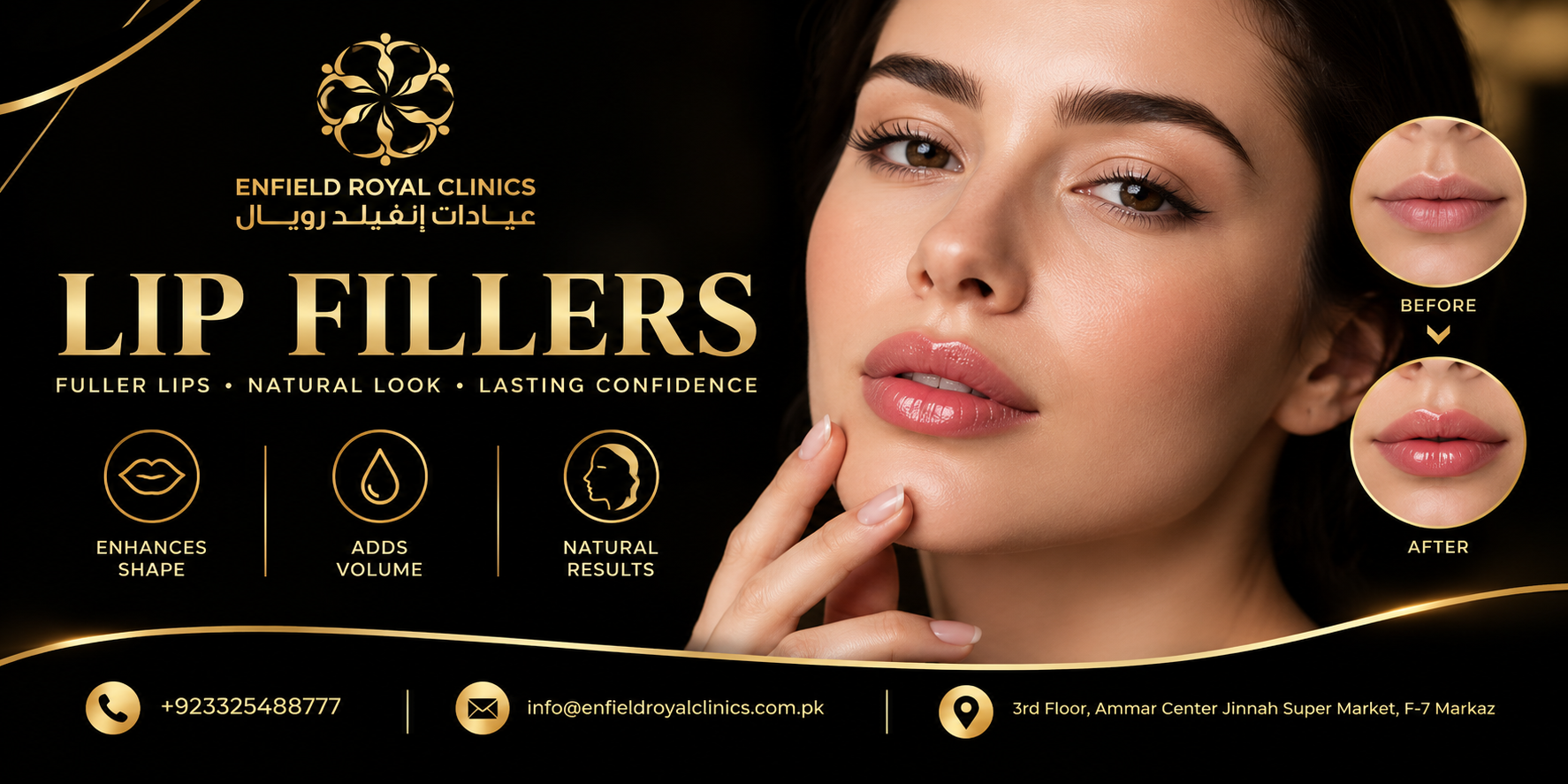

Lip enhancement has become a popular option for people who want fuller lips, improved symmetry, or more defined lip borders. Two options commonly considered are lip fillers and lip surgery. Although both can change the appearance of the lips, they differ in technique, recovery time, results, and long-term commitment. Understanding these differences can help individuals choose an approach that matches their goals and medical needs.
For people researching Lip Fillers in Islamabad, learning how injectable treatments compare with surgical procedures is an important first step. The most suitable option depends on the desired result, natural lip structure, general health, and willingness to undergo surgery or maintain temporary results.
1. What Is the Difference Between Lip Fillers and Lip Surgery?
Lip fillers are injectable treatments commonly made with hyaluronic acid (HA), a substance that attracts and retains moisture. A qualified medical professional injects small amounts of filler into specific areas to add volume, improve symmetry, or define the lip border. The procedure usually takes a relatively short time and does not require surgical incisions.
Lip surgery includes different procedures designed to change the structure or proportions of the lips. For example, a lip lift removes a small amount of skin beneath the nose to shorten the distance between the nose and upper lip, making more of the upper lip visible. Other surgical techniques may be considered for specific structural concerns.
The main difference is that lip fillers primarily add volume through injections, while surgery changes lip shape or position through an operation. Neither option is automatically better for everyone.
2. Why Do Many People Choose Lip Fillers?
Lip fillers are often preferred by people seeking a noticeable but adjustable change without undergoing an operation. They allow a medical professional to add volume gradually and tailor the treatment to the individual's facial proportions.
Several potential benefits make fillers appealing:
-
Non-surgical treatment: The procedure uses injections rather than surgical incisions.
-
Limited downtime: Many people return to ordinary activities relatively quickly, depending on swelling and bruising.
-
Adjustable results: The amount and placement of filler can be tailored to the patient's goals.
-
Temporary effects: Most HA fillers gradually break down over time, so the results are not permanent.
-
Improved definition: Treatment may enhance the cupid's bow, refine the lip border, or improve the appearance of mild asymmetry.
For individuals considering Lip Fillers in Islamabad, an initial consultation helps determine whether injections can achieve the intended outcome. Natural-looking enhancement usually depends on careful product selection, appropriate placement, and avoiding excessive volume.
However, fillers have limitations. They cannot reliably shorten the distance between the nose and upper lip, remove excess skin, or correct every structural concern. They also carry medical risks, including rare but serious complications involving blood vessels.
3. When Can Lip Surgery Be a Better Option?
Lip surgery may be more suitable when a person wants a structural change that injectable fillers cannot provide. A lip lift, for example, may benefit selected individuals who want a shorter upper-lip-to-nose distance or greater visibility of the upper lip without repeatedly adding volume.
Potential advantages of surgery include:
-
Long-lasting structural changes: Certain procedures can produce results that last for years.
-
Changes in lip proportions: A surgical procedure may alter the position or visible shape of the upper lip.
-
No routine filler maintenance: Once healing is complete, the patient generally does not need repeated injections to maintain the surgical change itself.
Nevertheless, surgery involves greater commitment. It may require anesthesia, surgical incisions, wound care, and a longer recovery period. Swelling, bruising, discomfort, scarring, infection, and dissatisfaction with the final appearance are possible risks.
Surgical changes may also be difficult to reverse. A person considering surgery should understand the expected scar location, healing process, possible complications, and realistic outcome before proceeding.
4. Lip Fillers vs. Lip Surgery: Recovery and Results
Recovery is an important factor when comparing the two treatments. Lip fillers generally involve less downtime than surgery, although the experience varies from person to person.
After filler injections, temporary swelling, tenderness, redness, and bruising are common. These effects often improve over several days, but some swelling or unevenness may take one to two weeks to settle. The final appearance should be assessed after the initial swelling has subsided.
Surgical recovery is usually more involved. Depending on the procedure, patients may need to follow specific wound-care instructions, limit certain activities, and attend follow-up appointments. Swelling can continue for weeks, while scars may take several months to mature and become less noticeable.
Results also differ in duration. Many hyaluronic acid lip fillers last approximately six to twelve months, although the duration varies with the product, treatment area, metabolism, and individual factors. Maintenance sessions may be needed to preserve the effect.
Some lip surgeries produce longer-lasting changes, but no procedure can guarantee a permanent appearance that remains unchanged throughout life. Ageing, facial anatomy, and changes in surrounding tissues can influence the result.
5. Which Treatment Offers More Natural-Looking Results?
Both fillers and surgery can produce natural-looking results when the procedure is appropriate and performed by a qualified professional. The best choice depends on the concern being addressed.
Fillers may work well for someone who wants a modest increase in volume, a more defined lip border, or improved balance between the upper and lower lips. A gradual approach can help prevent an overfilled appearance and allows the result to be assessed before considering further treatment.
Surgery may create a more suitable result when the main concern involves lip position or proportions rather than volume. For example, adding filler to an upper lip that already has sufficient volume may not address a long upper-lip-to-nose distance as effectively as an appropriately selected surgical procedure.
During a consultation, the medical professional should examine the natural lip shape, facial proportions, skin condition, medical history, and the individual's expectations. Photographs and a discussion of realistic outcomes may also help clarify the options.
Natural results are not determined by the procedure alone. Conservative treatment planning, appropriate technique, and a clear understanding of the patient's goals are equally important.
6. Safety Considerations Before Choosing a Treatment
Safety should be a priority when comparing Lip Fillers in Islamabad with lip surgery. Both options require professional assessment, and neither is completely risk-free.
With fillers, common side effects include swelling, bruising, tenderness, and temporary unevenness. Less common complications include infection, persistent lumps, and inflammatory reactions. A rare but serious complication occurs when filler blocks a blood vessel, potentially damaging skin tissue or affecting vision.
Severe or increasing pain, pale or blue-grey skin, or a mottled appearance near the injection area requires urgent medical assessment. Any vision changes after filler injections require emergency care.
Hyaluronic acid fillers can sometimes be dissolved using an enzyme called hyaluronidase, but reversal is not guaranteed to eliminate every complication. Patients should confirm that the practitioner is trained to manage emergencies and has an appropriate response plan.
Surgery carries risks such as bleeding, infection, scarring, changes in sensation, asymmetry, and complications related to anesthesia. The exact risks depend on the procedure and the individual's health.
Before either treatment, the patient should disclose medical conditions, allergies, previous cosmetic procedures, and all medications. Prescribed blood thinners should never be stopped without advice from the prescribing clinician. Elective filler treatment is generally postponed during pregnancy or breastfeeding because safety data are limited. Active infections or cold sores around the mouth may also require treatment to be delayed.
7. How Can Patients Decide Which Option Is Right for Them?
The decision between fillers and surgery should be based on the desired change rather than popularity alone.
Lip fillers may be a reasonable option for people who want temporary volume, subtle definition, or a non-surgical approach. Lip surgery may be worth discussing with an appropriately qualified surgeon when the goal involves a lasting structural change that injections cannot achieve.
A useful consultation should cover the following questions:
-
What specific lip feature does the patient want to change?
-
Can fillers realistically achieve the desired outcome, or is surgery more appropriate?
-
How long should the results last?
-
What are the possible complications and recovery requirements?
-
What professional qualifications, product information, and aftercare arrangements are available?
-
If the result is unsatisfactory, what options exist for managing or correcting it?
Anyone considering Lip Fillers in Islamabad should choose a qualified medical professional who uses appropriate products, follows strict hygiene standards, explains the risks clearly, and avoids promising perfect or risk-free results.
Ultimately, lip fillers are often more convenient for temporary volume enhancement, while surgery may be more suitable for selected structural changes. A personalised assessment is the best way to determine which option offers the most appropriate balance of benefits, risks, and expectations.
Frequently Asked Questions
1. Are lip fillers better than lip surgery?
Lip fillers may be better for people seeking temporary volume or definition without an operation. Lip surgery may be more appropriate for structural changes, such as shortening the distance between the nose and upper lip. The best choice depends on individual goals and medical assessment.
2. How long do lip filler results last compared with surgery?
Many hyaluronic acid lip fillers last around six to twelve months, although results vary. Certain surgical procedures can create longer-lasting structural changes, but ageing and other factors may affect the appearance over time.
3. Is lip filler recovery easier than lip surgery recovery?
Lip filler recovery is generally shorter, with temporary swelling and bruising often improving within days. Surgery usually involves a more involved healing period, and swelling or scar maturation may continue for weeks or months, depending on the procedure.
4. Can lip fillers replace the need for lip surgery?
Not always. Fillers can add volume and improve definition, but they cannot reliably correct every structural concern. A qualified medical professional can assess whether injections are appropriate or whether a surgical consultation would be more helpful.
