

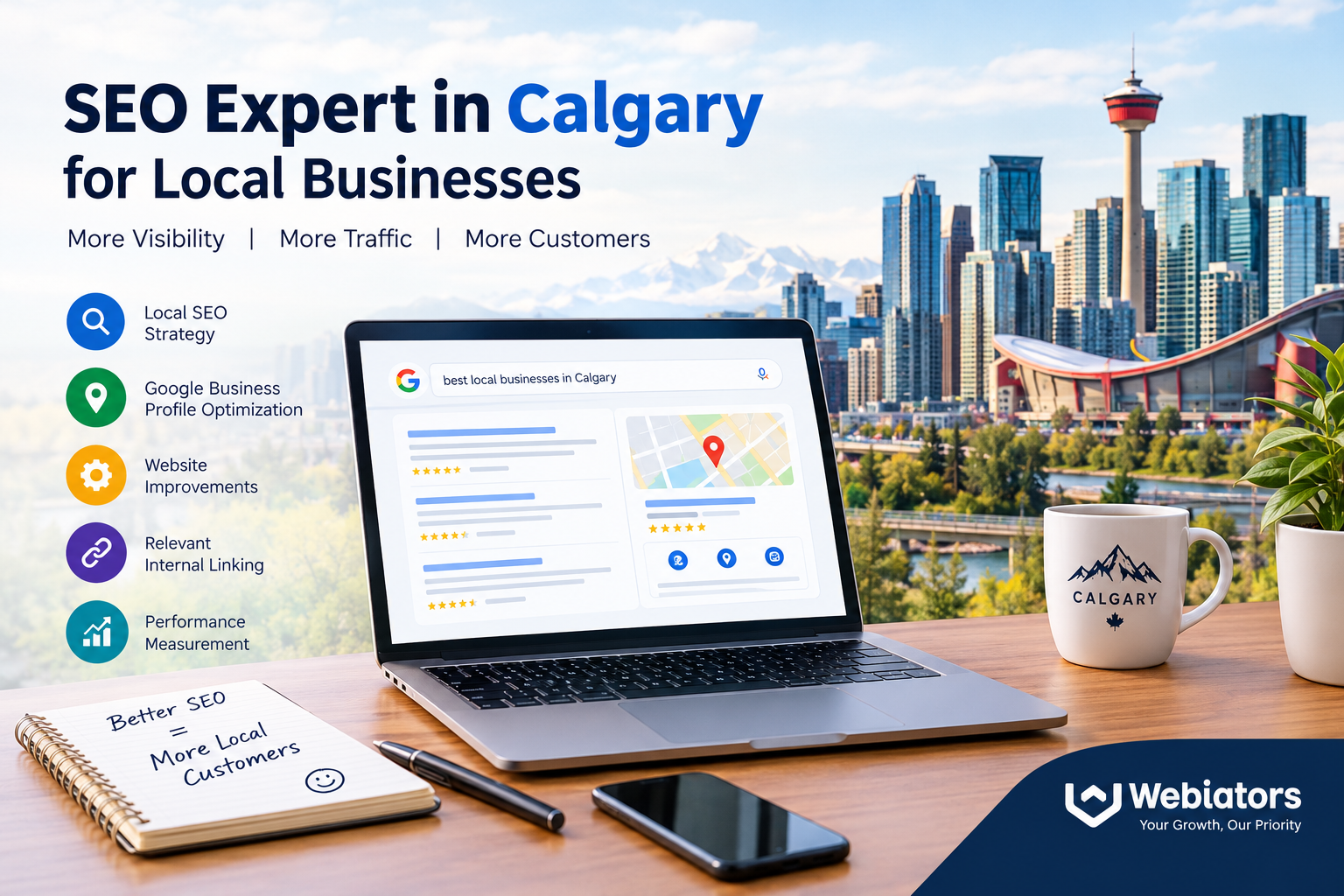

SEO Expert in Calgary for Local Businesses: Build Long-Term Search Visibility
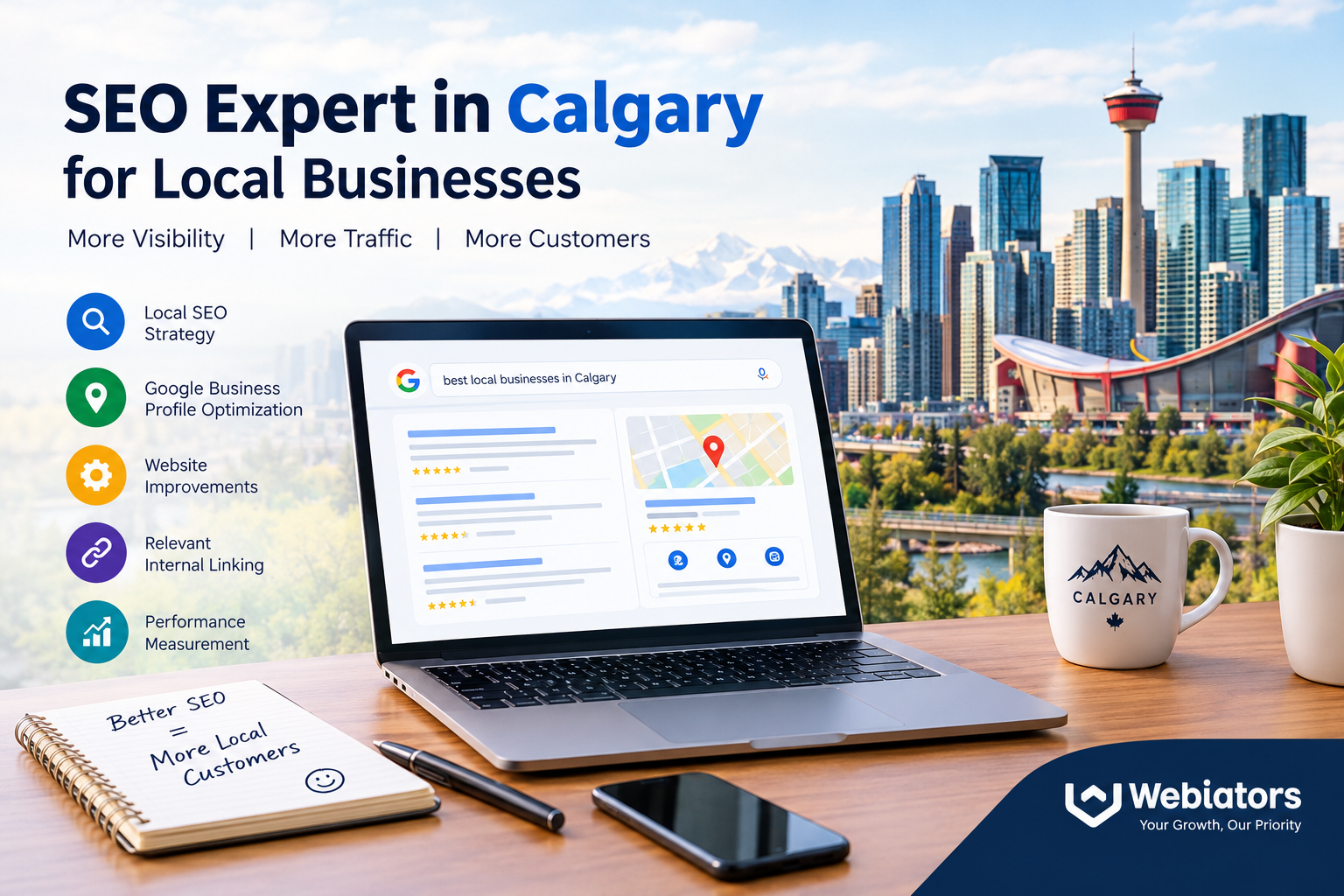
A strong online presence helps local businesses explain their services, answer customer questions, and earn trust before the first conversation. For companies in Calgary, search engine optimization can make important website pages easier to discover when potential customers look for relevant services.
An SEO expert in Calgary for local businesses can help identify technical issues, improve content relevance, and build a strategy around qualified traffic rather than rankings alone.
Start With a Website Audit
Before creating more content, assess the website's current condition. An SEO audit can reveal indexing problems, outdated information, weak internal links, confusing navigation, and pages that do not match customer search intent.
Start by reviewing:
-
Which pages receive organic impressions and clicks.
-
Whether important service pages are indexed.
-
Whether titles and descriptions accurately represent each page.
-
Whether mobile visitors can navigate and contact the business easily.
-
Whether similar pages target the same keywords without offering distinct value.
Fixing existing problems may be more valuable than publishing additional content without a clear plan.
Create Helpful, Location-Relevant Content
Local content should explain the services a business provides and the customers it serves. Include relevant service areas where appropriate, but do not create pages for locations the business cannot genuinely serve.
Each page should have a clear purpose. Explain the service, address common questions, provide useful details, and make the next step easy for visitors.
Internal links can guide users from educational content to related services. Use descriptive anchor text and ensure the destination page matches what the link promises.
Strengthen the Technical Foundation
Search engines need to crawl and interpret website content effectively. Businesses should review XML sitemaps, canonical tags, redirects, robots directives, and broken links. Mobile usability and page performance should also be monitored.
Structured data may help search engines interpret eligible business information when the markup accurately reflects visible content. It should not be used to add misleading claims or information that visitors cannot verify.
Technical improvements should be prioritized according to their likely impact on important pages and user experience.
Understand Related SEO Needs Across Canada
SEO services differ according to business type and target market. A local service provider, a small retailer, and a national ecommerce store may need different content and technical priorities.
For online retailers, ecommerce SEO services Edmonton can be relevant when improving product discovery, category pages, and organic visibility.
Businesses comparing an ecommerce SEO agency in Montreal may want to evaluate experience with product catalogs, technical SEO, and content that matches the language and needs of their customers.
A small company researching an SEO agency in Vancouver for small businesses may benefit from a plan focused on local searches, service-page relevance, and lead tracking.
Companies exploring SEO services for local businesses in Toronto may prioritize local keyword targeting, website improvements, and accurate business information.
For Ottawa-based companies, local SEO optimization Ottawa for businesses can be relevant when strengthening location-specific content, local listings, and customer discovery.
These examples should be used as contextual links to appropriate service pages—not as a reason to add unrelated city keywords to every page.
Build Trust and Track Meaningful Results
Customers need clear information before they decide to contact a business. Make service details, contact information, business hours, and relevant customer feedback easy to find. Avoid exaggerated promises or claims that cannot be substantiated.
Track performance with Google Search Console and website analytics. Review organic clicks, impressions, landing-page engagement, calls, form submissions, and qualified leads.
If a page receives impressions but few clicks, improve its title and description where appropriate. If it attracts visitors but few inquiries, review the content, user experience, and call to action.
With a structured strategy, Webiators can connect content improvements, technical SEO, and performance monitoring to the business's wider growth objectives.
Conclusion
Sustainable local SEO depends on a website that is useful, technically accessible, and aligned with customer needs. Calgary businesses can strengthen their search presence by improving existing pages, publishing relevant content, maintaining accurate business information, and tracking qualified leads. A consistent, data-driven approach provides a more dependable foundation for organic growth than shortcuts or repetitive keyword use.
FAQs
1. What is the first step in improving local SEO?
Start with a website and local presence audit. Review keyword relevance, indexing, service pages, business information, and existing organic performance.
2. Does technical SEO matter for local businesses?
Yes. Indexing, site structure, mobile usability, and working internal links help search engines access content and visitors use the website.
3. How often should local SEO content be updated?
Review content periodically and update it when services, business information, customer questions, or performance data indicate a real need.
4. Are location keywords enough to rank a local page?
No. A page should also provide useful, relevant information and match the services and location it describes. Repeating a city name does not guarantee rankings.
5. How can a business know whether SEO is working?
Look at relevant organic traffic, search impressions, clicks, calls, form submissions, and qualified leads over time rather than relying on one ranking position.
