

How Can a Time Attendance System in Abu Dhabi Help Businesses Manage Employees More Efficiently?

Why Is Accurate Employee Attendance Important for Businesses?
Managing employee attendance may seem like a routine administrative task, but it can have a significant impact on business operations. When working hours are recorded incorrectly, managers may struggle to identify late arrivals, calculate overtime, prepare payroll, and maintain accurate employee records. These problems become more difficult to manage as a company expands and hires more staff.
Traditional attendance registers and spreadsheets can work for small teams, but they often require manual calculations and repeated data entry. Employees may forget to sign in, records can contain mistakes, and HR teams may spend hours checking attendance information before payroll deadlines.
For businesses operating across Abu Dhabi, modern attendance technology offers a more organised alternative. A time attendance system Abu Dhabi businesses can implement helps record employee clock-in and clock-out times, manage attendance records, and simplify routine workforce administration.
The right system does more than replace paper registers. It gives managers a clearer view of attendance patterns and helps HR teams work with more consistent information.
What Is a Modern Time Attendance System?
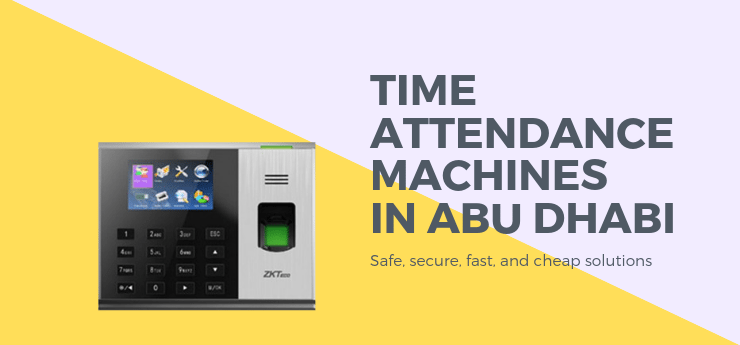
A time attendance system records when employees begin and finish work. Depending on the technology selected, employees can register their attendance using fingerprint readers, facial recognition devices, RFID cards, PIN codes, or compatible mobile applications.
The recorded information is processed by attendance software, where authorised users can review working hours, late arrivals, early departures, absences, and overtime according to the company's policies.
For example, an office with fixed working hours may use a biometric attendance machine at its main entrance. Employees verify their identity when arriving and leaving, and the software records the relevant timestamps. HR staff can then review attendance reports instead of collecting information from individual departments.
Businesses with different shifts or multiple locations may require more advanced features, such as shift scheduling, department-based reporting, and centralised attendance management.
The most suitable configuration depends on the workforce size, working arrangements, reporting requirements, and available infrastructure.
How Can Attendance Technology Improve Daily Operations?
1. Reducing manual errors
Manual attendance tracking creates opportunities for missed entries, duplicate records, incorrect calculations, and inconsistent reporting. Even small mistakes can create additional work when HR teams prepare payroll or investigate attendance disputes.
Automated recording reduces dependence on handwritten registers and repeated spreadsheet updates. Depending on the software, working hours and attendance exceptions can be calculated according to configured rules.
However, automation still requires proper setup. Work schedules, grace periods, overtime rules, and approval procedures should be configured correctly to produce useful reports.
2. Making payroll preparation easier
Payroll teams need reliable information about attendance, approved leave, overtime, and other relevant adjustments. Collecting this information from separate sources can slow down the process.
An integrated attendance platform can provide organised reports for payroll preparation and, where supported, exchange data with compatible HR or payroll software. This reduces duplicate data entry and helps staff identify missing records before processing payments.
Businesses should confirm that the selected system supports their existing payroll workflow. Attendance data should complement payroll controls rather than automatically determine every payment without appropriate review.
3. Supporting better workforce planning
Attendance reports can help managers identify recurring patterns, such as frequent late arrivals, understaffed shifts, or attendance gaps in particular departments.
This information may be useful when planning schedules, allocating responsibilities, and reviewing internal procedures. For businesses operating customer service teams, retail outlets, warehouses, or field operations, having a clearer attendance overview can support day-to-day planning.
Managers should interpret reports in context, particularly when employees work flexible schedules, remote shifts, or approved alternative hours.
4. Improving accountability and transparency
Clearly recorded attendance gives employees and managers a consistent reference when reviewing working hours. Staff can understand the organisation's attendance procedures, while authorised supervisors can check records when questions arise.
A well-managed process should also provide a way to correct genuine mistakes. If an employee forgets to clock in or a device fails, the system should allow authorised corrections with suitable approval and an audit trail.
This approach supports accountability without making the process unnecessarily difficult for employees.
Which Attendance Technology Should Businesses Choose?
Different businesses need different identification methods. Choosing the right device means considering convenience, reliability, operating conditions, and the sensitivity of employee information.
Biometric attendance systems use characteristics such as fingerprints or facial features to verify identity. They can be useful where businesses want to reduce the risk of employees registering attendance for one another. Organisations should assess privacy, data security, device suitability, and applicable requirements before selecting biometric technology.
RFID card systems allow employees to register attendance by presenting an authorised card or tag. They are straightforward to use and can suit offices with larger workforces, although cards can be lost or shared unless appropriate controls are in place.
PIN-based systems require employees to enter a code. They may suit smaller workplaces or specific operational environments, but shared or easily guessed codes can weaken accountability.
Mobile attendance solutions may be useful for approved remote teams, field workers, or employees who operate across several locations. Their suitability depends on the platform's location-verification features, connectivity requirements, and organisational policies.
Before purchasing equipment, businesses should evaluate reporting features, user capacity, integration options, technical support, and the expected cost of ongoing maintenance.
Why Do Abu Dhabi Businesses Need a Well-Planned Attendance Solution?
Businesses in Abu Dhabi operate across a wide range of sectors, including construction, healthcare, education, retail, hospitality, professional services, and technology. Their attendance requirements can differ considerably.
An office may need to manage standard working hours and leave records, while a construction company may require attendance tracking across multiple sites. A business with rotating shifts may need scheduling tools, whereas a company with several branches could benefit from centralised reporting.
For organisations considering a time attendance system Abu Dhabi solution, planning should begin with an assessment of the workforce and its working arrangements. The system should accommodate relevant shifts, overtime approvals, leave policies, and reporting needs without creating unnecessary complexity.
Businesses should also review applicable UAE employment requirements and their own approved policies when configuring working hours and overtime calculations. Attendance software supports recordkeeping, but the employer remains responsible for ensuring that its practices comply with applicable rules.
AMJ Technology Solutions provides access control and time attendance solutions for businesses in Abu Dhabi, Dubai, and across the UAE. Companies exploring attendance technology can visit its access control and time attendance services page to learn more about available options.
What Should You Check Before Installation?
A successful installation begins with understanding how attendance information will be used. Businesses should identify the number of employees, device locations, shift patterns, reporting requirements, and any existing HR or payroll applications that need to work with the system.
It is also important to consider network connectivity, power supply, backup arrangements, user permissions, and data protection. Employee records should be accessible only to authorised personnel, with suitable controls for reviewing, exporting, and retaining information.
Before the system goes live, test the devices and software using realistic work schedules. Confirm that attendance reports are accurate, exceptions can be handled properly, and administrators know how to manage users and resolve common problems.
Training is equally important. Employees should understand how to register attendance, while HR staff and managers need clear instructions for reviewing records and correcting errors.
Finally, ask the provider about maintenance, software updates, warranties, and technical support. Reliable after-sales service helps businesses maintain accurate records and resolve equipment issues with less disruption.
Conclusion
Accurate attendance records help businesses organise working hours, support payroll preparation, and understand workforce patterns. A modern attendance solution can reduce repetitive administrative work while giving managers and HR teams a more consistent view of employee attendance.
The best choice depends on the organisation's size, work schedules, security needs, and existing business systems. By assessing these requirements before installation and providing appropriate training, businesses can implement an attendance process that supports both operational efficiency and employee accountability.

