

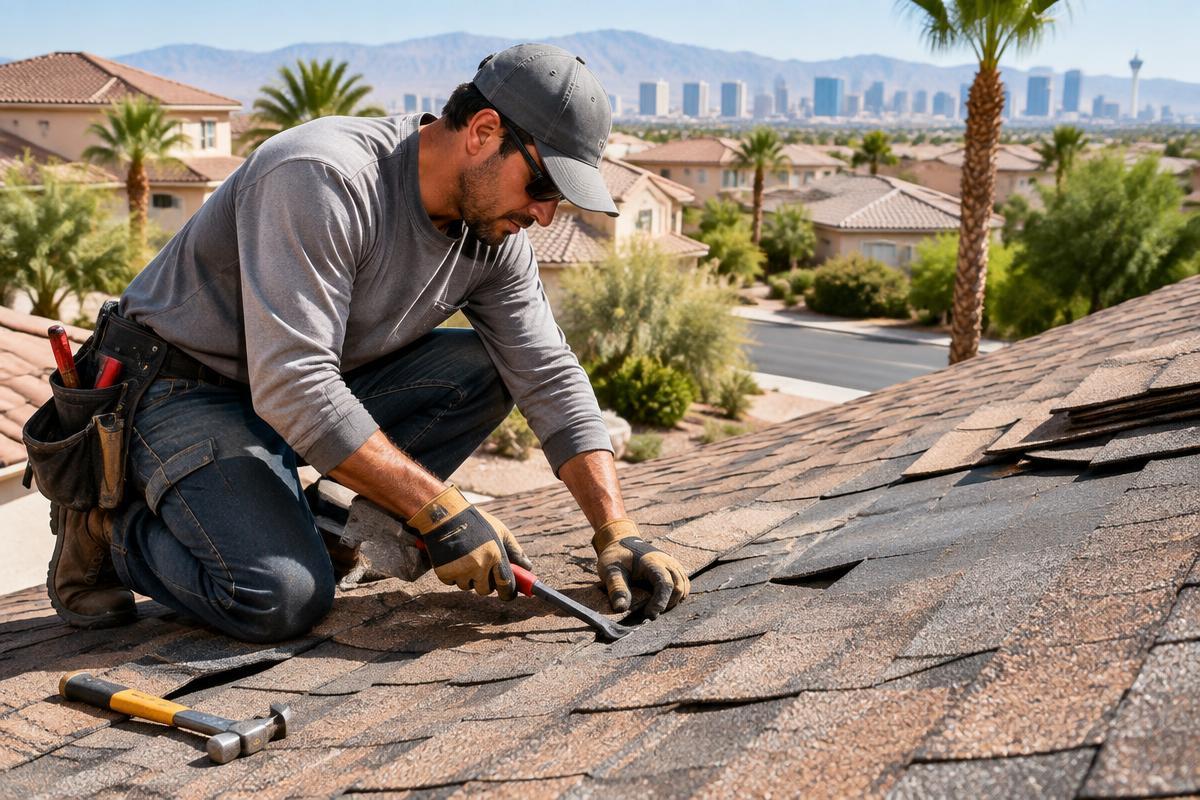

A roof can look perfectly intact from the street and still have a hidden weakness that allows water inside. The problem may not be a missing shingle or a visibly damaged roof section. Instead, it may involve flashing, the protective material installed at vulnerable transitions and openings throughout a roofing system.
Flashing helps direct water away from places where roofing materials meet walls, chimneys, vents, skylights, and other structures. When these connections deteriorate, separate, or become improperly sealed, moisture can find a path beneath the roof covering. Understanding how flashing works and recognizing early warning signs can help homeowners make informed decisions about roof maintenance and repairs.
In Las Vegas, where roofs experience prolonged sun exposure, high temperatures, and occasional intense rainfall, these details deserve attention. A careful inspection can help identify vulnerable areas before a minor defect develops into a more extensive roofing problem.
What Is Roof Flashing, and Why Does It Matter?
Roof flashing consists of protective materials, commonly metal or compatible flashing membranes, installed at joints and transitions where water could otherwise enter the roofing assembly. Its purpose is to guide water away from vulnerable areas and toward appropriate drainage paths.
Shingles provide the main weather-shedding surface on an asphalt roof, but they cannot independently protect every intersection. Roofs contain numerous openings and changes in direction, and these locations require carefully integrated flashing.
Common Areas Where Flashing Is Installed
Several locations deserve particular attention during a roof inspection:
-
Chimneys: Flashing helps protect the junction between masonry and the surrounding roof.
-
Plumbing vents: Specialized flashing boots or assemblies seal the area around pipes extending through the roof.
-
Skylights: Flashing systems direct water away from the skylight frame and adjoining shingles.
-
Roof-to-wall intersections: These transitions require appropriate flashing to manage water moving down the roof or along an exterior wall.
-
Roof valleys: Properly constructed valley systems help channel water where two roof slopes meet.
-
Roof edges and penetrations: Edge details and other openings need suitable protection to limit water entry.
Each location has different installation requirements. A repair should account for the roof's design, existing materials, and the way water moves across the surface.
Why Can Roof Flashing Fail in Las Vegas?
Roof flashing can deteriorate for several reasons, and local weather exposure is only one part of the picture.
Prolonged Sunlight and Temperature Changes
Las Vegas roofs receive substantial sunlight throughout the year. Repeated heating and cooling cause roofing materials to expand and contract. Over time, this movement can stress joints, sealants, fasteners, and connections between dissimilar materials.
Sealants may lose flexibility, while exposed components can deteriorate. However, temperature exposure alone does not establish that flashing has failed. An inspection must determine whether the material has actually separated, cracked, corroded, or otherwise lost its ability to direct water.
Aging or Incorrect Installation
Flashing problems can also develop when materials were installed incorrectly, fasteners were improperly placed, or adjoining components were not integrated as intended. Previous repairs may temporarily conceal a problem without addressing the underlying water pathway.
For example, applying sealant over a deteriorated joint may not provide a durable solution if the original flashing is damaged or improperly positioned. The appropriate repair depends on the condition and design of the complete assembly.
Wind and Heavy Rain
Wind-driven rain can reach vulnerable joints that receive little direct rainfall under ordinary conditions. Strong winds may also loosen roofing materials or expose weaknesses around vents, roof edges, and other transitions.
After a significant storm, homeowners should watch for new interior stains, dripping water, or visible debris around the property. These signs do not automatically prove flashing failure, but they justify further investigation.
What Warning Signs Suggest a Flashing Problem?
Some flashing defects are visible from the ground, while others remain concealed beneath shingles or adjoining materials. Homeowners should look for changes inside and outside the property rather than relying on a single symptom.
Interior Warning Signs
Water stains on ceilings and upper walls can indicate moisture entering through the roof. Peeling paint, bubbling finishes, damp insulation, or recurring musty odors may also warrant investigation.
The location of an interior stain does not necessarily identify the exact entry point. Water can travel along roof decking, framing, or other surfaces before becoming visible indoors. A proper assessment traces the likely pathway instead of assuming the damaged ceiling area sits directly below the defect.
Exterior Warning Signs
From a safe ground-level position, homeowners may notice visibly displaced flashing, damaged sealant, loose roofing materials, or gaps around roof penetrations. Repeated leaks near a chimney, skylight, or plumbing vent can also indicate a problem with the surrounding assembly.
Avoid climbing onto a roof to examine these details. Sloped surfaces, brittle shingles, and hidden structural damage create unnecessary risks. A qualified roofing professional can inspect the affected areas using appropriate access and safety procedures.
How Does Professional Roof Flashing Repair Work?
Effective repair begins with identifying the source of water entry. Replacing a visible piece of damaged material without examining nearby components may leave the actual problem unresolved.
A professional evaluation generally considers the roof covering, flashing condition, adjacent materials, drainage paths, and evidence of moisture damage.
Step 1: Inspect the Suspected Entry Point
The inspection should focus on the affected area while also considering nearby roof components. A leak around a plumbing vent, for example, could involve a deteriorated boot, damaged shingles, an improperly secured connection, or another nearby defect.
The objective is to establish a plausible cause before deciding on a repair.
Step 2: Determine the Appropriate Repair
The required work depends on the nature and extent of the damage. A localized defect may need a targeted repair, while deteriorated flashing or damaged adjoining materials may require partial replacement.
Homeowners researching roof flashing repair in Las Vegas should look for an explanation of what failed, which components need attention, and why the proposed work addresses the underlying issue.
A useful estimate should distinguish between repairing the flashing itself and correcting related damage to shingles, roof decking, or surrounding materials. It should also explain any limitations that cannot be assessed until concealed components are exposed.
Step 3: Restore the Weather-Resistant Connection
Depending on the roof design, repairs may involve replacing a damaged flashing component, correcting its position, integrating it with the surrounding roofing materials, or renewing compatible sealing details where appropriate.
Simply covering a gap with a surface-applied sealant is not necessarily sufficient. Flashing must be installed in a way that manages water correctly, with suitable overlaps and connections for the specific roofing assembly.
Step 4: Check the Surrounding Area
After completing the repair, the contractor should examine the adjoining roof materials and relevant drainage details. Any evidence of additional damage should be documented and discussed with the property owner.
The scope of follow-up testing or verification depends on the repair and the roofing system. Homeowners should ask what was completed and whether any further work is recommended.
How Does Flashing Repair Relate to Asphalt Shingle Roof Repair?
Flashing and shingles perform different but complementary functions. Shingles shed water across the main roof surface, while flashing protects vulnerable transitions and openings. A defect in either component can contribute to moisture intrusion.
For this reason, asphalt shingle roof repair in Las Vegas may involve more than replacing a visibly damaged shingle. A careful evaluation may also consider exposed fasteners, damaged vent boots, roof-to-wall connections, and nearby flashing.
For example, replacing missing shingles near a plumbing vent may not resolve a leak if the vent boot is cracked or the flashing connection is improperly sealed. Conversely, a flashing repair may not be enough if adjacent shingles have deteriorated or the underlying roof deck has sustained damage.
The repair strategy should reflect the actual condition of the roofing assembly. Homeowners should ask whether the recommendation addresses the identified cause and whether any related defects remain.
What Should Homeowners Ask Before Authorizing Repairs?
A little preparation can make the repair process clearer and help property owners compare proposals fairly.
Consider asking the contractor these questions:
-
What evidence indicates that the flashing is the source of the leak?
-
Is the proposed work a repair, a partial replacement, or a more extensive reconstruction?
-
Will nearby shingles or other roofing materials also need attention?
-
Could concealed damage to the decking or surrounding components affect the final scope?
-
Which materials will be used, and are they compatible with the existing roofing system?
-
What workmanship warranty, if any, applies to the proposed repair?
-
Will the estimate identify excluded work and any conditions that could change the price?
Requesting photographs of accessible problem areas can also help homeowners understand the findings. Any warranty terms, pricing, and expected completion schedule should be confirmed directly with the contractor rather than assumed.
How Can Homeowners Reduce the Risk of Recurring Leaks?
Routine observation and timely professional inspections can help identify developing roofing problems. Homeowners should pay attention to new ceiling stains, recurring moisture near roof openings, and visible damage after significant weather events.
Keeping records of previous repairs can also be useful. Documentation helps identify recurring problems and gives a contractor a clearer understanding of the roof's maintenance history.
Avoid walking on the roof, applying incompatible sealants, or attempting improvised repairs. Such actions may damage shingles, conceal the original defect, or create additional safety risks. If water is actively entering the home, protect belongings where safe to do so and arrange a professional assessment promptly.
Conclusion
Roof flashing plays an essential role in protecting the vulnerable connections within an asphalt shingle roofing system. Damaged joints, deteriorated materials, and improperly integrated flashing can allow water to enter even when the main roof surface appears relatively sound.
For Las Vegas homeowners, recognizing early warning signs and investigating recurring leaks can help clarify the work a roof actually needs. A thorough evaluation, a clearly explained repair plan, and appropriate installation practices provide a more reliable approach than repeatedly treating visible symptoms without identifying their cause.
More details are available at: Local Business Directory
