

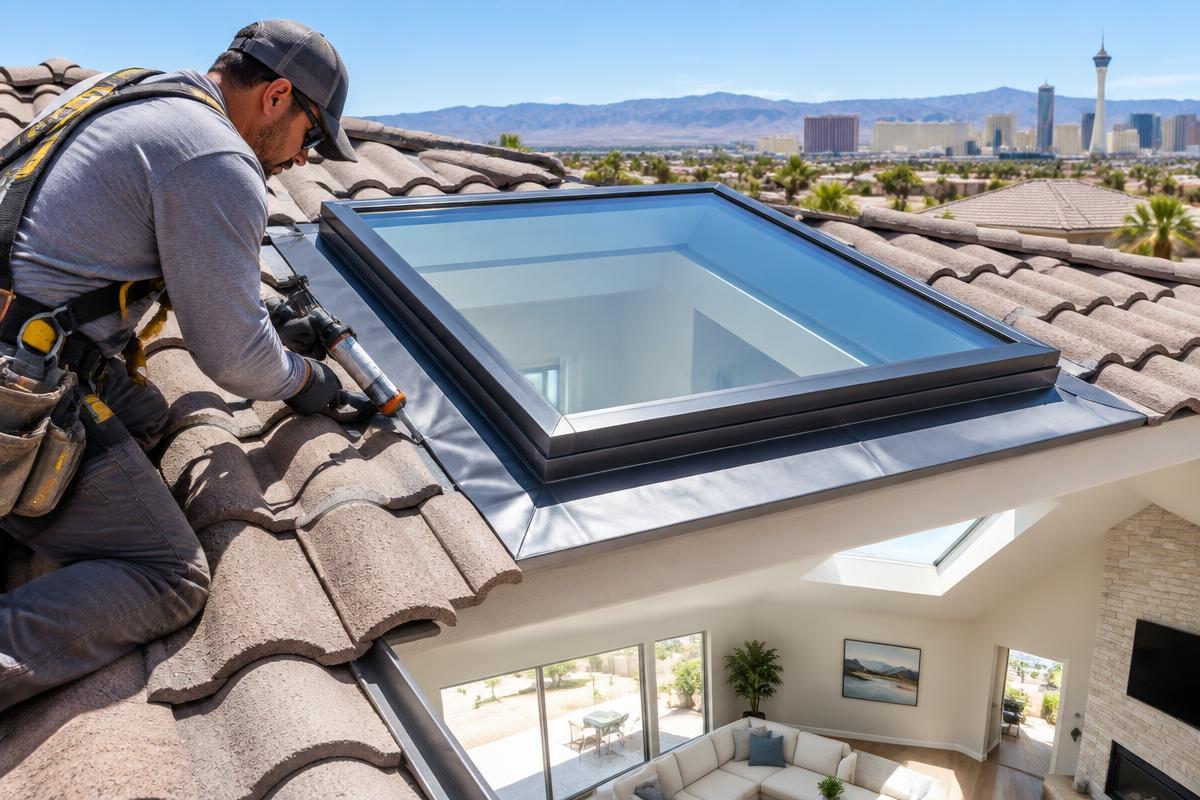
How Does Proper Skylight Flashing Installation Help Prevent Roof Leaks in Las Vegas?

Adding a skylight can transform a room by introducing natural light and creating a more open atmosphere. However, the success of the project depends on more than choosing attractive glass or finding the right position on the roof. The area where the skylight meets the roofing system must be designed to manage water, accommodate temperature changes, and protect the surrounding materials.
In Las Vegas, Nevada, intense sunshine, prolonged heat, and occasional heavy rain make these details particularly important. A skylight may appear secure during dry weather but reveal weaknesses when rainwater encounters poorly integrated flashing or deteriorated roof materials. Understanding how flashing works helps property owners make informed decisions before installation and recognize potential problems afterward.
What Is Skylight Flashing, and Why Does It Matter?
Flashing consists of weather-resistant materials installed around roof openings, joints, and other vulnerable transitions. Around a skylight, it helps direct water away from the opening and back onto the roof surface, where the roofing system can carry it toward the appropriate drainage path.
A skylight interrupts the roof's otherwise continuous protective surface. Without carefully planned transitions, water can collect around the frame, travel beneath adjacent roofing materials, or enter gaps between the skylight and its supporting structure.
Flashing is not simply a decorative metal border. It is part of a coordinated waterproofing assembly that may include the skylight frame, curb, underlayment, roofing material, and compatible seals. Each component must work with the others to reduce the risk of moisture intrusion.
Even high-quality skylight products can develop problems if the opening is poorly prepared or the flashing does not match the roof's design.
How Does Flashing Work With Different Roofing Materials?
The appropriate flashing arrangement depends on the roof covering, slope, skylight design, and manufacturer's installation requirements. A solution suitable for one roof type may not be appropriate for another.
Tile Roofs Require Careful Integration
Clay and concrete tile roofs are common architectural features in southwestern communities. Their individual tiles help shield the underlying roof assembly from direct exposure, but the tiles themselves should not be treated as the only waterproofing layer.
When a skylight is installed in a tile roof, the surrounding tiles may need to be carefully lifted, adjusted, or cut to accommodate the opening and flashing components. The installer must also consider the underlayment beneath the tiles and the paths water follows around the skylight.
The finished arrangement should allow water to move around the opening without becoming trapped behind raised edges or entering vulnerable joints. Damaged tiles, deteriorated underlayment, or poorly coordinated metal transitions may undermine an otherwise well-designed installation.
Shingle Roofs Need Layered Water Protection
On asphalt shingle roofs, flashing must integrate with the overlapping courses of shingles. Step flashing and other purpose-designed components may be used according to the skylight manufacturer's instructions and the roof configuration.
The objective is to maintain the intended direction of water flow. Upper roofing layers should direct water over the appropriate flashing surfaces rather than beneath them.
Fasteners, corners, side transitions, and the upper edge of the skylight deserve particular attention. Small installation errors at these points can create pathways for moisture even when the surrounding shingles appear undamaged.
Low-Slope Roofs Need a Compatible Waterproofing Detail
Low-slope roofing systems handle water differently from steep-slope tile and shingle roofs. Depending on the roof assembly, the skylight may require a properly designed curb and membrane transitions compatible with the existing waterproofing system.
The installer should evaluate drainage, membrane condition, curb height, and the manufacturer's requirements before work begins. Simply applying sealant around the perimeter does not replace a properly designed flashing detail.
What Should Homeowners Consider Before Installation?
Planning the opening and its relationship to the existing roof is an essential part of a successful project. Several factors deserve attention before materials are ordered or work begins.
Roof Condition and Underlayment
The visible roof covering may look serviceable while concealed materials are deteriorating. Before cutting an opening, the contractor should assess the condition of the surrounding roof, including accessible underlayment, decking, and supporting components.
Existing moisture damage should be investigated rather than covered by new materials. If the roof already needs substantial repairs, coordinating the skylight project with that work may help avoid unnecessary disturbance later.
Skylight Position and Roof Drainage
Placement affects both the amount of daylight entering the room and the way water moves around the installation. Roof valleys, drainage paths, nearby penetrations, and structural framing can influence where an opening is practical.
The location should also suit the room's intended use. A skylight positioned without considering sun exposure may introduce more direct heat or glare than the occupants want.
Product Compatibility and Manufacturer Instructions
Skylights vary in frame design, glazing, mounting requirements, and approved flashing systems. Before installation, confirm that the selected unit and flashing arrangement are suitable for the roof type and slope.
The contractor should explain whether a curb-mounted or deck-mounted configuration is appropriate and how the proposed detail will integrate with the existing roof. Structural changes should be assessed by qualified professionals when necessary; roof trusses and other structural members should never be cut without an appropriate engineered solution.
Why Is Flashing Especially Important in Las Vegas?
Las Vegas experiences prolonged sunny periods and significant roof-surface heating. Roofing materials can expand and contract as temperatures change, placing stress on joints, sealants, and connections over time.
Occasional intense rainfall also tests the roof's ability to move water away from openings. Wind-driven rain can expose gaps that may remain unnoticed during dry conditions.
For property owners planning skylight installation in Las Vegas, the goal should be to consider the complete roof assembly rather than focusing exclusively on the skylight itself. Flashing must be suitable for the roofing material, installed in the correct sequence, and coordinated with the underlayment and drainage design.
A qualified roofing professional can assess whether the existing roof is ready for an opening and explain which installation details are appropriate for the property. These precautions are particularly valuable when working with older tile roofs, aging underlayment, or roof coverings that have previously experienced leaks.
How Can Homeowners Recognize Potential Flashing Problems?
Water entering near a skylight does not always mean the glass or frame has failed. The cause may involve flashing, nearby roofing materials, condensation, or another part of the building envelope.
Common warning signs include:
-
Water stains around the interior opening: Brown marks, peeling paint, or damp drywall may indicate moisture entering the assembly.
-
Dampness after rainfall: Water appearing during or shortly after a storm warrants investigation of the skylight and surrounding roof.
-
Loose or displaced roofing materials: Tiles or shingles that have shifted near the opening may expose vulnerable transitions.
-
Cracked or deteriorated sealant: Visible sealant damage can be a warning sign, although replacing sealant alone may not resolve an underlying flashing defect.
-
Recurring moisture despite previous repairs: Repeated leaks suggest that the original water pathway may not have been identified correctly.
Condensation is another possible explanation for moisture on the interior surface of a skylight. Indoor humidity, ventilation, glazing temperature, and insulation details can contribute to condensation. A careful inspection helps distinguish condensation from water entering through the roof.
Homeowners should avoid climbing onto a roof to investigate these problems themselves. A professional assessment can examine the exterior installation and interior symptoms while reducing unnecessary safety risks.
What Should a Professional Flashing Installation Include?
A sound installation follows a planned sequence and accounts for the entire roof assembly. Although the exact procedure varies by product and roof type, several considerations are broadly important.
First, the installer should verify the opening location, structural requirements, roof condition, and compatibility of the selected skylight with the existing covering.
Next, the curb or mounting assembly should be constructed according to the approved design. Underlayment and flashing components must then be integrated in the correct sequence so water is directed away from the opening. The exact arrangement depends on the roofing system and manufacturer's instructions.
The installer should also pay attention to corners, fasteners, adjacent tiles or shingles, and transitions where different materials meet. Sealants may be required in designated locations, but they should not be treated as a substitute for correctly installed flashing.
Finally, the completed work should be inspected for visible defects, loose materials, obstructed drainage, and unfinished transitions. Homeowners should ask what was installed, whether concealed roof damage was found, and what maintenance or documentation the manufacturer recommends.
Should Flashing Be Inspected When Replacing an Existing Skylight?
Yes, evaluating the flashing is an important part of planning a skylight replacement. Removing an older unit can reveal damaged underlayment, deteriorated framing, corrosion, or previous repairs that were not visible from inside the room.
Reusing existing flashing may be unsuitable if it is damaged, incompatible with the replacement product, or improperly integrated with the roof. Conversely, the correct scope of work should be based on the actual condition of the assembly rather than an automatic assumption that every surrounding component must be replaced.
Property owners should request a clear explanation of the proposed work, including whether the flashing will be renewed, which roofing materials may need adjustment, and how discovered damage will be handled.
When a roof is already scheduled for restoration or replacement, coordinating the skylight work with the larger project may also reduce the need to disturb recently completed roofing.
How Can You Make a More Informed Installation Decision?
Before approving a project, ask the contractor how the skylight will be integrated with your specific roof covering, which flashing system will be used, and how the installation will preserve drainage and waterproofing.
Request clarification about the scope of work, the handling of existing roof damage, product requirements, and any applicable workmanship or manufacturer warranties. Confirm that the contractor holds the qualifications and insurance required for the work.
For a property in Las Vegas, the most useful recommendation is one that accounts for actual roof conditions, local exposure, the selected skylight, and the surrounding waterproofing system.
A skylight should deliver natural light without creating an avoidable weak point in the roof. Careful planning, compatible materials, correct flashing installation, and a thorough final inspection all contribute to that objective. By understanding these details before work begins, homeowners can evaluate proposals more confidently and make decisions that support the long-term performance of their roofing system.
More details are available at: Local Business Directory
