


A reliable water pump is essential for maintaining water pressure in homes, supplying water to storage tanks, and supporting irrigation systems. When a pump suddenly stops operating, everyday activities such as showering, washing dishes, watering a garden, or filling a water tank can become difficult. Identifying the cause quickly can help prevent further damage and restore the water supply safely.
If your water pump stopped working, the problem could involve the electrical supply, pressure switch, motor, water source, clogged intake, or another component. Some issues can be identified through basic visual checks, while others require professional diagnosis. Understanding the most common causes helps homeowners determine which steps are safe to perform and when to contact a qualified pump repair technician.
Common Reasons a Water Pump Stops Working
Water pumps can stop operating for several reasons, and the symptoms often provide useful clues. A pump that makes no sound may have a power supply issue, a failed control component, or a damaged motor. A pump that runs continuously without delivering water may have lost its prime, encountered a blocked intake, or developed a problem with the water source.
Pressure switches, capacitors, wiring, and motor components can also fail over time. In some systems, a faulty float switch may prevent a tank-filling pump from starting or stopping correctly.
The pump type matters when diagnosing the issue. A household well pump, a booster pump, and a submersible pump use different configurations and controls. Checking the manufacturer's documentation can help you understand the system before attempting any troubleshooting.
Check the Electrical Supply and Pump Controls
An interrupted electrical supply is one possible reason a water pump will not start. If the pump is silent, check whether the property has power and look for visible signs of a tripped breaker or an interrupted power supply.
Do not repeatedly reset a breaker that trips again, and never open electrical panels or touch exposed wiring unless you are qualified to do so. Water and electricity create a serious safety hazard, so keep the area dry and contact an electrician or pump technician if the electrical fault is unclear.
Some water pumps use pressure switches, float switches, timers, or electronic controllers. A faulty switch or control system can prevent the pump from starting even when power is available. These components should be inspected and tested according to the equipment manufacturer's safety instructions.
Inspect the Water Source and Intake
A pump needs an adequate water supply to operate correctly. If a well's water level drops below the pump's intake or a storage tank becomes empty, the pump may fail to deliver water. Some systems include low-water protection that shuts the equipment down to prevent damage.
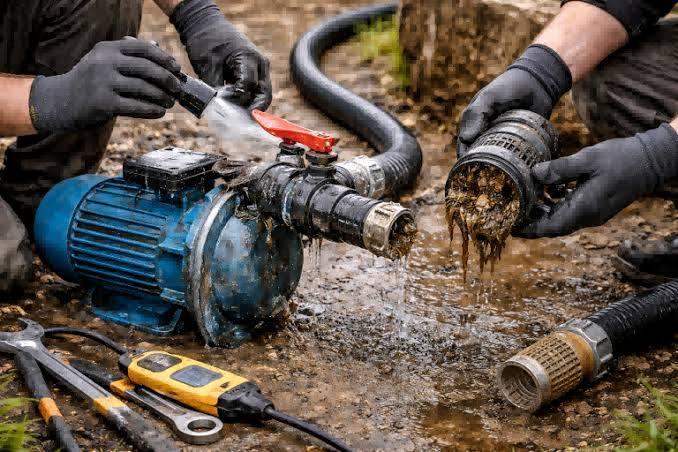
A clogged intake screen, blocked inlet pipe, or obstructed filter can also restrict water flow. Where safely accessible, inspect the area for visible debris and check whether the water source contains enough water.
Never allow a pump that requires water for cooling or lubrication to run dry. Dry operation can damage internal components and may cause overheating. If the pump has lost prime, follow the manufacturer's priming instructions only after isolating the power and confirming that the procedure is appropriate for that pump model.
Understand Pressure Switch and Pressure Tank Problems
In many residential well-water systems, the pressure switch controls the pump according to the water pressure in the system. When pressure drops below the switch's cut-in setting, the switch signals the pump to start. Once the pressure reaches the cut-out setting, the pump stops.
If the pressure switch becomes worn, blocked, or defective, the pump may fail to start or stop correctly. A waterlogged pressure tank, damaged diaphragm, or incorrect pressure setting can also contribute to short cycling, fluctuating water pressure, and repeated pump operation.
If you notice frequent starting and stopping, unusually low water pressure, or a pump that continues running, avoid repeatedly cycling the system. A qualified technician can test the switch, pressure tank, and associated plumbing components to determine the underlying problem.
Recognize Signs of Motor or Capacitor Failure
An electric pump motor may fail because of overheating, worn bearings, electrical faults, or prolonged operation under unsuitable conditions. Some single-phase pump motors use capacitors to help the motor start or run. A failed capacitor may cause humming, difficulty starting, or failure to operate.
These symptoms do not confirm a specific fault on their own. A humming pump could have a jammed impeller, low voltage, or another electrical or mechanical problem. Do not touch the motor, remove covers, or attempt capacitor replacement without the appropriate training and isolation procedures. Capacitors can retain a dangerous electrical charge even after power is disconnected.
If the pump smells burnt, becomes unusually hot, makes grinding noises, or repeatedly trips its protective device, switch it off if you can do so safely and arrange professional inspection.
Safe Troubleshooting Steps for Homeowners
Before contacting a technician, homeowners can perform a few basic checks without dismantling the pump.
-
Confirm that the water source or storage tank contains sufficient water.
-
Look for visible leaks, damaged pipes, or obvious obstructions.
-
Check the pump's display or controller for error codes.
-
Verify the normal operating position of accessible controls using the owner's manual.
-
Note whether the pump is silent, humming, cycling repeatedly, or running without delivering water.
Record when the problem started and whether water pressure changed beforehand. This information can help a technician narrow down possible causes and reduce unnecessary diagnostic work.
Avoid bypassing safety switches, opening electrical components, or repeatedly restarting a pump that may be running dry.
When to Call a Professional Pump Repair Technician
Professional assistance is appropriate when basic checks do not identify the problem or when the pump requires electrical, mechanical, or plumbing repairs. A technician can evaluate the motor, controls, pressure settings, intake, pipework, and water supply to identify the actual fault.
Prompt service is particularly important when the pump is overheating, producing a burning smell, leaking near electrical components, or repeatedly tripping a breaker. If the system supplies drinking water, also investigate any sudden changes in water appearance or odor before using the water.
Regular inspections, appropriate filtration, correct pressure settings, and adherence to manufacturer maintenance recommendations can help reduce avoidable failures. Addressing unusual noises, leaks, and pressure changes early may also prevent minor issues from developing into more extensive repairs.
Conclusion
A water pump that stops operating can disrupt household water supply, irrigation, and other essential activities. Common causes include electrical faults, insufficient water, blocked intakes, pressure switch problems, and motor failure. Basic visual checks can help identify obvious issues, but electrical and mechanical repairs should be handled by qualified professionals. By responding promptly to warning signs and maintaining the pump according to manufacturer recommendations, homeowners can support reliable operation and reduce the risk of unexpected breakdowns.
