

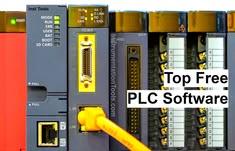
Competitive Landscape and Industry Positioning The PLC Software Market Share reflects the competitive environment among technology providers delivering programming, monitoring, and automation solutions for industrial applications. The industry includes est

Industry Analysis and Business Environment
The PLC Software Market Analysis highlights the growing importance of programmable control technologies in modern industrial environments. PLC software enables organizations to program and manage industrial equipment, automate production sequences, and monitor manufacturing processes. These capabilities support businesses seeking improved productivity, operational consistency, and equipment reliability. The industry is influenced by the expansion of manufacturing automation, increasing adoption of connected technologies, and modernization of industrial infrastructure. According to Market Research Future, the industry is projected to grow from USD 26.04 billion in 2025 to USD 45.09 billion by 2035, at a CAGR of 5.64%. Applications extend across process control, Manufacturing Execution Systems, Supervisory Control and Data Acquisition, and Distributed Control Systems. Manufacturing, automotive, energy, pharmaceuticals, chemicals, and food processing represent important application areas. The increasing complexity of industrial operations is encouraging businesses to adopt software that connects machine-level control with broader production management systems.
Demand Drivers and Industrial Automation Requirements
Industrial automation remains a major factor supporting the adoption of PLC software. Manufacturers are seeking technologies that improve production speed, reduce operational errors, and maintain consistent product quality. Programmable controllers allow organizations to automate repetitive machine operations and coordinate complex production sequences. The automotive industry uses PLC software for robotic assembly, welding, material handling, and inspection. Food processing facilities use programmable systems for packaging, temperature control, and production management. Chemical plants rely on automated control for monitoring industrial processes and maintaining operating conditions. Energy and utility organizations also use programmable systems to manage equipment and infrastructure. The growing importance of manufacturing efficiency is encouraging businesses to modernize existing control environments. In addition, Industry 4.0 initiatives are creating demand for software that can communicate with industrial sensors, monitoring applications, and enterprise systems.
Technology Developments and Application Segmentation
Technological developments are influencing PLC software capabilities across different applications. Internet of Things integration enables communication between industrial controllers, sensors, and monitoring systems. Cloud-based platforms can support remote access and centralized engineering management. Artificial intelligence and advanced analytics may improve equipment diagnostics and predictive maintenance. Within application categories, Manufacturing Execution Systems play an important role in connecting shop-floor activities with production management. SCADA solutions support real-time data acquisition and supervisory control, while process control applications manage industrial operating conditions. Distributed Control Systems coordinate more complex industrial processes. PLC architecture also influences software requirements. Modular systems offer flexibility for complex applications, compact systems provide space-efficient configurations, and rack-mounted systems support expandable industrial installations. These different configurations allow organizations to select automation environments according to their operational requirements.
Regional Insights and Industry Challenges
North America represents a significant regional environment for PLC software adoption, supported by industrial automation investment and established technology providers. Europe benefits from manufacturing modernization, engineering expertise, and industrial digitalization initiatives. Asia-Pacific is experiencing increasing demand through rapid industrialization and manufacturing investment, particularly in China and Japan. The Middle East and Africa are also developing opportunities through energy, infrastructure, and industrial diversification projects. Despite these opportunities, organizations face several challenges. Integration with legacy machinery can require additional technical resources and implementation expenditure. Cybersecurity threats are becoming more important as industrial control systems connect with wider networks. A shortage of experienced automation professionals can also affect deployment and maintenance. Businesses must therefore consider compatibility, security, training, and lifecycle management when adopting new software.
Future Industry Outlook Through 2035
The PLC software industry is expected to continue developing alongside smart manufacturing and industrial digital transformation. Cloud connectivity, industrial IoT, and AI-supported analytics may provide additional functionality for monitoring and equipment management. Businesses are likely to prioritize software that offers reliable control, flexible programming, and integration with enterprise applications. Cybersecurity and operational continuity will remain central considerations because PLC systems support essential industrial processes. Growth in emerging manufacturing economies may create additional opportunities for automation providers. As industrial organizations pursue connected and efficient production environments, PLC software will remain an important technology supporting process control and manufacturing modernization through 2035.
Key trending Reports :
Home High End Audio System Market
