


Planning for the future involves more than deciding who will inherit your money or property. It also means choosing who will manage your affairs, how your assets will be transferred, and what protections your loved ones may need. Two common estate planning tools are wills and trusts. Although both can help individuals control how their property is distributed, they work in different ways.
Understanding what is a will vs trust can help individuals and families make informed decisions about protecting their assets and preparing for the future. The right choice depends on personal circumstances, financial goals, family structure, and the level of control someone wants over their estate.
What Is a Will?
A will is a legal document that explains how a person's property should be distributed after death. It allows someone, known as the testator, to identify beneficiaries and nominate a personal representative to handle estate administration.
A properly prepared will can also address important family matters. For example, parents of minor children may use a will to nominate a guardian, subject to court approval. A will can also establish testamentary trusts for beneficiaries who should not receive an inheritance outright.
In Florida, a will must meet specific legal execution requirements. Generally, the person making the will must sign it, or acknowledge an existing signature, in the presence of at least two attesting witnesses. The witnesses must sign in the presence of the testator and each other.
A will generally takes effect at death and is subject to the probate process when probate assets need to be administered.
What Is a Trust?
A trust is a legal arrangement in which a person, called the grantor or settlor, transfers property to a trustee to manage for designated beneficiaries. The trust agreement explains how the assets should be handled and when distributions may be made.
One commonly used estate planning tool is a revocable living trust. It is created during the grantor's lifetime and can generally be changed or revoked while the grantor has the required legal capacity and authority under the trust terms.
Many people establish a revocable trust to maintain control over their assets while creating a plan for management during incapacity and distribution after death. The grantor can often serve as the initial trustee and name a successor trustee to take over when necessary.
A trust can also establish instructions for distributing assets over time rather than giving beneficiaries their inheritance immediately.
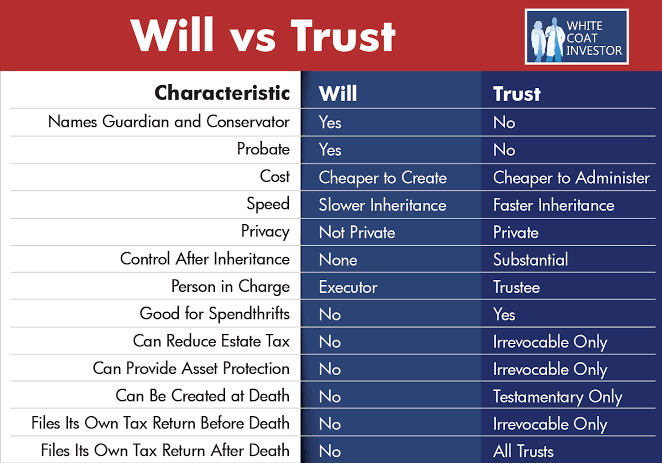
What Is a Will vs Trust? Understanding the Main Differences
Although wills and trusts can both support estate planning, their purposes and legal functions are not identical.
When they take effect: A will generally controls the distribution of probate property after death. A living trust can operate during the grantor's lifetime and continue after death according to its terms.
Probate involvement: Assets passing under a will generally require probate administration. Properly funded trust assets can usually be distributed through trust administration without a separate probate proceeding for those assets.
Asset management: A will nominates a personal representative to administer the probate estate. A trust appoints a trustee to manage property held in the trust.
Privacy: Probate proceedings involve court filings and records. Trust administration generally offers greater privacy because the trust agreement and its administration are not ordinarily handled through the same public probate process.
Incapacity planning: A will does not provide ongoing asset management if its maker becomes incapacitated. A properly structured living trust may allow a successor trustee to manage trust property under the trust's terms.
Cost and maintenance: A will is often simpler and less expensive to prepare initially. A trust may involve additional preparation, asset transfers, and ongoing administration. The overall cost depends on the complexity of the estate and the planning required.
Advantages of Having a Will
A will remains an important part of many estate plans, even when someone also establishes a trust.
Its advantages include:
-
Clear inheritance instructions: A will identifies the people or organizations intended to receive probate assets.
-
Personal representative nomination: It allows the testator to nominate someone to manage the estate, subject to legal qualification and court appointment.
-
Guardianship nominations: Parents can nominate a guardian for minor children.
-
Flexibility: A will can be updated when family circumstances, financial priorities, or beneficiary choices change.
-
Testamentary trust provisions: A will can create a trust that takes effect after death for certain beneficiaries.
A will may be particularly suitable for individuals with relatively straightforward estates who want to establish clear instructions for distributing their property.
Advantages of Establishing a Trust
A trust may offer additional planning opportunities, particularly for individuals with multiple assets, complex family circumstances, or specific distribution goals.
Some potential advantages include:
-
Probate avoidance for properly funded assets: Property transferred into a trust during the grantor's lifetime generally does not need to pass through probate solely to transfer ownership after death.
-
Continued management: A successor trustee can manage trust assets if the original trustee becomes unable to serve or dies.
-
Distribution control: The trust can establish conditions, schedules, or other instructions for beneficiary distributions.
-
Privacy: Trust administration generally avoids many of the public filings associated with probate.
-
Planning for incapacity: A living trust can provide instructions for managing assets during the grantor's lifetime if the grantor becomes incapacitated.
However, creating a trust is only part of the process. Assets must be properly transferred or otherwise connected to the trust for the intended benefits to work.
Can You Have Both a Will and a Trust?
Yes. In fact, many comprehensive estate plans include both documents because they serve different purposes.
A person who establishes a revocable living trust may also prepare a pour-over will. This type of will directs certain assets remaining outside the trust at death to be transferred into it through the probate process.
A pour-over will does not automatically eliminate probate. Instead, it provides a backup arrangement for assets that were not transferred into the trust during the grantor's lifetime.
Other estate planning documents may also be necessary, including a durable power of attorney and health care directives. These documents address matters that a will or living trust may not fully cover.
Which Option Is Right for Your Estate?
The decision between a will and a trust should reflect the individual's circumstances rather than a general assumption that one document is always better.
A will may be appropriate for someone who wants straightforward inheritance instructions and does not require extensive asset management arrangements. A trust may be worth considering when probate avoidance, ongoing management, privacy, or controlled distributions are important priorities.
Florida residents should also consider issues involving homestead property, beneficiary-designated accounts, jointly owned assets, taxes, and creditor claims. Transferring property into a trust without reviewing these issues can create unintended consequences.
An experienced estate planning attorney can review the ownership of assets, family needs, and long-term objectives before recommending an appropriate structure.
Conclusion
A will and a trust are valuable estate planning tools, but they serve different functions. A will provides instructions for distributing probate property and can address matters such as personal representative nominations and guardianship nominations. A trust can provide ongoing asset management, structured distributions, and probate avoidance for properly funded assets.
Understanding what is a will vs trust is an important step toward building an estate plan that reflects personal wishes and protects loved ones. With careful planning and appropriate legal guidance, individuals can choose documents that work together to support their financial and family goals.
