

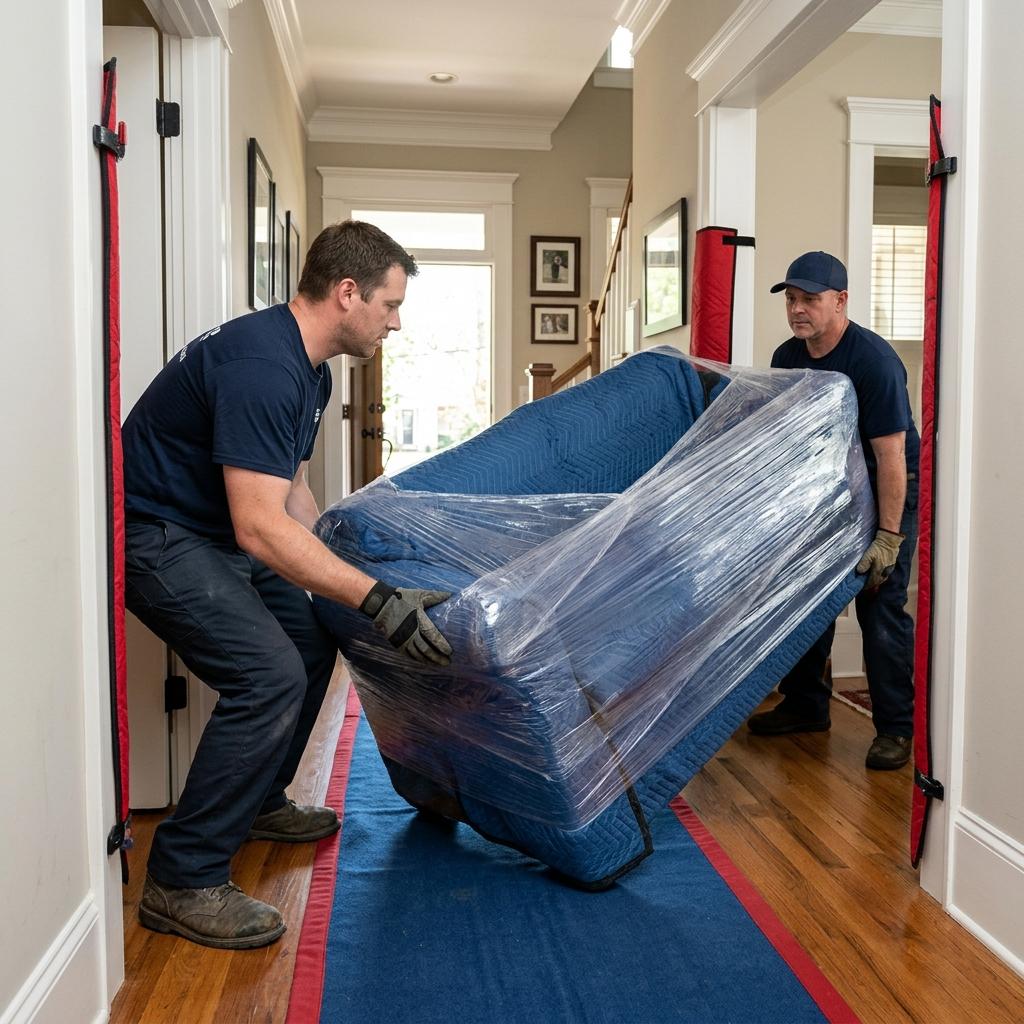
How Can You Move Heavy Furniture Through Narrow Spaces Without Damaging Your Home?

Moving a large sofa, solid wood dresser, sectional, or piano can become complicated when the route out of a room includes narrow doorways, sharp hallway turns, or steep stairs. The challenge is not simply lifting a heavy object. It is guiding an awkward shape through a limited space while protecting the furniture, the building, and everyone involved.
In Atlanta, Georgia, homes vary widely in layout. A move might involve a modern apartment with shared corridors, a townhouse with a tight staircase, or an older house with compact doorways. Understanding how professionals approach these obstacles can help homeowners prepare, avoid preventable damage, and decide when experienced help is worthwhile.
Why Narrow Spaces Make Furniture Moving Difficult
Furniture is designed for comfort and function, not necessarily for easy movement. A deep sectional may fit beautifully in a living room but prove difficult to turn around a hallway corner. A tall dresser can be too high to pass upright beneath a doorway, while a heavy dining table may have legs that catch on walls or trim.
The difficulty comes from a combination of weight, dimensions, balance, and available clearance. Even a piece that appears narrow enough on paper may need additional room to tilt, rotate, or change direction.
Trying to force an item through a tight opening can damage corners, scrape floors, loosen joints, or cause a loss of control. A safer move begins with measuring and planning, not pushing harder.
Measure the Furniture and the Entire Route
Before moving day, measure each large item at its widest, tallest, and deepest points. Include protruding handles, feet, decorative details, and any parts that cannot be removed. Record the measurements so they can be compared with the route.
Next, measure the doorways, hallways, stairwells, landings, and turns the furniture must pass through. Check ceiling height and note narrow points rather than measuring only the entrance. A staircase landing may be the real restriction, even when the front door is wide.
Account for Turning and Tilting Space
Measurements should reflect how an item will travel, not just whether it fits through an opening in a straight line. A long sofa may need to be angled vertically to clear a doorway. A tall cabinet may require careful tilting, but only if its construction and weight distribution make that movement safe.
Prepare Furniture Before Lifting
Preparation reduces weight, protects surfaces, and makes bulky pieces easier to control before the first item leaves its room. Empty drawers, cabinets, and shelves. Remove loose cushions, glass shelves, detachable legs, and other components when appropriate.
For suitable items, disassembly can make the difference between a manageable move and an unsafe attempt. Bed frames, table legs, and sectional components may be separated according to their construction.
Wrap finished surfaces with suitable moving blankets or protective padding. Secure the covering so it does not slide over handles or create a tripping hazard. Fragile edges, polished wood, and glass components deserve particular attention.
Protect Floors, Walls, and Doorways
Furniture is not the only thing at risk during a tight move. A corner can strike drywall, a leg can gouge hardwood, and repeated foot traffic can mark flooring. Before lifting begins, clear the route of rugs, shoes, small tables, and other obstacles.
Use appropriate floor protection where needed, especially across finished flooring and high-traffic thresholds. Doorway and wall protection can reduce scrapes when a large piece passes close to a surface.
Keep doors fully open when possible and secure them so they cannot swing into the load. Protecting the route before the first lift is easier than repairing damage afterward.
Use the Right Lifting and Moving Technique
Heavy furniture should be moved with coordinated effort and suitable equipment. Dollies, lifting straps, and other moving tools can help in appropriate situations, but equipment must match the item's weight, shape, and route.
People lifting should communicate clearly and agree on commands before moving. One person should coordinate the movement so everyone knows when to lift, lower, pause, or change direction. Keep the load controlled and avoid sudden twisting or jerking.
Know When a Piece Is Too Heavy
A large item may be awkward even when its weight seems manageable. Uneven weight distribution, delicate joints, and limited handholds increase the risk. If the furniture cannot be lifted and controlled without straining, stop and reassess rather than attempting another lift.
Pianos, oversized sectionals, antiques, and unusually heavy cabinets require particular care. Their construction, finish, and center of gravity can make improvised handling risky.
Plan for Atlanta Homes and Buildings
Moving conditions in Atlanta depend on the property, not simply the distance between addresses. Apartment residents may need to reserve a service elevator, follow building move-in hours, or arrange loading access. Townhomes can involve multiple stair flights, narrow landings, and limited places to pause with a bulky item.
Some homes have compact entryways, older trim, or room layouts that make turning difficult. Before moving day, confirm building requirements, parking arrangements, access instructions, and any restrictions that could affect the crew's route.
For residents comparing furniture movers in Atlanta, GA, it is useful to describe the largest items and the tightest access points when requesting a quote. Clear information helps a moving company understand the job and discuss the equipment, crew, and preparation that may be appropriate.
When Professional Furniture Movers Make Sense
A small chair or lightweight table may be manageable with careful preparation. Large, valuable, unusually shaped, or heavy pieces are different. Professional movers can assess access, plan the sequence, use suitable protective materials, and coordinate the handling of bulky items.
Ask a prospective mover how the team handles disassembly, padding, stairwells, and tight turns. Explain whether the furniture includes glass, delicate finishes, sentimental value, or parts that need special attention.
Magic Movers ATL lists furniture moving among its services in Atlanta and around Georgia. Its service description identifies sofas, pianos, sectionals, and heirlooms as examples of items handled, with disassembly, padding, and reassembly as part of the described service.
Homeowners can discuss moving heavy furniture through narrow spaces with the company when explaining a particular property's access challenges.
Make a Clear Plan for Moving Day
A smooth furniture move depends on decisions made before lifting starts. Identify which pieces need disassembly, which route each item will take, and where the crew can safely pause.
At the destination, decide where large pieces should go before they arrive. Measure tight entrances there as well, since a sofa that leaves one home successfully may face a different challenge at the new property.
After each item is placed, check its condition and confirm that reassembled components are secure. A final walkthrough helps identify anything that needs attention while the move is still underway.
Conclusion
Moving heavy furniture through narrow spaces is a problem of planning, measurement, protection, and controlled handling. Taking accurate dimensions, preparing each piece, clearing the route, and choosing suitable equipment can reduce the risk of damage and injury. Atlanta homes and buildings present different access challenges, so sharing details about stairs, hallways, elevators, and large items is essential.
When a piece is especially heavy, valuable, or difficult to maneuver, experienced movers can help develop a safer approach. A thoughtful plan protects more than furniture; it helps preserve the home and makes moving day more manageable.
