

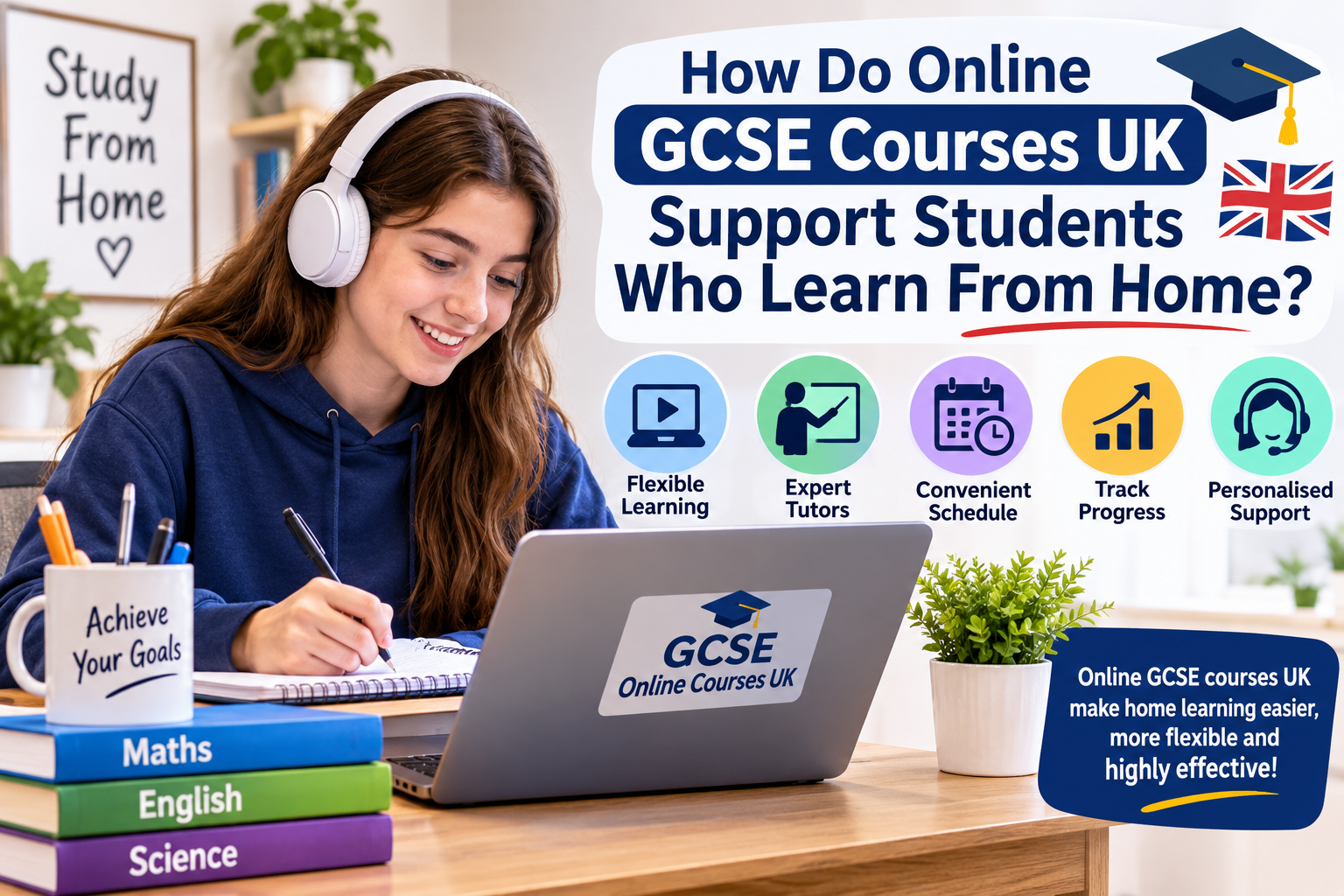
Learning from home has become an increasingly practical option for students who need more flexibility in their education. For families choosing home education, students who need to fit studying around other commitments, or learners who simply perform better in a quieter environment, online education can provide a useful alternative to traditional classroom learning.
Online GCSE courses UK providers can give students access to structured lessons, learning resources, tutor support and exam preparation without requiring them to attend a physical school every day. With the right approach, studying online can help students develop both academic knowledge and independent learning skills.
What Are Online GCSE Courses?
Online GCSE courses are structured programmes that allow students to study GCSE subjects through the internet. Depending on the provider and subject, lessons may include recorded videos, live classes, digital textbooks, worksheets, assignments, quizzes and assessments.
An online GCSE course can be particularly useful for students who need flexibility in when and where they study. Instead of following exactly the same daily routine as students in a traditional classroom, learners may have more control over their study schedule.
However, students should check important details before enrolling, including the qualification being offered, the relevant exam board, assessment arrangements and whether the course includes appropriate tutor support.
How Do Online GCSE Courses UK Support Home Learners?
One of the biggest advantages of online GCSE courses UK programmes is that they are designed to make learning possible outside a traditional classroom.
Students can generally access their lessons and learning materials from home using a computer, tablet or another suitable device. This means that the learner can create a study environment that suits their individual needs.
For example, a student may prefer studying in the morning, while another learner may find it easier to concentrate in the afternoon or evening. A flexible online programme can make it easier to organise study around personal circumstances.
1. Flexible Study Schedules
Home learners often have different schedules from students attending conventional schools. Online courses can provide greater flexibility, allowing students to organise their study time around their individual routines.
This flexibility can be particularly valuable when students are balancing several subjects. They can create a timetable that gives sufficient time to difficult topics while maintaining regular revision for subjects they already understand well.
2. Learning in a Comfortable Environment
Some students find that they concentrate better away from a busy classroom. Studying at home can provide a quieter environment where learners can work at their own pace.
Students can organise their workspace, reduce unnecessary distractions and develop a consistent study routine. Parents can also help younger learners establish suitable schedules and make sure they have the equipment and environment needed for effective study.
3. Access to Digital Learning Resources
Many online GCSE courses use a combination of digital resources to explain GCSE topics. These may include videos, presentations, practice questions, downloadable materials and online assessments.
Having resources available digitally can make revision more convenient. Students may be able to revisit a difficult lesson or review a particular topic before attempting practice questions.
This can be especially helpful for subjects where students need regular practice, such as mathematics, English and the sciences.
4. Support for Independent Learning
Home education requires students to become more responsible for their own learning. Online GCSE programmes can help develop this independence by encouraging students to manage their time, complete assignments and monitor their progress.
These skills can be useful beyond GCSEs. Students who become comfortable with planning their own studies may find the transition to further education or other forms of independent learning easier.
5. Tutor and Academic Support
Although online learning takes place remotely, students do not necessarily have to study without assistance. Depending on the provider, support may be available through live lessons, email, messaging systems, online meetings or scheduled tutoring sessions.
Tutor support can be particularly important when a student is struggling with a difficult topic. Instead of repeatedly trying to understand a concept alone, the learner may be able to ask questions and receive clarification.
When comparing online GCSE courses for homeschooling, parents and students should therefore look carefully at the level of tutor support included in the programme.
Can Online GCSE Courses Help With Exam Preparation?
Yes, an appropriate online programme can support GCSE exam preparation by combining subject learning with regular practice.
Students can use mock tests, practice questions and revision activities to identify areas where they need additional work. Regular assessment can also help learners become familiar with the types of questions they may encounter in their examinations.
However, students should not assume that completing an online course automatically guarantees examination success. Effective preparation also requires consistent revision, practice and an understanding of the requirements of the relevant examination board.
It is important to check whether the course provider clearly explains how examinations are arranged and what students need to do to enter their exams.
Why Are Online GCSE Courses Useful for Homeschooling?
Online GCSE courses for homeschooling can provide structure for families who have chosen to educate their children at home.
Homeschooling can offer flexibility, but creating a suitable GCSE study programme can sometimes be challenging. A structured online course can provide a curriculum framework, learning materials and a sequence of topics for students to follow.
Parents may also find it easier to monitor progress when assignments and assessments are organised through an online learning platform.
Nevertheless, parents should research providers carefully. Factors such as course content, tutor qualifications, exam-board information, assessment methods, student support and costs should all be considered before making a decision.
How Should Students Choose an Online GCSE Course?
Choosing the right online GCSE course involves more than simply comparing prices. Students should consider whether the programme matches their academic goals and preferred learning style.
Useful questions to ask include:
-
Which GCSE subjects are available?
-
Which examination board is associated with the qualification?
-
Are lessons live, recorded or a mixture of both?
-
Is tutor support available?
-
How are assignments assessed?
-
Are mock examinations included?
-
How are final GCSE examinations arranged?
-
What technical equipment is required?
-
Are there additional costs beyond the advertised course fee?
Answering these questions can help students and parents compare different online GCSE courses UK providers more effectively.
Creating a Successful Home Study Routine
Having an online course is only part of successful home learning. Students should also create a realistic timetable and maintain consistent study habits.
A useful routine could include dedicated time for lessons, homework, revision and breaks. Students should avoid trying to study for long periods without rest, as concentration can decrease over time.
It can also help to set weekly goals. For example, a student might aim to complete a particular topic, finish an assignment and complete a set number of practice questions during the week.
Parents can provide encouragement and help students stay organised without taking complete control of their learning.
Conclusion
Online GCSE courses UK programmes can provide valuable flexibility for students who learn from home. Through digital lessons, structured resources, tutor support and online assessments, students can study GCSE subjects without relying entirely on a traditional classroom environment.
For homeschooling families in particular, online GCSE courses for homeschooling can offer a structured approach to secondary-level education while allowing learners to study from a familiar environment.
The most important step is choosing a suitable programme. Students and parents should check the course content, examination arrangements, tutor support, assessment methods and qualification details before enrolling. With a well-organised routine and consistent effort, online GCSE learning can be a practical way to prepare for GCSE examinations from home.
Frequently Asked Questions
1. Are online GCSE courses suitable for students who learn from home?
Yes. Online GCSE courses can be suitable for home learners because they provide access to lessons and educational resources without requiring students to attend a traditional classroom.
2. Can students study GCSE subjects at their own pace?
Some online programmes offer considerable flexibility, while others follow fixed schedules. Students should check the specific course structure before enrolling.
3. Are online GCSE courses useful for homeschooling?
Yes. Online GCSE courses for homeschooling can provide structured learning materials, assessments and academic support, making GCSE study easier to organise at home.
4. Do online GCSE courses include tutor support?
This depends on the provider. Some courses offer live teaching and direct tutor assistance, while others rely mainly on recorded lessons and digital resources. Always check what support is included.
5. Can online GCSE courses prepare students for exams?
They can support exam preparation through lessons, revision materials, practice questions and assessments. Students should also understand their examination requirements and maintain regular revision.
6. What should parents check before choosing an online GCSE course?
Parents should check the subjects offered, qualification and examination arrangements, course content, tutor support, assessment methods, learning resources and total costs.
7. Is an online GCSE course the same as attending a traditional school?
Not necessarily. The learning environment and teaching methods can be different. Online courses allow students to study remotely, while traditional schools generally provide face-to-face classroom education.
8. Can students study multiple GCSE subjects online?
Many providers offer multiple GCSE subjects, but availability varies. Students should check whether all the subjects they need are offered and whether the examination arrangements meet their requirements.
