

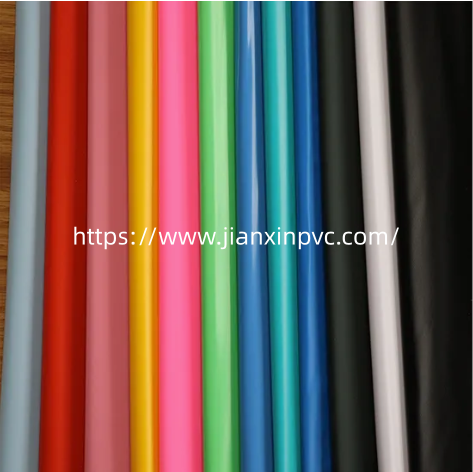

A vehicle interior is shaped by the details drivers and passengers see and touch every day. Dashboard accents, door inserts, console panels, and other trim areas contribute to the cabin’s visual identity. For manufacturers exploring surface customization, PVC Automotive Decorative Film can offer a way to introduce color, texture, and a coordinated finish without changing the underlying component design. Its role is not purely decorative: the film must also suit the substrate, the application process, and the conditions expected inside a vehicle. These considerations make material selection and design planning closely connected.
The material structure influences how a decorative film looks and behaves. PVC can be processed into flexible films with varied surface appearances, including smooth, embossed, colored, and patterned finishes. Formulation choices affect flexibility, surface feel, and the film’s ability to conform during processing. Pigments contribute to color, while embossing can create tactile patterns that resemble selected materials. A decorative film may be used as a surface layer or incorporated into a larger component-making process, depending on its construction. Automotive interior applications require particular attention to the film and substrate working together, since an attractive surface alone does not establish suitability for the intended part. Zhejiang Jianxin Plastic Co., Ltd. describes its embossed PVC film as available for automotive interior decoration, including textured surface options.
Choosing a suitable film begins with defining the application. A trim piece with a broad, relatively flat surface may present different requirements from a component with curves, recesses, or detailed edges. Buyers should identify the substrate material, the intended finish, and the production method before comparing film options. They should also consider whether the surface will be frequently touched, exposed to cleaning products, or positioned near sunlight. A sample review can help teams evaluate the film’s color, texture, flexibility, and visual consistency in the context of the actual component. It is useful to assess the decorated part rather than relying only on a flat film sample, because forming and application can change how a pattern or finish appears.
Decorative film technology involves more than producing a colored sheet. Depending on the application, the film may be printed, embossed, laminated, formed, or bonded to a compatible substrate. The selected process influences how accurately a design follows the component’s shape and how consistently the finish is reproduced. When a film is formed over a contoured part, the pattern and texture need to remain visually coherent. Adhesion and substrate compatibility also matter: if the materials do not work well together, the surface may show defects or lose its intended appearance. Automotive decorative surfaces are therefore developed through coordination between film characteristics, part geometry, and manufacturing methods. Film-based decoration is also used in automotive trim production where a designed surface is integrated with a component.
The user experience is influenced by both appearance and touch. A textured surface may create a more tactile impression, while a smooth finish can contribute to a clean and understated interior. The visual effect can also vary with lighting and the surrounding materials, so a film should be considered as part of the complete cabin environment. Decorative surfaces should be easy for users to understand and maintain, particularly in areas that are regularly touched. Buyers can discuss expected cleaning practices and the intended location of the film with their supplier. For vehicle applications, installation and component design must also preserve the function of surrounding controls and safety-related features.
Design and appearance provide broad opportunities for customization. Color, gloss, texture, and pattern can help establish a consistent visual language across different interior components. A restrained finish may complement a minimalist cabin, while a more expressive pattern can create a focal detail. Embossed effects can introduce depth without relying only on printed graphics, and coordinated finishes can help separate functional areas while maintaining a unified style. Designers should consider how the film works alongside upholstery, plastics, metal-look accents, and other cabin materials. The goal is to create visual continuity while respecting the shape and purpose of each component.
For manufacturers and sourcing teams, design development often involves balancing creative direction with production practicality. Clear communication about substrate, application method, desired texture, and appearance expectations can make sample evaluation more productive. Zhejiang Jianxin Plastic Co., Ltd. offers PVC film products for varied applications, including decorative film options. Businesses considering automotive interior film can discuss their intended use, preferred finish, and processing requirements with the company to clarify whether a proposed material aligns with their project. Further information about the company and its PVC film products is available at https://www.jianxinpvc.com/.

