

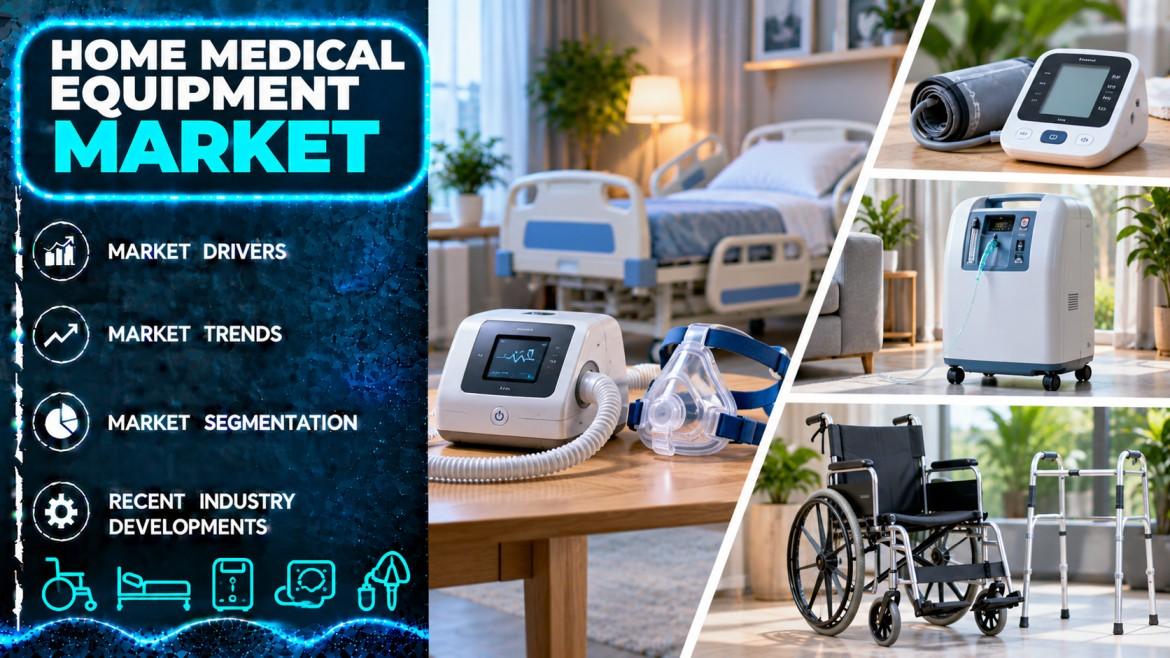

IMARC Group, a leading global market research and management consulting firm, has published its latest market intelligence report on the home medical equipment market. The global home medical equipment market size reached USD 44.7 Billion in 2025. Looking forward, IMARC Group expects the market to reach USD 70.9 Billion by 2034, exhibiting a growth rate (CAGR) of 5.10% during 2026-2034. The market is witnessing steady expansion, driven by a rapidly growing geriatric population, rising prevalence of chronic conditions such as diabetes, cardiovascular disease, and respiratory illness, strong preference for home-based care over extended hospital stays, and wider adoption of smart, connected devices that enable remote monitoring worldwide.
Demand is gaining momentum as patients, families, and health systems look for care that is cost-effective, comfortable, and clinically reliable outside hospital walls. Respiratory therapy devices, dialysis systems, intravenous equipment, connected monitors, and mobility aids now allow patients to manage long-term conditions from their living rooms. Government programs are reinforcing this shift. In the United States, the Acute Hospital Care at Home program has been extended for five years and covers 366 approved programs across 139 health systems in 37 states. Meanwhile, the World Health Organization notes that the global population aged 60 and above is on course to reach roughly 1.4 billion, which keeps the installed base of home-use devices expanding.
How AI is Reshaping the Future of the Home Medical Equipment Market
- AI-Powered Remote Patient Monitoring and Early Risk Detection: Machine learning platforms embedded in connected blood pressure monitors, pulse oximeters, glucose monitors, and wearables analyze continuous streams of vital sign data to flag deterioration before it becomes an emergency. Clinicians managing patients with heart failure, COPD, and diabetes can prioritize high-risk cases, reduce avoidable readmissions, and extend specialist oversight to patients living far from hospitals.
- Smart Therapy Optimization in Respiratory and Sleep Care: AI-enabled CPAP machines, ventilators, and portable oxygen concentrators automatically adjust pressure and flow based on breathing patterns, track adherence, and send usage reports to care teams. This helps providers verify compliance, tune therapy remotely, and cut unnecessary home visits, which improves outcomes for patients using oxygen and sleep therapy equipment.
- Predictive Maintenance and Smarter Supply Management for HME Providers: Equipment providers are using analytics to forecast device servicing needs, optimize delivery routes, and manage rental fleets of hospital beds, wheelchairs, and oxygen systems. This reduces downtime, improves inventory turnover, and supports faster setup for patients discharged from hospitals who need equipment at home within hours.
Grab a sample PDF of this report: https://www.imarcgroup.com/home-medical-equipment-market/requestsample
Home Medical Equipment Market Trends and Drivers
The global home medical equipment market is expanding as demographic change, chronic disease burden, and digital health adoption converge. The foundational demand driver is the growing geriatric population, which is more vulnerable to long-term conditions and increasingly prefers to age in place. The World Health Organization identifies chronic obstructive pulmonary disease as one of the leading causes of death worldwide, which sustains steady demand for oxygen concentrators, nebulizers, and ventilation devices in the home. Diabetes adds to this pressure, with the International Diabetes Federation estimating that more than 580 million adults live with the condition globally. That scale supports consistent demand for glucose meters, continuous glucose monitors, and related monitoring supplies.
Policy and reimbursement support is amplifying adoption. In the United States, the Hospital at Home model has produced measurable results. Marshfield Clinic Health System reported a 44% reduction in readmissions, a 35% drop in average length of stay, and patient satisfaction above 90%. Ochsner Health saved more than 1,000 bed-days in under a year by avoiding inpatient admissions. In India, the government extended Ayushman Bharat PM-JAY health coverage in September 2024 to all citizens aged 70 and above, covering approximately 6 crore senior citizens across 4.5 crore families. This broadens access to care and strengthens long-term demand for home recovery and chronic care equipment in one of the world’s fastest-ageing large economies.
Technology is reshaping how devices are designed and delivered. Wearables such as smartwatches and fitness trackers now monitor heart rate, oxygen saturation, and activity continuously. Portable devices like compact oxygen concentrators and handheld glucose monitors give patients independence and mobility. IoT connectivity links these devices directly to healthcare providers, enabling real-time data sharing and telemedicine consultations. The shift toward preventive care and patient empowerment is also pushing consumers to buy personal monitoring devices proactively, not only after a diagnosis. At the same time, regulators are tightening oversight. A six-month moratorium on new HME provider enrollments in the United States ended in August, and CMS then announced a one-year probationary period for newly enrolled providers in September. This is raising quality and compliance standards across the supplier base.
Ask an analyst for customized report: https://www.imarcgroup.com/request?type=report&id=6144&flag=E
Home Medical Equipment Industry Segmentation
The report has segmented the market into the following categories:
Breakup By Equipment Type:
- Therapeutic Equipment
- Respiratory Therapy
- Dialysis
- Intravenous Equipment
- Others
- Patient Monitoring Equipment
- Conventional Patient Monitoring Equipment
- Telemedicine Patient Monitoring Equipment
- Mobility Assist and Patient Support Equipment
- Mobility Assist Devices
- Medical Furniture
- Bathroom Safety Equipment
Therapeutic equipment accounts for the largest equipment type segment, driven by the high prevalence of chronic respiratory disease, kidney failure, and conditions requiring long-term infusion therapy. Respiratory therapy devices, home dialysis systems, and intravenous equipment allow patients to receive continuous treatment without repeated hospital visits, which lowers costs for payers and improves quality of life for patients and caregivers.
Breakup By Distribution Channel:
- Retail Medical Stores
- Online Retailers
- Hospital Pharmacies
Retail medical stores hold the largest distribution channel share, supported by in-person product guidance, fitting and demonstration of devices such as wheelchairs and oxygen equipment, and established relationships with physicians and insurers. Online retailers continue to gain traction as consumers seek convenient purchasing of monitors, mobility aids, and bathroom safety products with home delivery.
Breakup By Region:
- North America (United States, Canada)
- Europe (Germany, France, United Kingdom, Italy, Spain, Russia, Others)
- Asia Pacific (China, Japan, India, South Korea, Australia, Indonesia, Others)
- Latin America (Brazil, Mexico, Others)
- Middle East and Africa
North America dominates the global home medical equipment market with the largest regional share, driven by advanced healthcare infrastructure, strong research and development capacity, a large geriatric population, and high adoption of telehealth and connected devices. Supportive reimbursement frameworks and federal programs that move inpatient-level care into the home further reinforce regional leadership across the United States and Canada.
Competitive Landscape
The report provides a comprehensive analysis of the competitive landscape in the home medical equipment market with detailed profiles of all major companies, including:
- ARKRAY Healthcare
- Baxter International
- Caire Inc.
- Drive Medical
- Fresenius Medical Care
- GF Health Products
- Inogen
- Invacare
- Koninklijke Philips
- Medtronic
- Microlife Corporation
- OMRON Healthcare India
- ResMed
What Does The Full Report Cover?
If you are tracking the home medical equipment market for investment decisions, market entry planning, competitive benchmarking, or strategic advisory, IMARC Group’s report gives you everything in one place:
- Complete market sizing with revenue forecasts covering the full projection period
- Quantified growth driver analysis across equipment type, distribution channel, and regional markets
- Sub-segment breakdowns for therapeutic equipment, patient monitoring equipment, and mobility assist and patient support equipment, along with retail medical stores, online retailers, and hospital pharmacies
- Country-level data for the United States, Canada, Germany, France, the United Kingdom, Italy, Spain, Russia, China, Japan, India, South Korea, Australia, Indonesia, Brazil, and Mexico
- Competitive profiles of 13 leading companies with strategic landscape assessment
- Porter’s Five Forces, value chain analysis, and pricing intelligence
- Latest innovation trends covering wearables, telemedicine-enabled monitoring, portable oxygen concentrators, compact glucose monitors, and IoT-connected devices shaping competition and patient preference across key regional markets
Recent News and Developments in Home Medical Equipment Market
- October: Davion Healthcare Plc agreed to acquire Healthcare Stat Homecare Inc., a Philadelphia-based home healthcare provider offering skilled nursing, rehabilitation, and wound care services, in a deal valued at USD 13.5 Million, comprising USD 8 Million in cash and USD 5.5 Million in shares. The acquisition gives Davion an operating home care business and a platform to test its non-invasive monitoring technologies in real home care settings.
- October: Trace Medical acquired a majority stake in LiViliti Health Products, whose Paptizer 360 received FDA 510(k) clearance as a Class II CPAP accessory microbial reduction device. The deal reflects continued investment in sleep therapy accessories and hygiene solutions for home CPAP users.
- September: America Wellness Group acquired New Hampshire Medical Supply, a provider founded in 1962, as its first HME acquisition. The move marks the start of a planned national platform strategy in home medical equipment supply.
- September: CMS announced a one-year probationary period for newly enrolled HME providers following the end of a six-month moratorium on new enrollments in August, tightening program integrity and compliance expectations across the supplier base.
- September (2024): India’s government approved extending Ayushman Bharat PM-JAY coverage to all senior citizens aged 70 and above, widening access to healthcare for an estimated 6 crore elderly beneficiaries and supporting demand for home-based care and equipment.
Note: If you require specific details, data, or insights that are not currently included in the scope of this report, we are happy to accommodate your request. As part of our customization service, we will gather and provide the additional information you need, tailored to your specific requirements. Please let us know your exact needs, and we will ensure the report is updated accordingly to meet your expectations.
Key Questions This Report Answers
- What is the current global home medical equipment market size and what is its projected value?
- Which equipment type segment holds the largest share in the global home medical equipment market?
- What are the key drivers of global home medical equipment market growth?
- Which region dominates the global home medical equipment market and why?
- How are telemedicine, wearables, IoT connectivity, and portable device innovation reshaping product development and competitive strategies in the home medical equipment industry?
- Who are the top companies in the global home medical equipment market and what are their competitive strategies?
- What are the investment and market entry opportunities across therapeutic equipment, patient monitoring equipment, and mobility assist and patient support equipment segments?
About Us:
IMARC Group is a global management consulting firm that helps the world’s most ambitious changemakers to create a lasting impact. The company provides a comprehensive suite of market entry and expansion services. IMARC offerings include thorough market assessment, feasibility studies, company incorporation assistance, factory setup support, regulatory approvals and licensing navigation, branding, marketing and sales strategies, competitive landscape and benchmarking analyses, pricing and cost research, and procurement research.
Media and Sales Contact
IMARC Group
Email: [email protected]
United States: +1-201-971-6302
India: +91-120-433-0800
United Kingdom: +44-753-714-6104
