

Cigarette Lighter Manufacturing Plant Project DPR: Investment Analysis, Financial Projections and Capacity Planning

IMARC Group's report, "Cigarette Lighter Manufacturing Plant Project Report 2026: Industry Trends, Plant Setup, Machinery, Raw Materials, Investment Opportunities, Cost and Revenue", offers a comprehensive guide for establishing a manufacturing plant. The cigarette lighter manufacturing plant cost report offers insights into the manufacturing process, financials, capital investment, expenses, ROI, and more for informed business decisions.
Cigarette Lighter Manufacturing Plant Project Report Summary: -
- Comprehensive guide for setting up cigarette lighter manufacturing plant.
- Covers market trends and industry outlook for 2026.
- Detailed project setup, including unit operations and processes.
- Raw material and utility requirements.
- Infrastructure and machinery specifications.
- Workforce and staffing requirements.
- Packaging and transportation details.
- Financial aspects: investment opportunities, cost analysis, and revenue projections.
In addition to covering operational aspects, the report offers detailed insights into the cigarette lighter manufacturing plant process and project economics.
- Detailed insights into the cigarette lighter manufacturing plant
- In-depth project economics and financial metrics.
- Covers capital investments and project funding.
- Analysis of operating expenses and income projections.
- Breakdown of fixed and variable costs, direct and indirect expenses.
- Evaluation of ROI (Return on Investment) and NPV (Net Present Value).
- Profit and Loss account analysis.
- Comprehensive financial analysis for decision-making.
- Provides a roadmap for successfully establishing a cigarette lighter manufacturing plant.
Request for a Sample Report: https://www.imarcgroup.com/cigarette-lighter-manufacturing-plant-project-report/requestsample
What is a cigarette lighter?
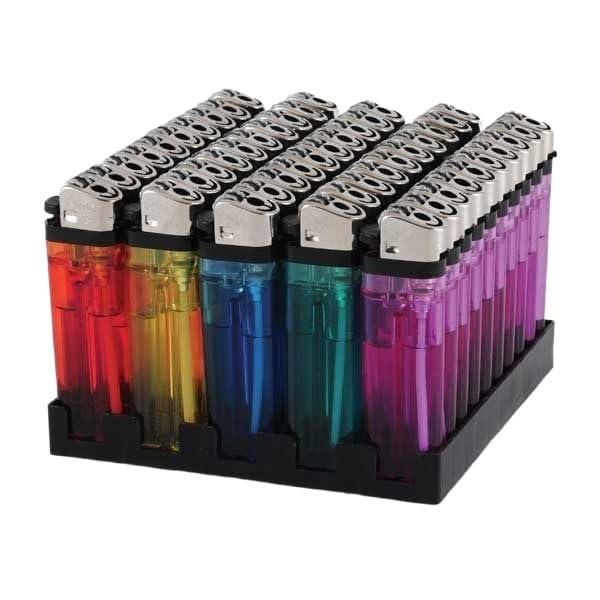
A cigarette lighter is a portable device designed to produce a controlled flame or heat source for igniting cigarettes and other combustible materials. It typically consists of a fuel reservoir, ignition mechanism, valve, and protective casing. Common types include disposable lighters, refillable gas lighters, electric lighters, and windproof lighters, each catering to different consumer preferences and applications. Disposable lighters are widely used due to their affordability and convenience, while refillable variants appeal to consumers seeking reusable alternatives. Electric lighters utilize rechargeable batteries and plasma arcs or heating elements, offering a flame-free ignition option. Cigarette lighters are manufactured using materials such as plastic, metal, and ceramic components, depending on their design, durability, and functionality. Their compact size, portability, and ease of operation make them convenient everyday accessories. Beyond tobacco-related applications, these devices are also used for lighting candles, incense, and small outdoor fires, supporting demand across retail, hospitality, household, and outdoor recreational segments.
Market Trends and Drivers:
The global cigarette lighter market is influenced by consumer demand for convenient, portable, and affordable ignition products across various applications. The global cigarette lighter market size was valued at USD 6.63 Billion in 2025. According to IMARC Group estimates, the market is expected to reach USD 7.80 Billion by 2034, exhibiting a CAGR of 1.8% from 2026 to 2034. The widespread availability of disposable lighters through convenience stores, supermarkets, tobacco retailers, and online platforms supports consistent product accessibility. Additionally, manufacturers are focusing on ergonomic designs, improved ignition mechanisms, attractive finishes, and customizable products to differentiate their offerings in a competitive marketplace.
Growing interest in reusable and rechargeable alternatives is encouraging the development of electric and refillable lighters that offer enhanced functionality and reduced disposable waste. Furthermore, demand from household, hospitality, and outdoor recreational applications contributes to market opportunities. Product innovation, efficient manufacturing processes, and expanded distribution networks are also helping manufacturers strengthen their market presence. However, increasing awareness of smoking-related health risks, fluctuations in raw material prices, environmental concerns regarding disposable plastic products, and stringent product safety regulations may influence future market growth and shape evolving consumer preferences.
Cigarette Lighter Manufacturing Plant Investment and Capacity Planning
A comprehensive cigarette lighter manufacturing plant investment analysis begins with determining the production capacity, machinery requirements, plant location, infrastructure, and working capital needed to establish the facility. According to IMARC Group, the proposed cigarette lighter manufacturing plant is designed for an annual production capacity of 100–300 million units, allowing manufacturers to benefit from economies of scale while retaining operational flexibility. The total investment depends on the selected production technology, degree of automation, land requirements, and infrastructure development. Key capital expenditure (CapEx) components include land acquisition, site development, civil works, automated fuel-filling machines, ignition assembly units, welding and pressing machinery, quality inspection systems, and packaging equipment. Capacity planning should also consider raw material availability, production scheduling, storage requirements, and future expansion. A well-structured investment plan helps businesses align manufacturing capacity with anticipated demand and establish an efficient production facility.
Cigarette Lighter Plant Financial Projections and Profitability Assessment
The financial projections for a cigarette lighter manufacturing business evaluate capital investment, operating expenditure (OpEx), production capacity utilization, product pricing, projected revenue, and overall profitability. As outlined in the IMARC Group report, raw materials account for approximately 60–70% of total operating expenses, while utilities contribute around 10–15%. Major inputs include plastic granules, steel flints, butane gas, and piezo ignition systems. Financial planning should also incorporate employee salaries, packaging, transportation, equipment maintenance, depreciation, and taxation. Under normal operating conditions, the proposed project indicates gross profit margins of 35–45% and net profit margins of 15–20%. The financial feasibility assessment includes income and expenditure projections, cash flow, liquidity, return on investment (ROI), payback period, net present value (NPV), and internal rate of return (IRR). These indicators help investors assess the project's financial sustainability, evaluate funding requirements, and identify potential risks associated with raw material price fluctuations and changes in production costs.
Production Capacity Utilization and Long-Term Investment Returns
Effective cigarette lighter production capacity planning is essential for balancing manufacturing output with market demand and investment returns. The proposed plant's annual capacity of 100–300 million units provides a basis for estimating raw material requirements, machinery utilization, staffing needs, and operating expenditure. Financial projections should assess different capacity utilization scenarios to determine their impact on unit production costs, sales revenue, and profitability. The report also considers how inflation, raw material price fluctuations, supply chain disruptions, and changing demand can influence operating expenses over time. Assessing break-even requirements, projected cash flows, and investment recovery timelines enables manufacturers to develop appropriate production and funding strategies. A detailed techno-economic feasibility study can therefore support informed decisions regarding plant scale, production technology, resource allocation, and long-term financial performance.
Ask Analyst for Customization: https://www.imarcgroup.com/request?type=report&id=7406&flag=C
Customization Options Available:
- Plant Location: Selection of optimal location for the plant.
- Plant Capacity: Customization based on desired production capacity.
- Machinery: Choice between automatic, semi-automatic, or manual machinery.
- List of Machinery Providers: Identification of suitable machinery suppliers.
Key Questions Addressed in This Report:
- How has the cigarette lighter market performed so far and how will it perform in the coming years?
- What is the market segmentation of the global cigarette lighter market?
- What is the regional breakup of the global cigarette lighter market?
- What are the price trends of various feedstocks in the cigarette lighter industry?
- What is the structure of the cigarette lighter industry and who are the key players?
- What are the various unit operations involved in a cigarette lighter manufacturing plant?
- What is the total size of land required for setting up a cigarette lighter manufacturing plant?
- What is the layout of a cigarette lighter manufacturing plant?
- What are the machinery requirements for setting up a cigarette lighter manufacturing plant?
- What are the raw material requirements for setting up a cigarette lighter manufacturing plant?
- And more...
How IMARC Can Help?
IMARC Group is a global management consulting firm that helps the world's most ambitious changemakers to create a lasting impact. The company provide a comprehensive suite of market entry and expansion services. IMARC offerings include thorough market assessment, feasibility studies, company incorporation assistance, factory setup support, regulatory approvals and licensing navigation, branding, marketing and sales strategies, competitive landscape and benchmarking analyses, pricing and cost research, and procurement research.
Services:
- Plant Setup
- Factoring Auditing
- Regulatory Approvals, and Licensing
- Company Incorporation
- Incubation Services
- Recruitment Services
- Marketing and Sales
Contact Us:
IMARC Group
134 N 4th St. Brooklyn, NY 11249, USA
Email: [email protected]
Tel No:(D) +91 120 433 0800
United States: +1-201971-6302

