

Minimally Invasive Surgery Market Size, Share, Latest Insights and Forecast 2026-2034

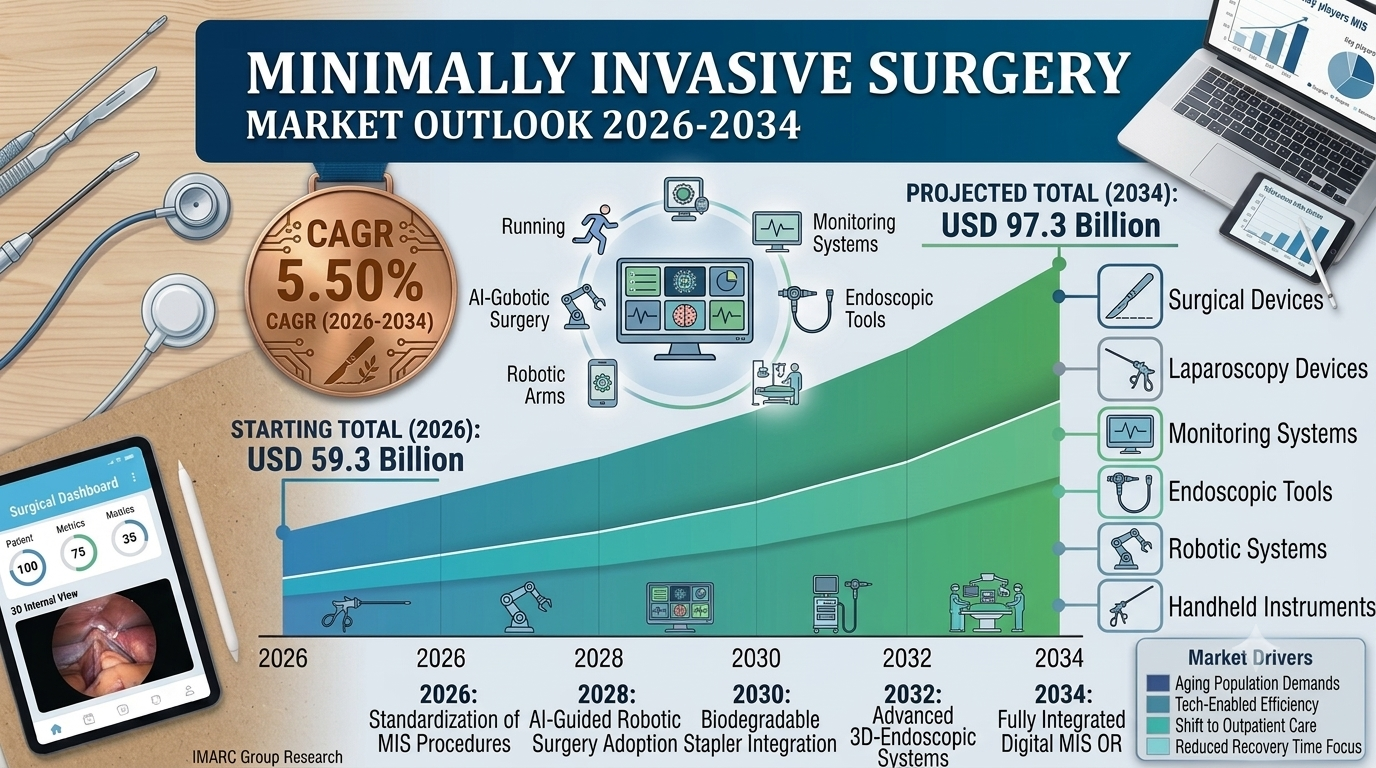
According to IMARC Group, the global minimally invasive surgery market size reached USD 59.3 Billion in 2025 and is projected to reach USD 97.3 Billion by 2034, expanding at a CAGR of 5.50% during 2026-2034. This sustained expansion reflects rising geriatric and chronic disease burden, the rapid adoption of robotic-assisted surgical platforms, and growing patient and surgeon preference for procedures that reduce complications and hospital stays.
Minimally Invasive Surgery Industry Overview
Minimally invasive surgery refers to surgical techniques that limit the size and number of incisions made during an operation through the use of small tools, high-definition cameras, and specialized lighting systems. Compared with traditional open surgery, MIS procedures are associated with fewer complications, quicker recovery, minimal blood loss, and shorter hospital stays, which has made them increasingly popular among both surgeons and patients. These techniques are now widely deployed across cardiothoracic, orthopedic, vascular, neurological, and general surgical procedures.
Minimally invasive surgical approaches are applied across a broad continuum of clinical use cases:
- Cardiac and thoracic surgery: Valve repair, bypass procedures, and lung resections performed through small ports rather than open-chest incisions
- Orthopedics and spine surgery: Arthroscopic joint repair and minimally invasive spinal fusion reducing muscle disruption and recovery time
- Gastrointestinal and bariatric surgery: Laparoscopic and robotic-assisted procedures for weight-loss surgery, hernia repair, and colorectal interventions
- Gynaecological surgery: Laparoscopic and robotic hysterectomy, myomectomy, and endometriosis treatment with reduced post-operative pain
- Cosmetic and breast surgery: Precision-guided procedures that minimize scarring while improving aesthetic and functional outcomes
Global Minimally Invasive Surgery Market Size & Key Statistics
Below are the key statistics drawn from IMARC Group's comprehensive market analysis:
|
Report Attribute |
Key Statistics |
|
Base Year |
2025 |
|
Historical Period |
2020-2025 |
|
Forecast Period |
2026-2034 |
|
Minimally Invasive Surgery Market Size in 2025 |
USD 59.3 Billion |
|
Market Forecast in 2034 |
USD 97.3 Billion |
|
Market Growth Rate (2026-2034) |
5.50% CAGR |
|
Leading Product Segment |
Surgical Devices |
|
Leading Application Segment |
Gastrointestinal Surgery |
|
Leading End-User Segment |
Hospitals |
|
Regions Covered |
North America, Europe, Asia Pacific, Latin America, Middle East and Africa |
Request for a Sample Report for Detailed Minimally Invasive Surgery Market Share Evaluation: https://www.imarcgroup.com/minimally-invasive-surgery-market/requestsample
Key Market Drivers & Minimally Invasive Surgery Market Trends in 2026
Several powerful forces are shaping minimally invasive surgery market trends and fuelling sustained growth expectations across global surgical and healthcare delivery systems:
1. Rising Geriatric Population and Growing Chronic Disease Burden
An expanding elderly population, coupled with the increasing prevalence of arthritis, cancer, and cardiovascular disease, is driving demand for surgical options that carry fewer risks and minimal procedural trauma. MIS techniques are particularly well suited to older patients who may not tolerate the physiological stress of open surgery.
2. Rapid Adoption of Robotic-Assisted Surgical Platforms
Robotic technology is enabling surgeons to achieve highly precise control during complex procedures, improving success rates and consistency of outcomes. The growing installed base of robotic surgical systems across hospitals and ambulatory centers is a central driver of minimally invasive surgery market growth worldwide.
3. Technological Advancements in Imaging and Visualization
Manufacturers are introducing technologically advanced products such as narrow-band imaging endoscopes, 4K and HD cameras, and fluorescence-guided imaging systems. These innovations are improving surgical precision and creating a positive outlook for the industry globally.
4. Expansion of Physician-Owned Ambulatory Surgical Centers (ASCs)
Because MIS procedures reduce post-operative pain and support faster recovery, a growing number of surgeons are performing them in their own clinics rather than hospital settings. The rising number of physician-owned ASCs is providing significant impetus to market growth.
5. Favorable Reimbursement and Shorter Hospital Stays
Payers and health systems increasingly favor minimally invasive approaches due to their association with shorter hospital stays and lower overall episode-of-care costs compared with open surgery, reinforcing adoption across both developed and emerging healthcare markets.
6. Growing Patient Preference for Faster Recovery and Reduced Scarring
Patients are increasingly informed and selective, favoring procedures that minimize visible scarring, post-operative pain, and time away from work. This consumer-driven demand is pushing surgical practices across cosmetic, gynaecological, and orthopedic specialties toward minimally invasive alternatives.
Key Market Segmentation
IMARC Group provides an analysis of the key trends in each sub-segment of the global minimally invasive surgery market, along with forecasts at the global and regional level from 2026-2034. The report categorizes the market based on product type, application, and end-user.
By Product Type
Surgical Devices: This segment encompasses the energy-based devices, sutures, staplers, and closure systems used across minimally invasive procedures. Continuous innovation in precision instrumentation supports its position as a leading contributor to the product segment.
Laparoscopy Devices: Laparoscopes, trocars, and insufflation systems form the core toolkit for abdominal and gynaecological MIS procedures, with demand closely tied to the rising volume of laparoscopic bariatric and gastrointestinal surgeries performed worldwide.
Monitoring and Visualization Devices: High-definition cameras, endoscopic imaging systems, and video processors enable the real-time visualization that underpins safe and precise minimally invasive procedures, with demand growing alongside robotic and image-guided surgery adoption.
By Application
Gastrointestinal Surgery: Representing a leading application area, reflecting high procedure volumes for laparoscopic and robotic-assisted bowel, hernia, and bariatric interventions.
Orthopedics and Spine Surgery: Representing benefiting from rising arthroscopic joint repair and minimally invasive spinal fusion procedures that reduce muscle disruption and recovery time.
Cardiac Surgery: Representing where minimally invasive valve repair and bypass techniques are reducing the trauma associated with traditional open-chest procedures.
Gynaecological Surgery: Representing driven by growing adoption of laparoscopic and robotic hysterectomy and related procedures.
Bariatric Surgery, Breast Surgery, Cosmetic Surgery, and Thoracic Surgery: Representing together contributing meaningful volume as minimally invasive techniques expand across surgical specialties.
By End-User
Hospitals: Hospitals represent the largest end-user segment, supported by high-throughput operating theaters, availability of robotic surgical platforms, and the capacity to manage complex procedures across multiple specialties.
Clinics: Outpatient and specialty clinics are a fast-growing end-user category as physician-owned ambulatory surgical centers expand their minimally invasive procedure offerings.
Others: This category includes academic medical centers and research institutions that support surgical training and clinical validation of emerging MIS technologies.
Regional Minimally Invasive Surgery Market Analysis
|
Region |
Key Markets |
Key Highlights |
|
North America |
United States & Canada |
Advanced surgical infrastructure, high adoption of robotic-assisted platforms, strong reimbursement frameworks, and presence of leading device manufacturers |
|
Europe |
Germany, France, UK, Italy, Spain, Russia |
Mature healthcare systems, growing uptake of minimally invasive orthopedic and cardiac procedures, and expanding ambulatory surgery infrastructure |
|
Asia Pacific |
China, Japan, India, South Korea, Australia |
Rapid healthcare infrastructure expansion, rising surgical volumes, growing medical tourism, and increasing investment in robotic surgery programs |
|
Latin America |
Brazil, Mexico |
Growing private hospital adoption of MIS technologies and expanding access to advanced surgical care |
|
Middle East and Africa |
GCC countries, South Africa |
Increasing healthcare investment and growing adoption of advanced surgical technologies in leading regional hospital networks |
Connect for Detailed Minimally Invasive Surgery Market Share Segmentation Analysis -- Speak to an Analyst: https://www.imarcgroup.com/request?type=report&id=1307&flag=C
Competitive Landscape
The global minimally invasive surgery market features a mix of established medical device majors and specialized surgical technology providers competing on precision, automation, and breadth of procedure coverage. Key players profiled in the IMARC Group report include Zimmer Biomet Inc., Medtronic Inc., GE Healthcare, Intuitive, Eximis Surgical, Stryker Corporation, Arthrex, B. Braun, Bauer Medical, Check-Cap, Cook Medical, OmniGuide Inc., Orthofix Holdings Inc., Pentax, Philips Healthcare, RF System, Smith & Nephew, TransEnterix, and Virtual Ports.
|
Company |
Key Offerings |
Focus Areas |
|
Intuitive |
da Vinci robotic-assisted surgical systems |
Robotic minimally invasive surgery across urology, gynaecology, and general surgery |
|
Medtronic Inc. |
Robotic-assisted and energy-based surgical platforms |
Broad surgical innovations portfolio spanning spine, cardiac, and soft-tissue procedures |
|
Stryker Corporation |
Robotic-assisted orthopedic and surgical navigation systems |
Joint replacement and minimally invasive orthopedic surgery |
|
Zimmer Biomet Inc. |
Surgical instrumentation and robotic-assisted knee and hip systems |
Orthopedic and spine minimally invasive procedures |
|
Smith & Nephew |
Arthroscopy and sports medicine visualization systems |
Minimally invasive orthopedic and sports medicine surgery |
|
B. Braun |
Laparoscopic and surgical instrumentation |
General surgery, closure systems, and surgical consumables |
|
Cook Medical |
Minimally invasive devices for vascular and endoscopic procedures |
Endovascular and gastrointestinal interventions |
|
Philips Healthcare |
Image-guided therapy and surgical navigation systems |
Integrated imaging and visualization for MIS procedures |
Recent Minimally Invasive Surgery Industry Developments
Leading manufacturers continue to invest in next-generation robotic-assisted platforms, integrated imaging systems, and single-port surgical technologies aimed at further reducing incision size and procedure time. Strategic collaborations between device makers and hospital networks are also expanding access to robotic surgery training programs, while ongoing regulatory clearances for new energy-based and visualization devices are broadening the range of procedures that can be performed using minimally invasive techniques.
About Us
IMARC Group is a leading global market research company providing data-driven insights and expert consulting services to businesses seeking to achieve their strategic objectives. With a multi-disciplinary team of industry experts, IMARC delivers thorough, reliable market intelligence across sectors including Healthcare, Technology, Chemicals, Energy, Food & Beverages, and more.
Contact Us
IMARC Group
United States: +1-201-971-6302
India: +91-120-433-0800
United Kingdom: +44-753-714-6104
