

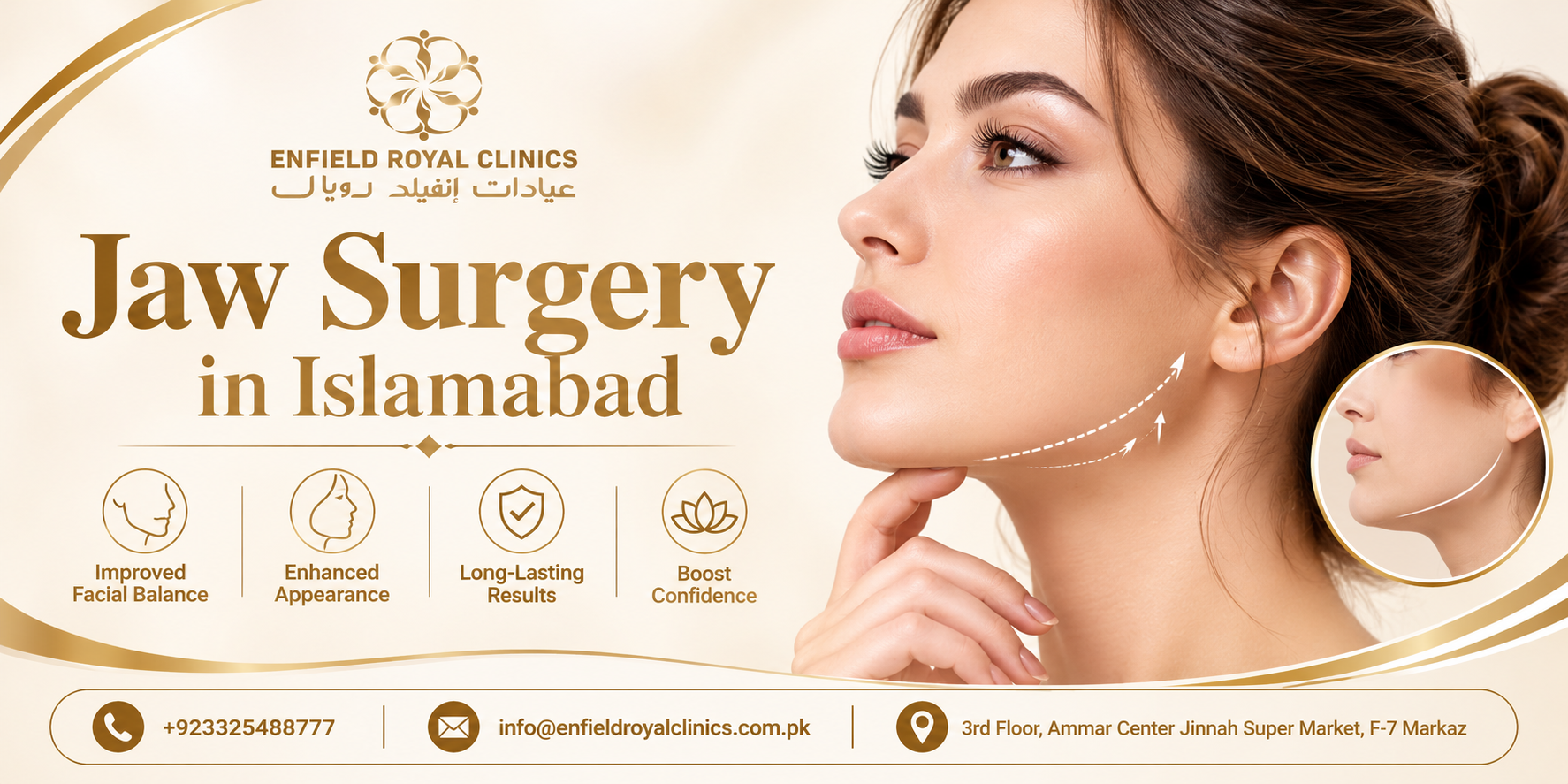

The shape and position of the jaw have a significant influence on overall facial appearance. The jawline, chin, lips, and lower facial profile all depend partly on how the upper and lower jaws are positioned. When these structures develop unevenly or become misaligned, the face may appear unbalanced, and certain features may look more prominent or recessed.
Jaw surgery is a corrective procedure that can address structural differences in the jawbones. By repositioning the upper jaw, lower jaw, or both, it may improve facial proportions while also correcting bite-related problems. The changes are not limited to appearance, as proper jaw alignment can also support better chewing and oral function.
For suitable candidates, Jaw Surgery in Islamabad may help create a more balanced facial profile through carefully planned surgical correction. However, the results depend on individual anatomy, the severity of the jaw problem, and the type of procedure performed.
How Does Jaw Position Influence Facial Appearance?
The upper and lower jaws provide structural support to several facial features. Their position affects the relationship between the chin, lips, nose, and cheeks. When the jaws are properly aligned, these features generally appear more proportionate.
However, significant jaw misalignment can change the overall facial profile. For example, an underdeveloped lower jaw may make the chin appear recessed, while an excessively prominent lower jaw can create a more projected appearance.
Common facial changes associated with jaw abnormalities include:
-
A recessed or overly prominent chin
-
An uneven or poorly defined jawline
-
A noticeable underbite or overbite
-
Facial asymmetry
-
An imbalanced relationship between the lips and chin
-
Differences in the appearance of the middle and lower face
Not every facial difference indicates a medical problem. Natural facial asymmetry is common, and treatment is generally considered when a structural condition also affects bite function, oral health, or overall well-being.
Can Jaw Surgery Create a More Balanced Facial Profile?
Yes, corrective jaw surgery can improve facial balance when the appearance is affected by an underlying skeletal problem. The procedure changes the position of the jawbones, which can influence the shape and proportions of the face.
For example, when the lower jaw is positioned too far backward, repositioning it may improve chin projection and create a more balanced side profile. Similarly, correcting an upper jaw that sits too far forward or backward may improve the relationship between the middle and lower facial structures.
Depending on the patient's condition, possible improvements include:
-
Better chin positioning
-
More balanced facial proportions
-
Improved jawline definition
-
A more harmonious side profile
-
Better alignment between the lips and jaw
-
Improved facial symmetry in suitable cases
The amount of visible change varies. Some patients experience noticeable improvements, while others have more subtle changes. The objective is to achieve a functional and proportionate result rather than create an identical facial appearance for everyone.
Which Facial Features Can Change After Jaw Surgery?
Jaw surgery primarily changes the position of the jawbones, but these movements can influence the appearance of nearby facial features.
1. Chin Shape and Position
The chin is closely connected to the position of the lower jaw. When the lower jaw is moved forward or backward, the chin may also change its position. This can improve the appearance of a recessed or prominent lower facial profile.
2. Jawline Definition
The lower jaw forms an important part of the jawline. Correcting an uneven or incorrectly positioned jaw may improve the overall contour of the lower face.
3. Lip Position
The lips are supported partly by the underlying teeth and jaw structures. Changes in jaw position can affect how the upper and lower lips rest together, potentially improving their relationship.
4. Facial Symmetry
When one jaw is positioned differently from the other side, the chin and lower facial features may appear uneven. Corrective surgery may help bring the jaw closer to a balanced position.
5. Nose and Midface Appearance
Upper jaw surgery can influence the appearance of the area around the nose and upper lip. Certain movements may change nasal base width or the angle between the nose and upper lip. These changes depend on the surgical technique and planned jaw movement.
It is important to remember that jaw surgery does not directly reshape every facial feature. The nose, cheeks, and soft tissues may respond differently depending on the patient's anatomy.
What Types of Jaw Surgery Can Change Facial Appearance?
Different procedures are used according to the location and severity of the structural problem.
Upper Jaw Surgery: Also known as maxillary osteotomy, this procedure repositions the upper jaw. It may improve the middle facial profile, upper lip support, and bite alignment.
Lower Jaw Surgery: Mandibular osteotomy changes the position of the lower jaw. It may help correct a prominent or recessed lower jaw and improve chin projection.
Double Jaw Surgery: This procedure involves repositioning both the upper and lower jaws. It may be recommended when the facial imbalance and bite problem involve both structures.
Genioplasty: This procedure changes the position or shape of the chin bone. It may be performed separately or alongside corrective jaw surgery when additional chin adjustment is appropriate.
Each technique serves a different purpose. A detailed assessment helps identify whether one procedure or a combination of treatments is suitable.
What Happens During the Jaw Surgery Planning Process?
Achieving a balanced facial appearance requires careful planning. The surgical approach must consider facial proportions, bite alignment, jaw movement, and the patient's overall oral health.
The process generally includes several stages:
Initial Consultation: The patient's medical history, facial concerns, bite condition, and treatment expectations are reviewed.
Facial and Dental Examination: The specialist evaluates the jawline, chin position, lip relationship, facial symmetry, and movement of the jaws.
Diagnostic Imaging: X-rays, dental impressions, photographs, and sometimes three-dimensional scans help examine the bone structure and plan the required movements.
Personalized Treatment Plan: The appropriate surgical technique is selected according to the patient's anatomy. Orthodontic treatment may be recommended before surgery to prepare the teeth for their new jaw position.
Surgical Correction: The planned jaw movements are performed under general anaesthesia. Small plates and screws are commonly used to hold the repositioned bones securely during healing.
People researching Jaw Surgery in Islamabad should discuss both functional and aesthetic expectations during the planning stage. A realistic treatment plan helps patients understand which changes are possible and which facial features may remain unchanged.
How Long Does It Take to Notice Facial Changes After Jaw Surgery?
Facial changes after jaw surgery develop gradually. Although the position of the bones changes during the procedure, swelling can temporarily hide the new facial contours.
During the first few weeks, patients commonly experience swelling, bruising, and some difficulty with normal mouth movements. As recovery progresses, swelling gradually decreases and the facial profile becomes easier to assess.
The final appearance may take several months to develop because the surrounding muscles and soft tissues also need time to adjust.
Patients should follow their recovery instructions, maintain proper oral hygiene, and attend scheduled appointments. A soft-food diet is usually recommended initially, with a gradual return to regular foods as healing allows.
Jaw surgery also carries potential risks, including infection, bleeding, changes in sensation, bite instability, and delayed bone healing. Patients should understand these considerations before choosing treatment.
Is Jaw Surgery Suitable for Anyone Who Wants Facial Improvement?
Jaw surgery is not intended as a general cosmetic procedure for every person who wants a different facial shape. It is primarily recommended for individuals with significant skeletal abnormalities that affect jaw function, bite alignment, or facial proportions.
Some appearance-related concerns may be caused by soft tissue, skin, muscle structure, or natural facial differences rather than jaw position. These concerns may require different approaches.
A qualified oral and maxillofacial surgeon can determine whether the patient's facial concerns are related to the jawbones and explain the available treatment options. The decision should consider medical needs, realistic expectations, possible risks, and long-term function.
For more information visit Enfield royal clinic in islamabad
Frequently Asked Questions
1. Does jaw surgery change the shape of the face permanently?
Jaw surgery changes the position of the jawbones, creating structural changes that are generally long-lasting after successful healing. However, natural ageing and other factors can influence facial appearance over time.
2. Can jaw surgery improve a recessed chin?
Yes, when a recessed chin is caused by the position of the lower jaw, corrective surgery may improve its projection. Genioplasty may also be considered when the concern is limited to the chin bone.
3. Will jaw surgery make the face perfectly symmetrical?
No procedure can guarantee perfect facial symmetry. Jaw surgery may improve asymmetry caused by skeletal misalignment, but natural differences between facial features may remain.
4. Does jaw surgery change the nose and lips?
Upper jaw surgery can affect the position and appearance of the upper lip and the area around the nose. The extent of these changes depends on the direction and amount of jaw movement.
