


Understanding Short-Circuit Ratio and Its Impact on Inverter Stability
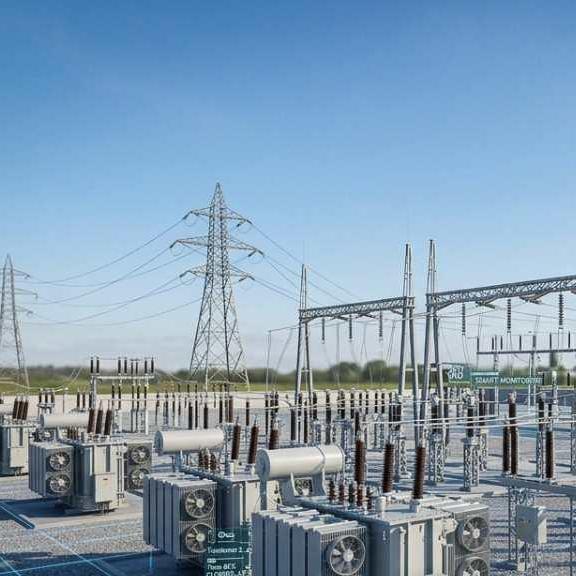
The rapid growth of renewable energy has transformed modern power systems. Solar farms, wind energy facilities, and battery energy storage systems increasingly rely on inverter-based resources (IBRs) to connect to the electrical grid. While these technologies offer flexibility and support the transition toward cleaner energy, they also introduce new challenges for power system stability, particularly in areas with limited grid strength.
One important parameter engineers use to evaluate these conditions is the Short-Circuit Ratio (SCR). It provides an indication of how strong or weak the electrical grid is at a particular point of interconnection. Understanding SCR is essential for assessing inverter performance, identifying potential stability concerns, and ensuring reliable renewable energy integration.
1. What Is Short-Circuit Ratio (SCR)?
Short-Circuit Ratio is a measurement used to evaluate the strength of an electrical grid relative to the capacity of an inverter-based resource connected to it.
In simple terms, SCR compares the available short-circuit power at the Point of Interconnection (POI) with the rated capacity of the connected inverter-based facility.
The commonly used formula is:
SCR = Short-Circuit Capacity at POI / Rated Capacity of the IBR
For example, consider a solar power plant with a rated capacity of 200 MW connected to a grid with a short-circuit capacity of 1,000 MVA. Its SCR would be approximately 5, assuming a consistent rating convention.
A higher SCR generally indicates a stronger grid with greater voltage stiffness, while a lower SCR suggests a weaker grid that may be more sensitive to changes in power injection and system disturbances.
However, SCR is not a complete measure of system stability. Its interpretation depends on network configuration, inverter controls, nearby generation facilities, and operating conditions.
2. Why Grid Strength Matters for Inverter-Based Resources
Traditional synchronous generators naturally contribute short-circuit current and provide inherent electrical characteristics that help support grid voltage and frequency. In contrast, inverter-based resources rely on power electronic converters and sophisticated control systems to interact with the grid.
This difference becomes particularly important when renewable energy projects connect to electrically weak networks.
In a weak grid, even relatively small changes in active or reactive power can cause noticeable voltage fluctuations. These variations may affect inverter synchronization, current control, and overall system performance.
Several challenges can arise in weak-grid environments:
-
Voltage instability: Limited grid strength can make voltage more sensitive to changes in power output.
-
Control interaction: Multiple inverters operating near each other may interact through the network impedance.
-
Synchronization problems: Grid-following inverters may experience difficulties maintaining stable synchronization during disturbances.
-
Oscillations: Poorly coordinated control systems can contribute to unwanted electrical oscillations.
These challenges make weak grid stability studies essential when developing large-scale solar, wind, and battery storage projects.
3. How Low SCR Affects Inverter Stability
A low Short-Circuit Ratio can significantly influence the dynamic behavior of inverter-based resources.
One major concern involves the interaction between inverter control systems and grid impedance. Grid-following inverters typically use Phase-Locked Loops (PLLs) to track the grid voltage angle and synchronize their output with the electrical network.
When the grid is weak, voltage changes can interfere with PLL performance. This may result in synchronization difficulties, reduced stability margins, or oscillatory behavior.
Another concern is the interaction between multiple inverter-based facilities. When several renewable energy projects connect to electrically close points, their combined impact on grid strength and system impedance can become significant.
Low SCR conditions may also increase sensitivity to:
-
Voltage disturbances and fault recovery.
-
Reactive power control responses.
-
Converter current limitations.
-
Harmonic and control-system interactions.
-
Changes in network operating conditions.
These issues demonstrate why inverter-based resource stability cannot be evaluated using steady-state power flow analysis alone. Engineers must also examine dynamic performance under normal and disturbed operating conditions.
4. SCR, Grid Strength Assessment, and Stability Studies
Grid strength assessment helps engineers determine whether the existing transmission network can reliably accommodate additional inverter-based generation.
SCR provides a useful starting point, but more detailed analysis is often necessary, particularly when multiple inverter-based resources share the same electrical network.
For large renewable energy projects, engineers may perform several complementary studies.
Short-Circuit Analysis: Determines available fault levels at the POI and establishes the basis for calculating SCR.
Power System Stability Studies: Evaluate system response during disturbances, including voltage recovery, control interactions, and potential oscillations.
Electromagnetic Transient (EMT) Studies: Examine fast inverter control responses, PLL interactions, switching-related behavior, and complex converter-grid interactions.
Impedance-Based Analysis: Identifies potential resonance conditions and interactions between inverter controls and network impedance.
For projects involving multiple nearby inverter-based resources, engineers may also evaluate Multi-Infeed Short-Circuit Ratio (MISCR) or other more comprehensive grid-strength metrics.
Combining these methods provides a more realistic understanding of grid conditions and helps identify potential technical limitations before project commissioning.
5. Practical Solutions for Improving Inverter Stability
When grid strength assessment identifies low SCR conditions, engineers can investigate several technical solutions to improve system performance.
One option is installing additional reactive power support equipment, such as STATCOMs or synchronous condensers. These technologies can improve voltage support and strengthen the electrical characteristics of the network.
Another approach involves optimizing inverter control parameters. Adjustments to PLL bandwidth, current control loops, and reactive power control strategies can help reduce unwanted interactions and improve performance under weak-grid conditions.
Grid-forming inverter technology also offers an important opportunity. Unlike conventional grid-following inverters, grid-forming systems can establish and regulate an internal voltage reference, supporting stable operation in suitable applications.
Other potential measures include:
-
Strengthening transmission infrastructure.
-
Improving coordination between nearby inverter-based resources.
-
Optimizing plant-level voltage and reactive power controls.
-
Evaluating alternative interconnection points.
-
Conducting detailed EMT simulations before implementation.
The appropriate solution depends on project capacity, network characteristics, equipment capabilities, and applicable interconnection requirements.
6. Why SCR Assessment Is Important for Renewable Energy Projects
As utility-scale solar, wind, and battery storage installations continue expanding, grid operators must ensure that new facilities can operate reliably without compromising existing network performance.
SCR assessment helps project developers identify potential grid-strength limitations early in the interconnection process. It can also guide equipment selection, inverter control design, and decisions regarding additional grid support requirements.
For developers, conducting weak grid stability studies during the planning and engineering stages can reduce the risk of unexpected technical issues, costly equipment modifications, and commissioning delays.
At Keentel Engineering, comprehensive power system engineering and stability assessments support the technical evaluation of renewable energy interconnections. Through detailed grid strength assessment, short-circuit analysis, and inverter-based resource stability studies, engineering teams can identify potential system limitations and develop practical solutions for reliable grid integration.
Conclusion
Short-Circuit Ratio is an important indicator of grid strength and a valuable starting point for understanding inverter stability challenges. However, a strong or weak SCR value alone cannot determine whether an inverter-based facility will operate reliably under every condition.
Combining SCR calculations with dynamic simulations, EMT analysis, and detailed grid strength assessments allows engineers to develop a clearer understanding of system behavior. As renewable energy penetration increases, these engineering evaluations will remain essential for building stable, reliable, and resilient power networks.
