

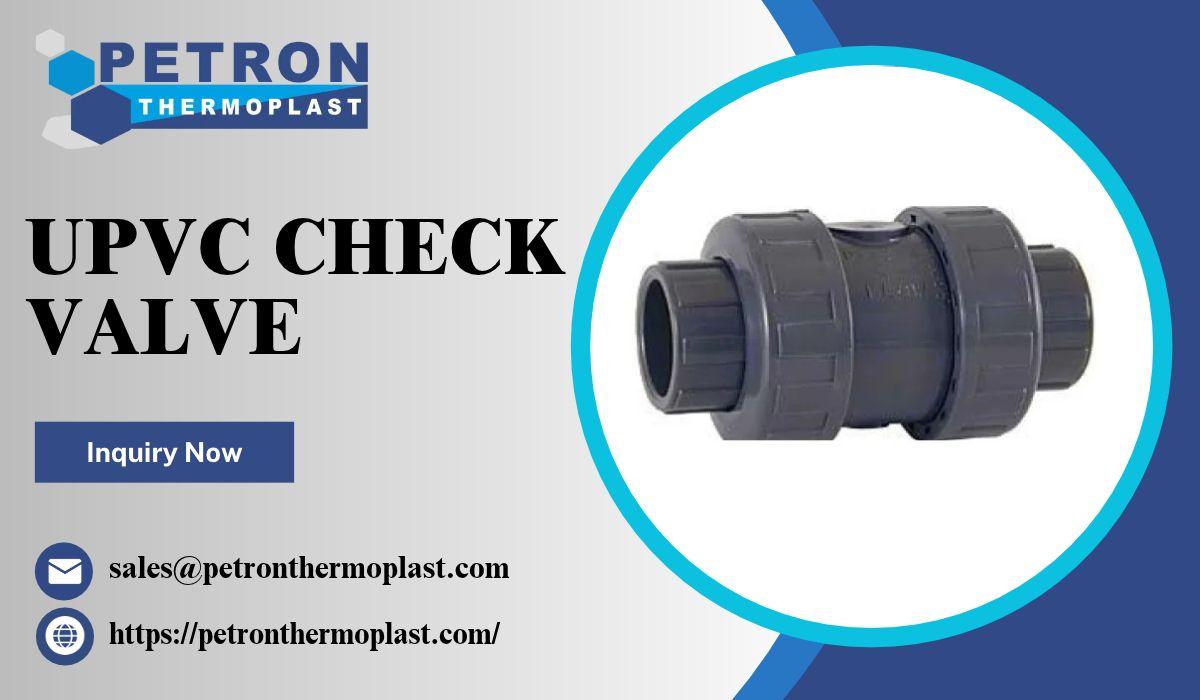

Industrial pipeline systems need reliable components to maintain controlled fluid movement. One important component is a check valve. It allows liquid to flow in one direction and helps prevent reverse flow through the pipeline. Customized UPVC check valve is a practical option for industrial installations where corrosion resistance, lightweight construction and suitable chemical compatibility are important.
UPVC (Unplasticized Polyvinyl Chloride) is widely used in industrial piping because of its resistance to corrosion and many chemicals. UPVC check valves can be used in selected water treatment, chemical handling and process applications. Their suitability depends on the liquid being handled, its concentration, operating temperature, pressure and other installation conditions.
For projects with specific pipeline requirements, customized valve configurations can help achieve better integration with the existing system.
What Is a UPVC Check Valve?
A UPVC check valve is a non-return valve designed to control the direction of liquid flow. It opens when fluid moves in the intended direction and closes when reverse flow occurs. Unlike manually operated valves, a check valve generally works automatically through fluid pressure and the movement of its internal mechanism.
These valves are commonly installed in pipelines connected to pumps, storage tanks, filtration systems and industrial processing equipment. Their primary purpose is to help prevent backflow, which may otherwise affect equipment performance or interrupt the process. The valve body is manufactured from UPVC material. Internal components and sealing materials are selected according to the valve design and operating requirements.
Why Choose Customized UPVC Check Valves?
Standard valves may not match every industrial pipeline arrangement. Different projects require specific dimensions, connection types, pressure conditions and installation configurations.
Customized UPVC check valves can be selected or configured according to the requirements of the application.
Important customization considerations include:
- Connection type: Socket, threaded or flange connections, depending on the required design and applicable standards.
- Valve dimensions: Selection according to pipeline size and available installation space.
- Internal mechanism: Different check valve designs may use a swing, ball or spring-assisted mechanism.
- Sealing materials: Selection based on fluid compatibility and operating conditions.
- Pressure requirements: The valve must be suitable for the system's operating and design pressure.
- Installation arrangement: Horizontal or vertical installation, depending on the valve design and manufacturer's instructions.
Types of UPVC Check Valves for Industrial Applications
Different check valve designs are available for industrial piping systems. The correct type depends on flow conditions, installation orientation and maintenance requirements.
- UPVC Swing Check Valve
A swing check valve uses a hinged disc that moves away from the flow path when liquid moves in the correct direction. When flow stops or reverses, the disc returns towards its seat and helps prevent backflow.
This design is considered for selected industrial pipelines where the flow conditions and installation arrangement are suitable.
- UPVC Ball Check Valve
A ball check valve uses a movable ball as its closing element. Forward flow moves the ball away from the sealing position. Reverse flow pushes it back towards the seat.
It can be considered for selected liquid-handling applications. The ball material, seat design and fluid characteristics should be checked before selection.
- UPVC Spring-Loaded Check Valve
A spring-loaded check valve uses a spring mechanism to assist the closing action. It is designed to close when the forward pressure is no longer sufficient to keep the valve open.
The opening pressure, spring characteristics and pressure loss should be evaluated according to the pipeline design.
- UPVC Wafer or Compact Check Valve
Compact check valve designs are used in selected piping arrangements where installation space is limited. Their connection and installation requirements vary by model.
Before selecting this type, check the available pipeline space, mating flange dimensions and manufacturer's installation guidelines.
Key Features of Industrial UPVC Check Valves
UPVC check valves offer several useful characteristics for suitable industrial installations.
- Corrosion Resistance
UPVC does not rust like conventional metal materials. This makes it useful in selected applications where corrosion resistance is an important consideration.
- Lightweight Construction
UPVC valves are generally lighter than comparable metal valves. Their weight can simplify handling and installation, subject to the requirements of the piping system.
- Low Maintenance Requirements
The non-metallic valve body does not require painting to prevent rust. However, internal parts, seals and moving mechanisms still need periodic inspection.
- Automatic Flow Control
Check valves operate automatically in response to fluid flow and pressure. They help prevent reverse flow without requiring manual operation.
- Chemical Compatibility
UPVC can resist many chemicals, but it is not suitable for every chemical or operating condition. Compatibility must be confirmed for the exact fluid, concentration and temperature.
- Flexible Installation Options
Depending on the selected model, UPVC check valves may be available with different connection arrangements and installation configurations.
Industrial Applications of UPVC Check Valves
Customized UPVC check valves are considered in various industries where compatible non-metallic piping components are required.
Water Treatment Plants
Water treatment systems use valves to manage liquid movement through filtration, treatment and distribution lines. UPVC check valves can be considered in compatible water-handling sections to help prevent reverse flow.
Chemical Processing Industries
Chemical plants often require corrosion-resistant piping components. UPVC check valves may be suitable for selected chemical transfer applications after checking the chemical concentration, temperature and operating pressure.
Electroplating and Surface Treatment
Electroplating facilities use different chemical solutions during metal finishing operations. Compatible UPVC check valves can be considered in selected process and transfer pipelines.
Industrial Cooling Systems
Some industrial cooling water systems use UPVC piping because of its corrosion-resistant properties. Check valves can help control flow direction in suitable pipeline arrangements.
Swimming Pool and Water Circulation Systems
UPVC check valves may also be used in compatible water circulation systems. They help reduce reverse flow through selected pump and filtration connections.
General Industrial Fluid Handling
Manufacturing facilities may use UPVC check valves in utility lines, transfer systems and process pipelines where the material and valve rating meet the application requirements.
How to Select the Right UPVC Check Valve?
Choosing the correct valve is important for long-term pipeline performance. Consider the following points before purchasing:
- Identify the fluid: Confirm the exact liquid, chemical name and concentration.
- Check operating conditions: Review the normal and maximum pressure and temperature.
- Select the valve design: Choose a suitable mechanism based on flow conditions and installation requirements.
- Confirm pipeline dimensions: Match the valve size and connection arrangement with the existing pipeline.
- Review pressure loss: Consider the valve's flow characteristics and pressure drop.
- Check installation orientation: Confirm whether the selected model supports horizontal, vertical or both arrangements.
- Verify sealing materials: Ensure that the seals are compatible with the process fluid.
- Request technical documentation: Review product drawings, datasheets and applicable test information.
Advantages of Customized UPVC Check Valves for Large Projects
Large industrial projects often involve multiple pipeline sizes, equipment connections and operating conditions. A customized valve solution can help match the component with the project design.
Some important advantages include:
- Better integration with specified pipeline dimensions.
- Selection of suitable connection arrangements.
- Options for different valve mechanisms.
- Compatibility assessment for process fluids.
- Easier coordination with pumps and other pipeline equipment.
- Consistent specifications across bulk project requirements.
- Support for project-specific documentation and technical evaluation.
Why Choose Petron Thermoplast?
Petron Thermoplast focuses on industrial plastic piping products, valves, fittings and customized solutions for different project requirements. For customers looking for customized UPVC check valves, Petron Thermoplast can assist with product requirement discussions and help identify suitable options according to the application.
Customers can share their required valve size, connection type, fluid details, operating pressure and temperature. This information helps in evaluating the appropriate configuration for the installation. Petron Thermoplast supports industrial and bulk project enquiries, with a focus on practical product requirements and customized piping solutions.
Customization and Bulk Project Requirements
Every industrial installation has different operating conditions. A valve suitable for one process may not be appropriate for another. Therefore, it is important to provide complete technical details when requesting a quotation.
For a customized UPVC check valve enquiry, share:
- Required valve size and quantity.
- Preferred valve design.
- Pipeline connection details.
- Fluid or chemical name.
- Operating pressure and temperature.
- Installation orientation.
- Project location and delivery requirements.
Conclusion
Customized UPVC check valves are useful components for industrial pipeline systems that require automatic flow direction control and suitable corrosion resistance. They can be considered for water treatment, chemical processing, cooling systems and other compatible fluid-handling applications.
Selecting the correct valve requires more than matching the pipeline diameter. Material compatibility, operating pressure, temperature, connection type and installation orientation must all be evaluated. Petron Thermoplast supports industrial plastic piping and customized product enquiries for bulk requirements. Contact the team with your technical specifications to discuss suitable UPVC check valve options for your next industrial installation.

