

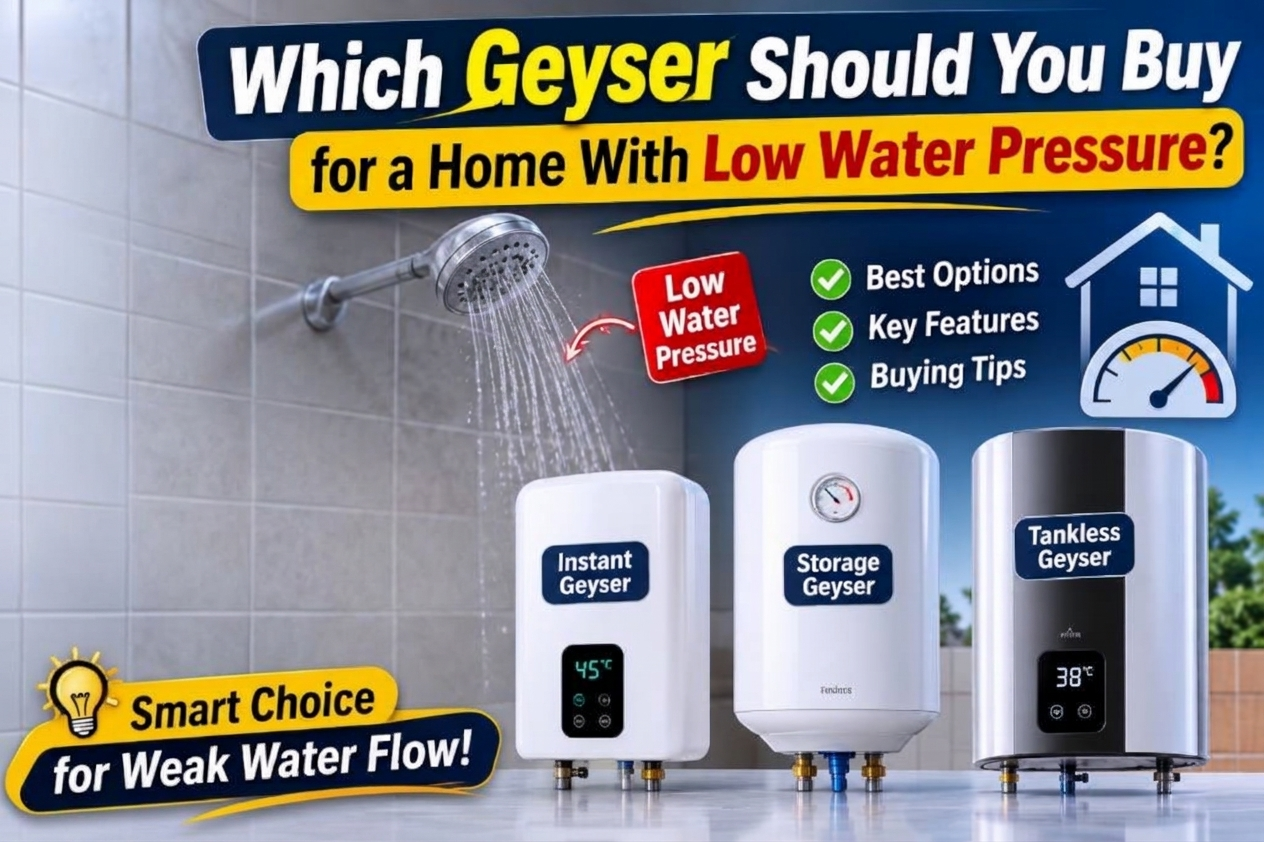

Buying a new geyser is not always straightforward, especially when your home has low water pressure. A water heater may offer excellent heating performance, but if it cannot operate properly with your existing water supply, it may not provide the comfort you expect. This is a common concern in Pakistani homes that rely on overhead water tanks or experience fluctuating water pressure.
Some geysers require a minimum water flow to start heating, while others operate differently because they store heated water inside a tank. Before comparing the latest instant geyser price, it is important to understand which models are suitable for low-pressure water systems.
Choosing the right heater involves checking its operating pressure, heating capacity, installation requirements, and compatibility with your household plumbing. These details can help you make a better purchase without unnecessary expenses.
Understanding Low Water Pressure in Pakistani Homes
Many houses in Pakistan receive water through overhead storage tanks. Water flows from these tanks to bathrooms and kitchens using gravity, and the available pressure depends partly on the height difference between the tank and the outlet.
If the tank is positioned close to the bathroom, the pressure may be relatively low. Long pipe runs, narrow fittings, and simultaneous water usage can further reduce the available flow.
Apartments and multi-storey buildings may experience different pressure conditions depending on their plumbing arrangements.
Before buying a water heater, it is useful to understand whether your home has consistently low pressure or only experiences occasional fluctuations. This can influence which type of geyser will work best.
How Water Pressure Affects Instant Geysers
Instant water heaters operate when water passes through the appliance at a sufficient flow rate. The heater detects this movement and activates its heating system.
If the available flow falls below the model's minimum requirement, the appliance may not start. This is why choosing an instant geyser based only on its advertised capacity can lead to disappointment.
For example, a 6L instant gas heater may have different activation requirements from another 6L model. Even when both products have similar rated flow capacities, their minimum operating pressure may differ.
Buyers should check the manufacturer's specifications for minimum water pressure and activation flow before purchasing.
A model advertised for low-pressure operation may be suitable, but its actual requirements still need to match the home's water supply.
Low-Pressure Instant Gas Geysers
Certain instant gas geysers are designed to operate at relatively low water pressure. These models may be useful for households that want hot water on demand without installing a large storage tank.
However, low-pressure compatibility does not mean a heater can work without sufficient water flow. Every appliance has operating limits.
The gas supply also matters. A heater may receive enough water pressure to activate but still struggle to provide normal heating if the fuel pressure is insufficient.
When comparing models, consider the minimum activation flow, rated heating capacity, fuel type, and temperature-rise performance.
Choose a heater based on verified specifications rather than assuming that every instant model will work with an overhead tank.
Are Gas Storage Geysers a Better Choice?
Gas storage geysers heat water inside a tank and maintain a reserve for household use. Unlike many instant gas models, their burner operation does not depend on detecting water flowing through a tap.
This can make storage heaters worth considering where limited flow prevents certain instant appliances from starting.
However, gas storage geysers still have specified plumbing pressure requirements. They must also deliver sufficient flow to the outlets, which depends on the home's water supply and pipe arrangement.
Homeowners comparing gas geyser price should examine tank capacity, approved operating pressure, heating performance, and installation requirements.
A storage geyser may be suitable for some low-pressure homes, but compatibility should always be confirmed for the exact model.
Electric Storage Geysers for Low-Pressure Homes
Electric storage geysers use heating elements to warm water inside an insulated tank. Because water is heated in storage, the heating process does not usually depend on the flow of water through an open tap.
This is an important difference from many instant water heaters.
For households with limited water pressure, a compatible electric storage model may provide a practical heating option. However, its ability to deliver water to a shower still depends on the plumbing system.
When searching for the best electric geyser, compare the manufacturer's pressure requirements, tank capacity, heating element, thermostat, and warranty.
Also confirm whether the selected appliance is approved for your home's gravity-fed or pressurised plumbing arrangement.
Instant vs Storage Geyser for Low Water Pressure
Both instant and storage heaters can provide hot water, but their operating methods create different considerations for homes with weak water supply.
An instant heater needs sufficient flow to activate and maintain heating. A storage heater warms water in advance, although the available outlet flow still depends on the plumbing system.
The comparison is not simply about which technology is better. It is about whether the selected model can safely operate within the home's existing pressure conditions.
For example, a suitable low-pressure instant heater may work well for one bathroom. A compatible storage model may be more practical for another property with different water requirements.
Check the actual specifications instead of selecting a category based on assumptions.
Choosing the Right Heating Capacity
Water pressure and heating capacity are two separate considerations.
For instant geysers, the advertised litre rating commonly describes the flow rate under specified heating conditions. A higher rating may allow greater hot-water flow when sufficient gas and water are available.
However, buying a larger instant heater will not automatically solve low water pressure.
For storage geysers, capacity refers to the amount of water held inside the tank. A larger tank can provide more stored hot water, but it does not increase the pressure reaching a shower.
Before choosing capacity, estimate your family's daily hot-water demand and identify how many outlets will operate simultaneously.
The right model should provide suitable heating performance without exceeding the home's plumbing limitations.
Overhead Water Tanks and Geyser Selection
Overhead tanks are common in Pakistani residential buildings. Their position can significantly influence the water pressure available to a geyser.
A tank installed at a greater height above the outlet generally provides more static pressure than one located close to the same level.
However, actual flow also depends on pipes, fittings, valves, and the number of outlets being used.
Before buying an instant heater, ask a plumber to assess whether the available flow meets the model's starting requirements.
For a storage heater, verify the permitted supply arrangement and pressure range.
Not all storage water heaters are suitable for every gravity-fed installation, so the manufacturer's instructions should guide the decision.
Can a Water Pressure Pump Help?
Some homeowners consider installing a booster pump to improve water supply.
A correctly selected pump may increase the available pressure and flow, but it must be compatible with the plumbing system and connected appliances.
Installing an oversized or incorrectly controlled pump can create excessive pressure and damage pipes or fittings.
It may also cause a water heater to operate outside its permitted pressure range.
Before spending money on a pump, have a qualified plumber assess the existing supply and determine whether improvements are necessary.
In some cases, choosing a water heater suitable for the available pressure may be more practical than modifying the entire plumbing system.
Hot Water Requirements for Multiple Bathrooms
Homes with two or more bathrooms need to consider more than water-heater capacity.
When multiple showers operate simultaneously, the available water flow may decrease. In low-pressure properties, this can become particularly noticeable.
A large storage tank cannot compensate for an inadequate water supply system.
Similarly, a high-capacity instant heater cannot deliver its rated output when insufficient water reaches the appliance.
For households planning to supply several bathrooms, the plumbing arrangement and expected peak flow should be assessed together with heating capacity.
This helps prevent buying a heater that looks suitable on paper but cannot meet actual household demand.
Installation and Safety Requirements
A geyser must operate safely within its specified water-pressure range.
Storage models may require pressure-relief devices, suitable valves, and correct mounting arrangements. Certain designs also require particular supply configurations.
Gas appliances need proper fuel connections, combustion air, and safe exhaust arrangements. Electric heaters require correctly rated wiring, earthing, and circuit protection.
Avoid modifying safety valves or pressure controls to make an unsuitable heater work with your existing plumbing.
A qualified installer should confirm that the appliance matches the property's water and energy supplies before installation.
Comparing Brands and Warranty Coverage
Several brands available in Pakistan offer instant, gas storage, and electric storage geysers, including Canon, iZone, Nasgas, Super Asia, and i-Max.
However, the minimum operating pressure and other specifications can vary between individual models.
A familiar brand name does not guarantee that every heater will work with low water pressure.
When comparing products, review the technical specifications and ask whether the manufacturer provides guidance for gravity-fed installations.
Warranty coverage and authorised servicing should also influence the purchase decision.
Choosing a compatible model from the beginning can help avoid unnecessary installation changes and additional expenses.
Frequently Asked Questions
Which geyser is best for low water pressure?
A compatible storage geyser or an instant model specifically rated for low-pressure operation may be suitable. The best choice depends on the measured supply and manufacturer specifications.
Can an instant gas geyser work with an overhead tank?
Yes, some models can operate with gravity-fed water when the available pressure and flow meet their minimum requirements.
Does a bigger geyser increase water pressure?
No. A larger heater provides greater heating or storage capacity, but it does not automatically increase the pressure supplied by household plumbing.
Is an electric storage geyser suitable for weak water pressure?
Some models may be suitable, depending on their approved operating pressure and supply arrangement. Their outlet flow still depends on the plumbing.
Should I install a pressure pump before buying a geyser?
Not necessarily. Have the water supply assessed first. A suitable heater may operate without a pump, while other installations may require plumbing improvements.
Final Verdict: Which Geyser Is Right for Your Water Supply?
Low water pressure should be considered before purchasing a new geyser, especially when your home relies on an overhead tank.
An instant gas geyser may work well when its minimum water-flow requirements are met. Gas and electric storage models can also be practical when they are compatible with the property's pressure and plumbing arrangement.
However, choosing a larger heater does not solve inadequate water pressure.
Before buying, compare operating pressure, heating capacity, household demand, installation requirements, and warranty coverage.
The best geyser for a low-pressure home is one that works safely with the available water supply while delivering enough hot water for your family's everyday needs.
