

What Is the Complete Guide to Choosing Spray Foam Companies in Norfolk, MA?

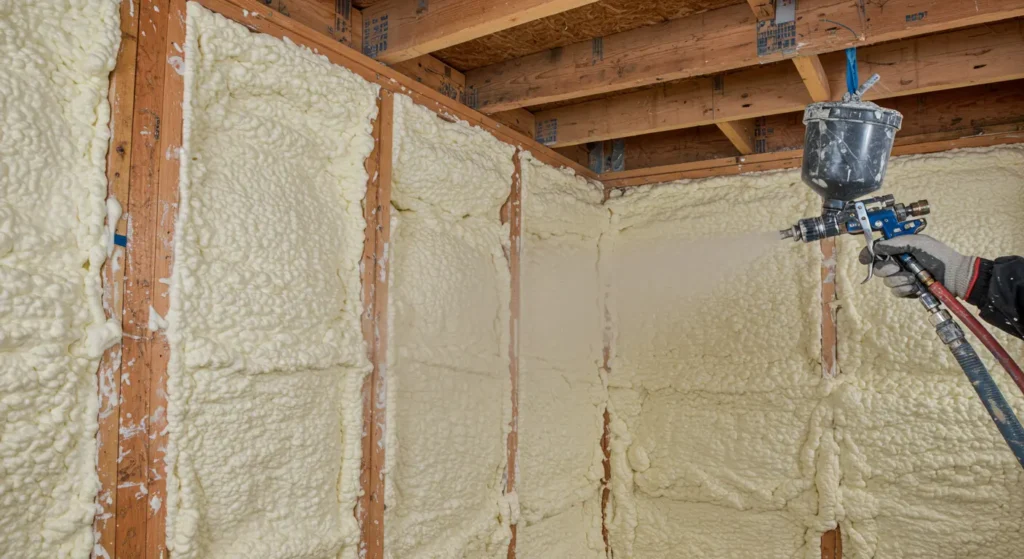
Choosing a spray foam company in Norfolk, MA starts with more than comparing prices. A good choice depends on the contractor’s experience, foam type, installation process, building conditions, and ability to address air sealing and moisture concerns. The right spray foam insulation services should match the property rather than use the same approach for every project.
For Norfolk property owners, the decision also involves local building requirements and weather conditions. This guide explains what to look for in a spray foam insulation contractor, how open-cell and closed-cell foam differ, what R-value means, common problems to watch for, and questions to ask before hiring a company.
What Should Property Owners Look For In Spray Foam Companies?
A qualified contractor should be able to explain why a particular foam system fits the building and where it should be installed. The goal is not simply to apply as much foam as possible.
Property owners should ask about:
-
Experience and training: The contractor should understand proper preparation, application thickness, curing, ventilation, and manufacturer requirements.
-
Foam type: The company should explain whether open-cell or closed-cell foam is suitable for the specific assembly.
-
Existing conditions: Wet insulation, leaks, damaged framing, or other building problems should be addressed before spraying.
-
Air sealing: The contractor should identify gaps, penetrations, and other areas where uncontrolled air movement may occur.
-
Code requirements: Massachusetts uses the 10th Edition building code, with Base, Stretch, and Specialized energy-code pathways depending on the project and municipality.
A contractor that can clearly explain these points gives the property owner a better basis for comparing estimates.
Why Professional Spray Foam Installation Matters
Spray foam can serve as both insulation and an air-sealing material when properly installed. DOE Building Science Education explains that spray foam can serve as an air barrier at the required thickness, while wiring, ducts, and other penetrations still need to be properly air-sealed.Professional installation matters because foam performance depends on more than the material itself.
Preparation And Application
The substrate should be suitable, dry, and within the product’s required temperature range. EPA guidance notes that temperature, humidity, product formulation, application technique, and foam thickness can affect curing.
A contractor should also follow the manufacturer’s application and safety instructions instead of treating every job the same.
Air Sealing And Building Details
Spray foam can be useful around irregular areas, joints, and difficult-to-seal sections of a building envelope. However, larger gaps may need backing or another method before foam is applied.
The best spray foam insulation solutions address the entire assembly, not just visible gaps.

Open-Cell Vs. Closed-Cell Spray Foam
The right foam depends on the location, moisture exposure, desired R-value, and building assembly. Neither option is automatically better for every Norfolk property.
|
Feature |
Open-Cell Foam |
Closed-Cell Foam |
|
Structure |
Soft, open-cell |
Dense, rigid, closed-cell |
|
Typical R-value |
About R-3.6/in. |
About R-6/in. or greater |
|
Air sealing |
Yes, when installed correctly |
Yes |
|
Vapor control |
More vapor-permeable |
Greater vapor resistance |
|
Best fit |
Many interior cavities and assemblies |
Areas needing higher R-value in less thickness or greater moisture resistance |
DOE sources describe open-cell foam at roughly R-3.5 to R-3.6 per inch and closed-cell foam at about R-6 per inch or greater, depending on the product.
The contractor should consider the complete assembly before recommending one.
Benefits And Limitations To Consider
Spray foam can solve several building-envelope problems, but property owners should also understand its limitations before signing a contract. Reviewing a spray foam insulation guide can help homeowners learn about different foam types, their performance characteristics, and important installation considerations.
Potential Benefits
-
Reduced air leakage: Properly installed foam can seal cracks and gaps that allow unwanted outdoor air movement.
-
Better temperature control: Air sealing and insulation can help reduce heat transfer through targeted parts of the building envelope.
-
Useful for difficult areas: Foam can reach irregular cavities, joints, and other areas where rigid or batt insulation may be difficult to fit.
-
Different performance options: Open-cell and closed-cell systems give contractors flexibility based on the assembly and project requirements.
Potential Limitations
-
Higher upfront cost: Spray foam can cost more than some traditional insulation options.
-
Installation sensitivity: Poor preparation, incorrect application, or unsuitable conditions can affect foam performance.
-
Moisture concerns: Existing leaks or wet materials should be corrected before insulation is installed.
-
Code and fire requirements: Foam plastic insulation may require specific protective measures depending on where it is installed. Massachusetts guidance addresses thermal-barrier requirements for many SPF applications.
Real Problems A Good Contractor Should Be Able To Identify
Homeowners often start looking for spray foam companies after noticing drafts, cold rooms, high heating demand, or uncomfortable floors. These symptoms can point to air leakage or insulation gaps, but they do not automatically mean the whole property needs spray foam.
For example, a Norfolk home with an unconditioned crawl space may have cold floors because the floor assembly is poorly insulated or air-sealed. DOE guidance specifically identifies floors over unconditioned spaces as areas where insulation and air sealing can help address heat loss and uncomfortable floors.
Other projects may involve attic penetrations, rim joists, wall cavities, or irregular framing where air leakage is difficult to control with conventional insulation alone.
A good contractor should identify the actual source of the problem before recommending a solution.
How Norfolk Weather Affects Spray Foam Installation
Norfolk experiences cold conditions during the heating season, so air leakage through poorly sealed parts of the building envelope can become noticeable. Seasonal temperature and humidity also affect how spray foam products are installed and cured.
EPA guidance recommends controlling application conditions because temperature and humidity can affect foam development and curing.
For that reason, a contractor should check the product requirements and site conditions rather than relying on a fixed installation approach throughout the year.

What Does R-Value Mean For Spray Foam?
R-value measures resistance to heat flow. A higher R-value generally means greater resistance to heat transfer, but R-value alone does not determine whether an insulation system will perform well.
Air leakage, thermal bridging, moisture, installation quality, and the overall building assembly also matter.
For spray foam, DOE references commonly identify approximately R-3.6 per inch for open-cell foam and R-6 per inch or greater for closed-cell foam, although actual product ratings vary.
A contractor should recommend thickness based on the assembly, product specifications, and applicable code requirements rather than choosing a thickness only by price.
Why Consider Coleman Spray Foam?
Coleman Spray Foam serves Norfolk, MA, with residential and commercial insulation services, including open-cell and closed-cell spray foam, retrofit insulation, new construction insulation, air sealing, attic insulation, blown-in insulation, and insulation removal.
The company can evaluate the existing insulation and building conditions before recommending a spray foam insulation solution. That approach helps property owners understand where foam makes sense and where another insulation method may be more suitable.
Conclusion
Choosing the right spray foam company in Norfolk, MA means looking beyond the lowest estimate. The contractor should understand foam types, air sealing, moisture conditions, R-value, installation requirements, and Massachusetts building requirements.
A proper evaluation can help determine whether open-cell foam, closed-cell foam, or another insulation method is the better fit for the property.
Contact Coleman Spray Foam
Property owners considering residential or commercial spray foam insulation can contact Coleman Spray Foam to discuss the project, existing insulation, and areas that need attention.
Email: [email protected]
Phone: (781) 730-6537
FAQs
Bilkul, inko short aur direct kar diya:
How Long Does Spray Foam Insulation Last?
Properly installed spray foam can last for many years, depending on installation quality and building conditions.
Can Spray Foam Be Removed?
Yes, but removal can be difficult and may require cutting or scraping the foam from the surface.
Does Spray Foam Affect Indoor Air Quality?
During installation and curing, occupants may need to stay away from the work area. Proper application and curing are important for indoor air quality.
Can Spray Foam Damage Building Materials?
It should not be applied over wet or damaged materials. The surface should be checked first to avoid covering existing problems.
Author and Reviewer
Author: I’m John Coleman. I moved here from Ireland in 2016 to work for an insulation company. In 2019, I purchased my own spray foam trailer and began building my career in the industry. I trained under a PCP-certified Project Manager and Installer, who taught me the chemical process, building science, equipment operation, and repair. His guidance encouraged me to pursue a career in insulation while maintaining the highest standards possible. I established my company on April 19, 2019, reflecting my continued commitment to quality work.
Reviewer: With 6+ years in real estate, Fenwick Thorne builds trust through clear communication and expert guidance, helping clients make confident home-buying and selling decisions.

