

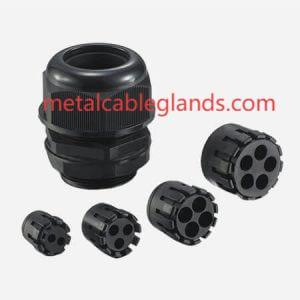

Cable management is an important part of electrical equipment design, particularly when wires pass through narrow openings or connect to components that experience regular movement. A properly selected Anti-Bending Cable Gland helps guide cables through enclosure entry points while providing additional support around the connection area. For manufacturers developing compact electrical products, an Anti-Bending Cable Gland offers a practical option for managing cable direction, improving installation arrangements, and limiting unnecessary stress caused by unsuitable cable positioning.
Supporting Cable Connections in Compact Spaces
Electrical equipment does not always provide generous space for cable installation. Control boxes, machinery housings, lighting systems, and communication devices often contain multiple components within relatively small enclosures.
In these situations, cables may need to change direction shortly after passing through an entry opening. An appropriate protective gland can help guide the cable into a more suitable position and maintain a cleaner connection arrangement.
The flexible structure is particularly relevant when installation angles cannot be determined entirely in advance. It gives technicians more freedom to position external wiring while helping protect the transition area between the cable and enclosure.
When selecting a product, engineers should evaluate the available clearance, cable direction, and surrounding components to avoid interference during assembly or operation.
Understanding Cable Diameter and Clamping Requirements
Cable compatibility is one of the first details buyers should confirm. Different equipment designs use different cable diameters, jacket materials, and construction types. A gland that does not match the cable dimensions may create installation difficulties or fail to provide the intended clamping performance.
The clamping range should therefore be checked against the actual outer diameter of the cable. Buyers should also consider whether the cable has a smooth, flexible, or reinforced outer jacket.
Thread dimensions are equally important. The mounting thread must correspond to the enclosure opening, while the overall gland dimensions should fit the available installation space.
For distributors handling multiple product models, maintaining clear specifications for cable diameter, thread size, and material can simplify product selection and reduce ordering mistakes.
MetalCableGlands: Product Design and Customization
MetalCableGlands provides cable connection accessories for electrical equipment manufacturers, industrial distributors, and wholesale buyers. When sourcing flexible nylon cable glands, customers can evaluate product dimensions, protective structures, connection threads, and material characteristics according to their project requirements.
Customization may also be relevant for equipment manufacturers developing specialized products. Different cable sizes, enclosure designs, and installation arrangements can create specific requirements for connector dimensions and packaging.
Before discussing a bulk order, buyers can prepare technical drawings, cable samples, and mounting measurements. These materials help clarify the intended application and make it easier to identify suitable product specifications.
Manufacturing consistency should also receive attention. Accurate molding, stable dimensions, and properly formed threads contribute to convenient assembly and compatibility with related electrical components.
Installation Planning and Long-Term Maintenance
A successful installation begins with preparing the enclosure opening and checking the condition of the cable. The mounting surface should be clean, and the selected thread should match the designated entry point.
During assembly, technicians should avoid twisting the cable excessively or forcing the flexible section into an unnatural position. The gland should be installed according to the manufacturer's instructions, using suitable tools and tightening procedures.
After installation, it is useful to inspect the cable route to confirm that nearby equipment parts do not press against the protective section. Moving machinery, enclosure doors, and other accessories should have sufficient clearance.
Maintenance teams can periodically examine exposed cable connections for visible wear, deformation, loose fittings, or damage to the cable jacket. Regular inspection is especially useful in installations where vibration or repeated movement occurs.
Applications in Different Electrical Industries
Flexible cable entry accessories are relevant to a variety of industrial and commercial products. Automation equipment, electrical distribution systems, outdoor lighting, electronic instruments, and communication cabinets may all require organized cable routing.
In automated production environments, wiring arrangements need to accommodate equipment layouts and possible movement. Lighting manufacturers may prioritize compact connectors that fit limited housing dimensions, while electronic equipment producers may focus on insulation properties and material compatibility.
For international buyers, evaluating the complete product specification is more useful than selecting components based only on appearance. Cable diameter, mounting thread, material, operating environment, and installation space should all be considered together.
A suitable sourcing partner can help buyers compare available configurations and coordinate product requirements for different projects. Businesses looking for nylon cable glands, flexible connectors, and other cable protection accessories can visit https://www.metalcableglands.com/ to explore product options and obtain further manufacturing information.
