

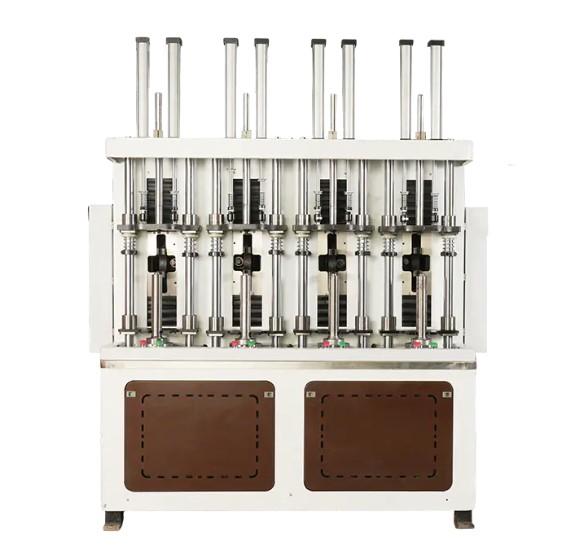

As the insulated drinkware market continues to expand, manufacturers are looking for equipment that can accommodate different product designs and production requirements. A Vacuum Flask Production Machine provides an integrated solution for coordinating essential manufacturing processes, from component preparation to final assembly. By selecting a suitable Vacuum Flask Production Machine, factories can organize production activities more efficiently, improve processing consistency, and adapt their operations to changing customer demands. Equipment configuration, automation levels, and compatibility with different flask specifications are important factors when developing a modern manufacturing facility.
Integrating Multiple Manufacturing Processes
Vacuum flask manufacturing involves several connected operations that must work together smoothly. Stainless steel materials need to undergo forming, shaping, welding, and assembly before the finished containers are ready for inspection. Coordinating these processes helps manufacturers establish a more organized production workflow.
Integrated machinery can reduce unnecessary movement between individual workstations and make production scheduling easier. Depending on the equipment configuration, different processing stages can be arranged to support continuous manufacturing activities. This approach is particularly useful for factories producing multiple flask models with different capacities and structural designs.
Manufacturers should evaluate how individual machines communicate with one another and whether their production arrangements can accommodate future equipment upgrades.
Improving Product Consistency Through Automation
Consistency is an important consideration when producing insulated stainless steel drinkware. Variations in component dimensions, welding positions, and assembly procedures may affect the appearance and structure of finished products.
Automated production equipment helps control repetitive manufacturing operations through predefined processing parameters. This can reduce differences caused by manual handling and provide operators with a more standardized production method.
Automation also allows factory managers to organize labor more effectively. Employees can focus on monitoring equipment conditions, checking product quality, and managing material preparation instead of performing every repetitive operation manually.
When introducing automation, manufacturers should consider equipment adjustment requirements, operator training, and compatibility with their existing manufacturing systems.
YKBAOWENBEIJIX Solutions for Flask Manufacturing
YKBAOWENBEIJIX offers machinery solutions designed for stainless steel vacuum flask production. Its automatic stainless steel vacuum flask production line provides an equipment option for manufacturers seeking to coordinate multiple production stages within an organized manufacturing arrangement.
A complete production line can help factories consider the relationship between different processing operations rather than purchasing individual machines without an overall production plan. Buyers should pay attention to equipment specifications, production capacity, applicable flask dimensions, and the level of automation available.
For manufacturers handling different insulated container designs, understanding the production line configuration is particularly important. Proper equipment selection can help create a manufacturing arrangement that supports current product requirements while leaving room for future development.
Organizing Quality Inspection and Equipment Maintenance
Product inspection should be incorporated into the manufacturing workflow instead of being treated as an isolated final activity. Checking component dimensions, welding conditions, surface appearance, and assembly results at suitable production stages helps manufacturers identify potential problems earlier.
Equipment maintenance is equally important for maintaining stable factory operations. Regular inspection of mechanical components, electrical systems, fixtures, and operating mechanisms can help reduce unexpected interruptions.
Manufacturers should establish maintenance procedures according to actual equipment requirements. Keeping records of machine adjustments, servicing activities, and production performance also provides useful information for improving daily operations.
A well-organized maintenance system supports better production planning and helps operators understand how equipment conditions influence manufacturing results.
Preparing Production Lines for Changing Market Demands
Consumer preferences for insulated drinkware continue to create opportunities for manufacturers producing different flask styles. Stainless steel bottles, travel thermoses, office drinking containers, and outdoor vacuum flasks may require different dimensions, capacities, and manufacturing arrangements.
A flexible production line allows factories to evaluate new product specifications without completely redesigning their manufacturing systems. Before purchasing equipment, buyers should consider anticipated product categories, available workshop space, material handling requirements, and expected production volumes.
Communication with machinery suppliers can also help clarify installation arrangements, technical specifications, and operating requirements. Manufacturers interested in developing or upgrading their vacuum flask manufacturing facilities can explore production equipment and related solutions at https://www.ykbaowenbeijix.com/ to find suitable machinery for their production plans.
