

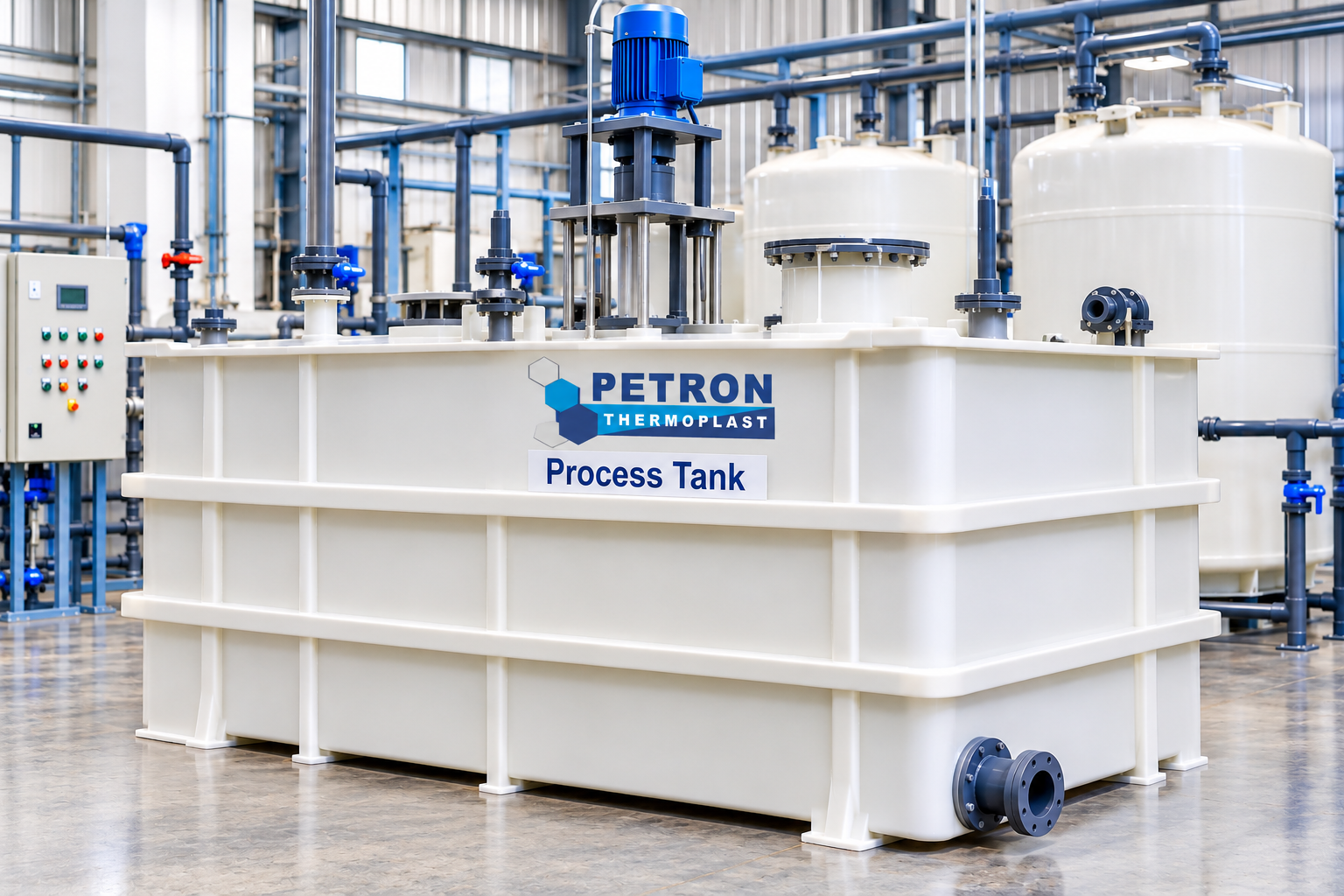

Industrial facilities across the world depend on reliable process equipment to manage liquids, chemicals and manufacturing operations. Process tanks are an important part of these facilities. They are used for holding, mixing, treating, collecting and transferring liquids at different stages of production. Industrial process tank manufacturing requires careful planning, material selection and fabrication to meet the technical requirements of each project.
Different industries have different process conditions. A chemical manufacturing plant may need a corrosion-resistant tank, while a water treatment facility may require a tank designed for liquid collection or treatment. Pharmaceutical, electroplating and other manufacturing units may also need customized tank configurations.
For global industrial projects, process tanks must be designed according to the project drawings, operating conditions, material requirements and applicable standards. Customized manufacturing helps ensure that the tank arrangement matches the intended installation.
What Is an Industrial Process Tank?
An industrial process tank is a fabricated vessel used to support different operations within a manufacturing or processing facility. Depending on the application, it may be used for liquid storage, chemical preparation, mixing, rinsing, dosing or process treatment.
Unlike a basic storage tank, a process tank is often designed around a specific industrial operation. Its dimensions, shape, capacity, inlet and outlet positions, connections and internal arrangements depend on the process requirements.
Plastic process tanks are commonly considered where corrosion resistance and chemical compatibility are important. Materials such as PP, PPH, PVDF and HDPE can be evaluated for suitable applications.
Importance of Customized Process Tank Manufacturing
Standard tank dimensions may not suit every industrial installation. Large projects often involve specific layouts, limited installation space and connections to existing equipment.
Customized process tank manufacturing helps address these requirements.
- Project-Specific Dimensions
Tanks can be fabricated according to the required length, width, height and capacity. This helps integrate the tank into the available plant space.
- Material Selection
Different industrial liquids require different construction materials. The material should be selected after evaluating chemical compatibility, temperature, pressure and mechanical requirements.
- Customized Connections
Inlet, outlet, drain, overflow and other connections can be planned according to the process layout.
- Equipment Integration
Process tanks may need to connect with pumps, pipelines, filters, dosing systems and other equipment. Customized fabrication helps coordinate these connections.
- Project Drawing Compliance
Manufacturing according to approved engineering drawings provides a reference for dimensions, connection positions and fabrication details.
Types of Industrial Process Tanks
Industrial process tanks are available in different designs according to the application and available installation space.
- Vertical Process Tank
Vertical tanks are designed with a taller structure and a relatively smaller floor footprint. They can be considered for industrial liquid handling, storage and process applications.
- Horizontal Process Tank
Horizontal process tanks are suitable for installations where the available height is limited or a horizontal configuration is required by the process design.
- Rectangular Process Tank
Rectangular tanks can be useful where space utilization and specific process arrangements are important. They are often considered for rinsing, treatment and industrial process applications.
- Chemical Process Tank
Chemical process tanks are designed for handling selected industrial chemicals. Material compatibility and operating conditions are particularly important during their design.
- Customized Process Tank
Customized tanks are fabricated according to project-specific requirements. They may include special dimensions, connections, support arrangements and other specified features.
Key Design Considerations for Process Tanks
A well-planned process tank starts with a clear understanding of its intended use.
Important design considerations include:
- Tank capacity: Determine the required working volume and total design capacity.
- Dimensions: Confirm the available installation space and required tank measurements.
- Wall thickness: Establish the required thickness based on material properties, dimensions and design conditions.
- Chemical compatibility: Verify the construction material against the process liquid.
- Operating temperature: Consider normal and maximum operating temperatures.
- Connections: Plan inlet, outlet, drain, overflow and other required connections.
- Support arrangement: Evaluate the tank base, foundation and structural support.
- Maintenance access: Consider access for cleaning, inspection and servicing.
- Safety features: Identify any required level indicators, vents, covers or secondary containment arrangements.
Industrial Process Tank Manufacturing Process
A structured fabrication process helps maintain consistency and ensures that the finished tank follows the approved requirements.
Step 1: Requirement Assessment
The process begins with collecting information about the intended application, liquid characteristics, tank capacity, operating conditions and installation location.
Step 2: Drawing and Design Review
Engineering drawings are reviewed to confirm tank dimensions, material specifications, connection positions and other fabrication details. Any missing or unclear information should be resolved before production.
Step 3: Material Inspection
The selected material is checked for the required grade, dimensions and visible condition. Relevant material documentation can also be reviewed according to project requirements.
Step 4: Cutting and Preparation
Plastic sheets, pipes and other required components are measured and prepared according to the approved design.
Step 5: Tank Fabrication
The tank body, base, top section and specified components are assembled using a joining process suitable for the selected material. Fabrication procedures should follow the manufacturer's approved methods.
Step 6: Connection Installation
Required nozzles, flanges, couplings, drain connections and other accessories are installed according to the project drawings.
Step 7: Inspection and Testing
The completed tank is checked for dimensions, joint quality, connection positions and visible defects. Leak or other performance testing should be carried out according to the approved project procedure and material requirements.
Step 8: Packing and Dispatch Preparation
After inspection, the tank is prepared for transportation. Proper handling and packaging help protect the fabricated structure and connections during delivery.
Industrial Applications of Process Tanks
Customized process tanks support a wide range of industrial operations.
Chemical Processing Plants
Chemical facilities use process tanks for selected liquid handling, preparation, collection and treatment operations. Material selection is essential because chemical concentration and temperature can affect tank performance.
Water Treatment Plants
Water treatment facilities use tanks in different stages of filtration, chemical dosing, treatment and liquid collection.
Electroplating Industries
Electroplating operations involve chemical solutions and treatment processes. Compatible PP, PPH or other suitable tanks may be considered according to the specific application.
Pharmaceutical Manufacturing
Pharmaceutical facilities may require process tanks for compatible liquid handling and utility operations. The material grade, cleanliness and applicable process requirements must be evaluated.
Manufacturing Facilities
Industrial manufacturing units use process tanks for different production activities, including liquid preparation, rinsing and process circulation.
Surface Treatment Industries
Surface treatment plants may use customized tanks for selected chemical baths, rinsing operations and treatment processes.
Advantages of Customized Industrial Process Tanks
Customized process tanks offer several practical benefits for industrial installations.
- Tank dimensions can be planned according to available space.
- Material selection can be matched to the process requirements.
- Connections can be positioned according to pipeline layouts.
- Different tank configurations can support specific operations.
- Fabrication can follow approved engineering drawings.
- Multiple tanks can be planned for bulk project requirements.
- Customized accessories can be included where technically suitable.
Why Choose Petron Thermoplast?
Petron Thermoplast focuses on industrial plastic piping products, fabricated tanks, valves, fittings and customized solutions for industrial requirements. For process tank enquiries, customers can share their tank drawings, required capacity, material preference, dimensions and application details. This information helps evaluate suitable fabrication options for the intended installation.
Petron Thermoplast supports customized and bulk project enquiries for industrial plastic tanks. Requirements can be discussed for different configurations, including vertical, horizontal and rectangular process tanks, subject to technical feasibility. Whether you are planning a new manufacturing facility or expanding an existing processing unit, sharing the engineering details helps establish the required tank specifications.
Global Project Requirements and Bulk Manufacturing
Industrial projects in different countries may have specific requirements related to dimensions, materials, connections, documentation and transportation. For international project enquiries, it is important to confirm the technical specifications before manufacturing begins.
Customers should provide:
- Approved tank fabrication drawings.
- Required material and grade.
- Tank dimensions and working capacity.
- Chemical or liquid details.
- Operating temperature and pressure conditions.
- Required inlet, outlet and drain connections.
- Quantity and project schedule.
- Delivery destination and applicable documentation requirements.
Conclusion
Industrial process tank manufacturing plays an important role in chemical processing, water treatment, pharmaceutical manufacturing and other industrial operations. Customized fabrication allows tanks to be designed according to specific dimensions, material requirements, connection arrangements and project drawings.
PP, PPH, PVDF and HDPE are possible material options for different applications. However, the final selection must be based on chemical compatibility, operating temperature, tank dimensions and engineering requirements. Petron Thermoplast supports industrial plastic tank and customized fabrication enquiries for domestic and global project requirements. Share your drawings and technical specifications to discuss suitable process tank solutions for your next industrial project.
