

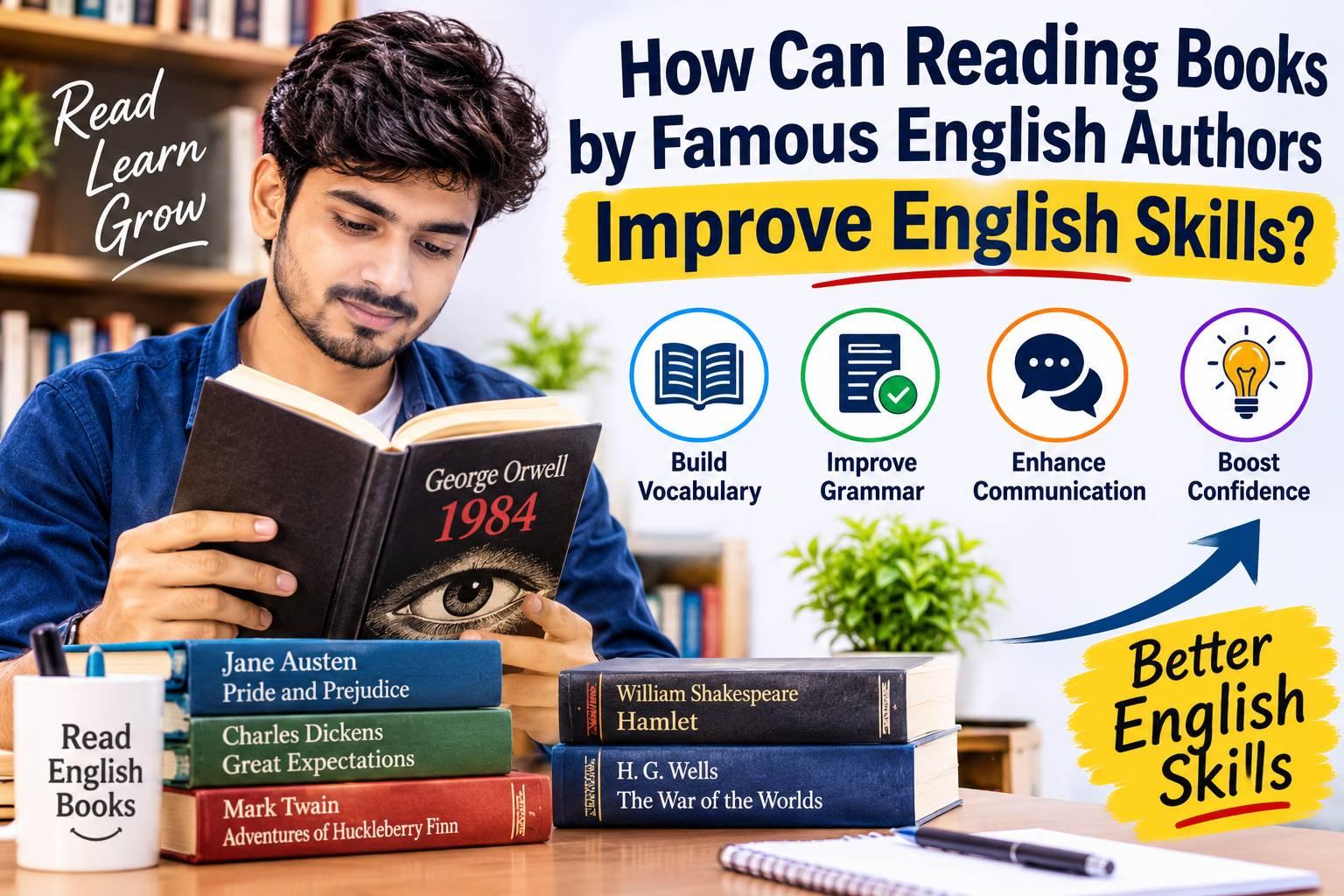

Reading provides many benefits for improving your ability to communicate in English. Not only does it help you expand your vocabulary, it also helps you understand how sentences are constructed, what type of grammar patterns are used, and the various types of writing that exist. If you're a student, a beginner, or someone who wants to enhance their communication skills, reading works from well-known English authors can provide an excellent opportunity for you to grow as a learner.
There are many great English-language writers (e.g., William Shakespeare, Jane Austen, Charles Dickens, George Orwell, and J.K. Rowling) whose novels have been read by people all over the world. These authors' novels provide much more than simply a good story to read. They are an opportunity for you to see how the English language is utilized to convey feelings, explain events, and express thoughts. Now let's discuss how reading novels written by English authors for Beginners will enhance your ability to learn the English language.
Improves Vocabulary and Word Knowledge
Reading English books offers many benefits including helping you build your vocabulary. Books will allow you to learn about new words and phrases which you wouldn't typically hear in day to day conversation.
As an example, reading Charles Dickens' novels may give learners access to descriptive language, and reading Jane Austen's novels may provide learners with vocabulary that describes relationships, social interactions and daily activities.
Rather than learning lists of random words, readers develop their vocabulary in relation to what is around them. If they find a word they do not know, they can look at the other words surrounding it to figure out what it means.
A useful technique for developing your reading skills is to keep a vocabulary journal and record five unfamiliar words from each of your reading assignments, including the definitions and examples of how they are used in sentences.
Develops Better Grammar and Sentence Formation
When you read books written by well-known English authors, you will see how they put their sentences together. If you continue to read things that have been put together using good English, then you should be able to spot grammar patterns, punctuation, verb forms and different ways to combine your sentences.
In addition, the writing of George Orwell is well-known for being written in a plain, direct manner with clearly expressed ideas. Beginners may use easy to read material to help them learn about using short, simple sentences to convey ideas effectively.
Readers can use the sentence structure they create to help them avoid frequent grammatical errors.
Strengthens Reading Comprehension Skills
Reading comprehension is about what you can tell me about the meaning, purpose, and message of a text. Classic novels, short stories, and contemporary fiction encourage readers to follow the characters in the story, understand the situation in which those characters find themselves, and identify the main ideas that are presented in the story.
- While reading, learners can ask themselves questions such as:
- What is the main idea of this chapter?
- Why did the character make a particular decision?
- What message is the writer trying to communicate?
- How does the story develop from beginning to end?
These exercises can help you develop greater concentration, analytical thinking skills, and improved reading comprehension.
Introduces Different Writing Styles
Each author has his/her own unique way of telling stories and expressing thoughts. By reading each author’s work, you can see how each author uses different writing styles.
In addition, William Shakespeare wrote numerous plays and poems, whereas Jane Austen wrote many novels about the development of relationships and how people interacted in society. J.K. Rowling creates a unique form of imaginative storytelling which may be appealing to individuals who like fantasy literature.
Learning from various well-known English writers will allow students to experience descriptive writing, dialogue, narrative writing, humor, and persuasion through their written works.
Improves Communication and Speaking Confidence
When students are comfortable with the vocabulary and grammar used in written materials, they may feel more confident expressing themselves when talking to others.
Reading dialogues aloud can be especially beneficial as it allows students to practice their pronunciation, pauses, and sentence flow.
Summarizing what you read can also be an effective way to help connect the reading process to your ability to speak about the information you are learning, as well as improve how well you can describe concepts and ideas.
Builds Critical Thinking and Imagination
Literature enables its audience to see what lies behind the text. It frequently examines the ways that people act, the problems in our societies, the way we interact with others, and our individual struggles.
Readers develop the ability to interpret situations, compare views and comprehend various angles. The benefits of developing these abilities extend far beyond language acquisition; they will assist with participation in academic debates, delivering presentations and communicating on a daily basis.
How to Start Reading English Literature as a Beginner
If you are just beginning to read, select books based on your existing reading ability. Trying to start reading with difficult classic literature can cause you problems when trying to learn.
Consider these simple steps:
- Begin with short stories and easy English books.
- Read for 15–20 minutes every day.
- Highlight unfamiliar words and learn their meanings.
- Read selected paragraphs aloud to practise pronunciation.
- Write a short summary after completing each chapter.
- Gradually explore more advanced works by well-known authors.
- Consistency is more important than reading several books quickly.
Conclusion
Reading books written by well-known creative English writers course will make learning English more enjoyable and productive. Reading books will help increase your knowledge of words (vocabulary), how those words are used in sentences (grammar), understanding what is being said (comprehension), expressing yourself through written words (writing), and expressing yourself through spoken words (communication). In addition, reading books will introduce you to many different ways of writing (literary styles). You can read classics, contemporary novels, or short stories; regardless of which type of book you select, consistently reading will allow you to continue to build on your ability to use English. Begin with books that are easy for you to understand, practice every day, and read from various authors to gain confidence in using the language and to find joy in the process of learning.
Frequently Asked Questions (FAQs)
Who are some famous English authors for beginners to read?
Accessible works written by Charles Dickens, Jane Austen, George Orwell and J.K. Rowling can be explored by beginning readers. It is also beneficial for beginning readers to begin with short stories and simplified editions.
Can reading English books improve vocabulary?
Reading provides new vocabulary within an applicable context which helps learners comprehend the definition of those terms and how they can be used in sentences.
How much time should I spend reading English books daily?
You can begin reading for 15-20 minutes every day. Reading regularly will help you learn new words, understand better, and feel more confident when speaking.
Which types of books are best for improving English skills?
Short stories, novels, biographies, children's literature, and simplified classics may be good options for you. Choose books that are appropriate for your reading level and interest.
Does reading English literature improve speaking skills?
Reading allows for familiarity with vocabulary and the way sentences are structured. Additionally, reading out loud and giving a summary of the story being read supports pronunciation and self-assurance when talking.
