

Family Holidays in India: A Complete Planning Guide for First-Time Visitors

Planning your first family holidays to India can be an exciting experience. India offers an extraordinary mix of colourful traditions, historic landmarks, beautiful landscapes, wildlife adventures and relaxing beach destinations. From exploring magnificent palaces in Rajasthan to enjoying peaceful backwater cruises in Kerala, the country offers something for every generation.
For families travelling from the UK, India provides an opportunity to experience a different culture while enjoying memorable activities together. However, planning a family trip to a country with so many destinations and travel experiences requires thoughtful preparation.
This complete guide covers everything first-time visitors should consider when organising family holidays in India, helping parents create a comfortable, enjoyable and rewarding holiday for everyone.
1. Choose the Right Destinations for Your Family
India is a vast country, and visiting too many destinations in one holiday can make travelling tiring, particularly for families with young children. Instead, choose locations that complement each other and offer a balance of sightseeing, relaxation and family activities.
Some of the best destinations to consider include:
Rajasthan: Rajasthan is an excellent choice for families interested in India's royal history and colourful culture. Jaipur's impressive forts, Udaipur's beautiful lakes and Jodhpur's historic streets offer plenty of opportunities for children and adults to explore. Families can also enjoy traditional performances, heritage hotels and cultural experiences.
Kerala: For a more relaxed experience, Kerala offers beautiful natural surroundings, peaceful waterways and wildlife encounters. Families can enjoy houseboat cruises through the backwaters, visit tea plantations in Munnar and spend time along the beaches of Kovalam.
Goa: Goa is ideal for families looking for a combination of beach relaxation and outdoor activities. Its sandy beaches, Portuguese-influenced architecture, spice plantations and coastal villages provide different experiences for visitors of all ages.
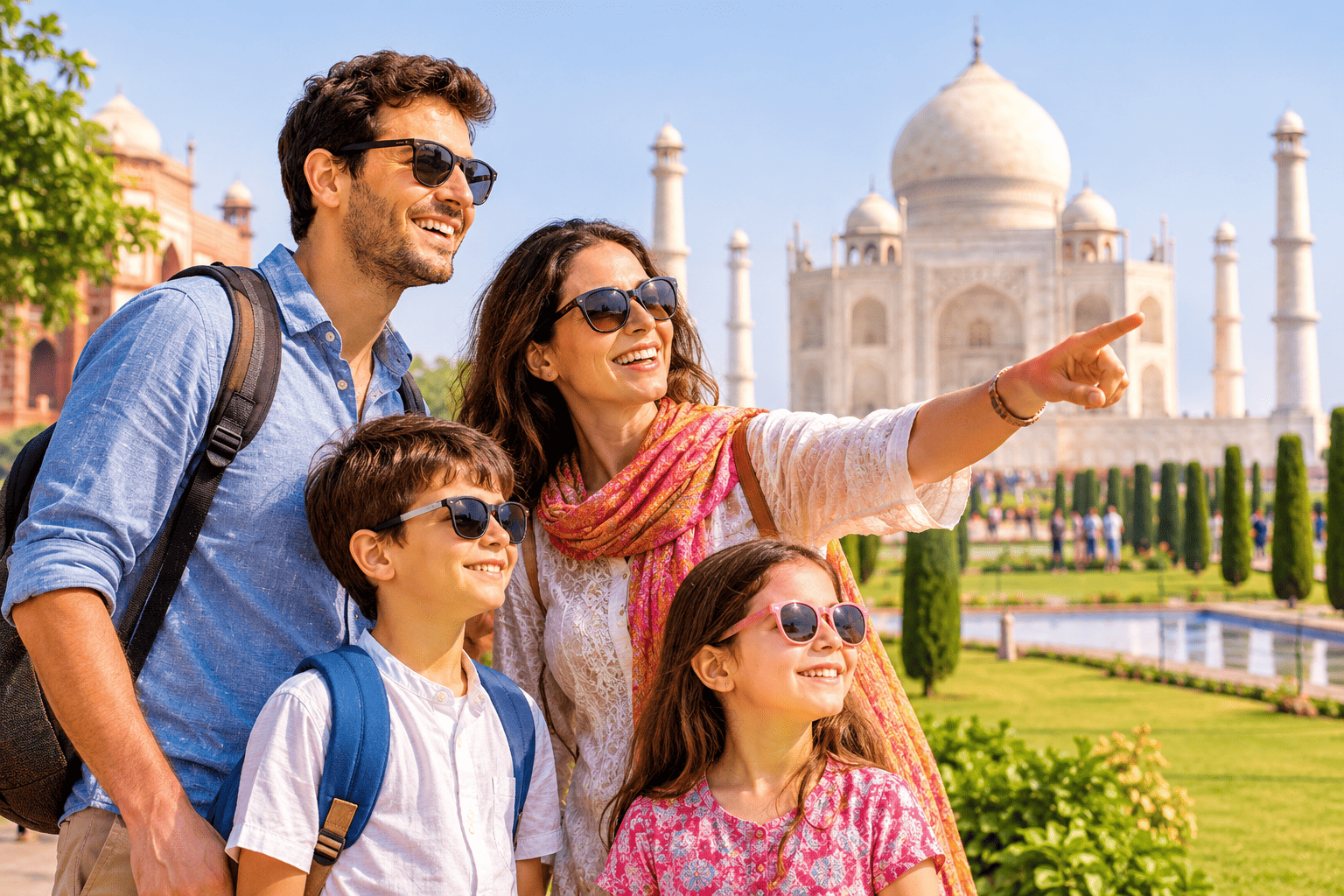
Agra and Delhi: These destinations are perfect for introducing children to India's fascinating history. Visiting the Taj Mahal, exploring historic monuments and experiencing traditional markets can make sightseeing educational and enjoyable.
Choosing two or three destinations is generally a better approach than attempting to cover the entire country in one visit.
2. Decide the Best Time to Visit India
Weather plays an important role when planning family holidays in India. The country experiences different climatic conditions depending on the region, so the ideal travel season depends on your chosen destinations.
October to March: This is generally one of the most comfortable periods for exploring many popular destinations. Rajasthan, Delhi, Agra and parts of southern India offer pleasant conditions for sightseeing and outdoor activities.
April to June: Temperatures can become extremely high, particularly across northern and central India. However, hill stations such as Shimla, Manali, Darjeeling and Ooty provide cooler surroundings and opportunities to enjoy nature.
July to September: The monsoon season brings rainfall to many parts of India. Kerala's landscapes become particularly lush, while some destinations offer quieter travel experiences. However, heavy rain can affect road journeys and outdoor activities.
For first-time family visitors, October to March is often a convenient starting point, although regional weather should always be considered.
3. Plan an Itinerary That Suits Every Age Group
A successful family holiday should include activities that appeal to different generations. Children may enjoy wildlife experiences and outdoor adventures, while parents and grandparents might prefer cultural attractions, scenic surroundings and comfortable accommodation.
A well-planned two-week itinerary could include:
-
Days 1–3: Delhi: Explore historical landmarks, enjoy local food experiences and visit important cultural attractions.
-
Days 4–6: Agra and Jaipur: Visit the Taj Mahal, explore Jaipur's Amber Fort and experience Rajasthan's colourful traditions.
-
Days 7–9: Udaipur: Enjoy peaceful lake views, palace visits and boat rides.
-
Days 10–12: Kerala: Experience the beautiful landscapes of Kerala, visit tea plantations or enjoy a backwater cruise.
-
Days 13–14: Relaxation: Spend the final days enjoying a comfortable resort, local experiences and time together before departure.
This itinerary can be adjusted depending on flight connections, children's ages and family interests.
Avoid scheduling several major sightseeing activities in one day. Allowing time for breaks, swimming, relaxed meals and spontaneous experiences makes the journey more enjoyable.
4. Choose Family-Friendly Accommodation
Accommodation can significantly influence the overall holiday experience. Families should look beyond the appearance of a hotel and consider its facilities, location, room arrangements and suitability for children.
India offers several accommodation styles, including luxury resorts, heritage palaces, boutique hotels, private villas and comfortable city properties.
Heritage hotels in Rajasthan offer an opportunity to experience traditional architecture and royal hospitality. Kerala's resorts provide peaceful surroundings, while beach properties in Goa are suitable for families seeking relaxation.
When choosing accommodation, consider:
-
Spacious family rooms or interconnected rooms.
-
Swimming pools and suitable children's facilities.
-
Restaurants offering familiar and local food options.
-
Convenient access to sightseeing attractions.
-
Reliable transport arrangements.
-
Comfortable facilities for older family members.
Selecting accommodation carefully helps create a relaxing environment between sightseeing activities.
5. Understand Food and Dining Options
Indian cuisine is one of the most enjoyable parts of travelling through the country. However, families visiting for the first time may need some time to become familiar with regional dishes and flavours.
From mild North Indian curries to South Indian breakfasts, there are plenty of options for different preferences.
Popular dishes that families can try include:
-
Butter chicken with naan.
-
Vegetable biryani.
-
Dosa with coconut chutney.
-
Mild paneer curries.
-
Idli and sambar.
-
Freshly prepared Indian breads.
Children who prefer familiar meals can usually find options such as pasta, sandwiches, rice and simple grilled dishes at established hotels and restaurants.
Choose hygienic dining establishments, drink sealed bottled or properly filtered water, and be cautious with uncooked foods when travelling.
Trying local dishes together can also become a memorable part of the family experience.
6. Prepare for Health, Safety and Travel Comfort
For first-time visitors, preparing for health and safety requirements is an important part of organising a family holiday.
Before departure, consult a healthcare professional or travel clinic regarding recommended vaccinations and destination-specific health precautions. Carry essential medicines, prescriptions and a basic first-aid kit.
A few practical considerations include:
-
Use reputable transport providers for airport transfers and longer journeys.
-
Carry sunscreen, insect repellent and suitable clothing.
-
Encourage children to wash their hands regularly.
-
Keep important travel documents accessible.
-
Choose licensed guides for sightseeing experiences.
-
Maintain travel insurance covering the activities included in your itinerary.
Families should also consider the distances between destinations. Private transfers can provide greater flexibility, particularly when travelling with young children or older relatives.
7. Arrange Flights, Visas and Local Transport
Families travelling from the UK should organise international flights, visas and domestic transport well before departure.
India offers direct flights from major UK airports to cities such as Delhi and Mumbai, alongside connecting services to other destinations.
British passport holders generally require an appropriate visa before travelling to India. The Indian e-Visa system provides an online application route for eligible travellers. Check the official Indian visa website for current eligibility, requirements and processing information.
Within India, families can choose from several transport options:
Private vehicles: These are particularly convenient for families visiting multiple destinations, offering flexibility with sightseeing stops and departure times.
Domestic flights: Useful for covering longer distances between regions, especially when travelling with children.
Trains: Indian rail journeys can provide a memorable cultural experience, although advance planning and suitable accommodation classes are important.
A combination of private transfers and domestic flights often works well for family itineraries.
8. Include Experiences That Bring Families Together
The most memorable family holidays are often about shared experiences rather than simply visiting famous attractions.
India offers countless opportunities for families to enjoy something different together.
Children can learn about wildlife through guided safaris in national parks, while parents can enjoy the surrounding natural landscapes. Rajasthan offers traditional cooking demonstrations, craft workshops and cultural performances.
In Kerala, families can experience peaceful boat journeys and explore spice plantations. Goa provides opportunities for beach activities and exploring coastal villages.
Other enjoyable experiences include:
-
Watching traditional dance performances.
-
Taking guided heritage walks.
-
Visiting local markets and craft villages.
-
Exploring India's historic forts and palaces.
-
Enjoying nature walks and scenic boat rides.
-
Participating in family-friendly cooking experiences.
Including these activities creates a more meaningful connection with India's culture, traditions and everyday life.
9. Pack Smartly for Your Family Trip
Packing appropriately can make travelling around India much easier. Weather conditions vary considerably between regions, so clothing should reflect the destinations and season.
Lightweight cotton clothing is useful for warmer regions, while jackets and comfortable layers are important for cooler destinations.
Families should also consider packing:
-
Comfortable walking shoes.
-
Sun hats and sunglasses.
-
Sunscreen and insect repellent.
-
Personal medication and basic first-aid supplies.
-
Reusable water bottles for filtered water.
-
Travel adapters suitable for Indian electrical sockets.
-
Copies of passports, visas and insurance documents.
When visiting temples and religious sites, modest clothing that covers shoulders and knees is generally appreciated. Carrying a light scarf can also be useful.
10. Make Your First Family Holiday to India Stress-Free
The key to enjoying your first family holiday in India is finding the right balance between exploration and relaxation. A carefully planned itinerary, comfortable accommodation, suitable transport and activities for different age groups can make the entire experience more rewarding.
Working with an experienced travel specialist can also simplify the planning process. From selecting destinations and arranging private transfers to recommending family-friendly hotels and organising guided experiences, professional assistance helps families make informed decisions.
For UK travellers, having access to UK-based travel support can provide additional reassurance when organising a holiday across multiple Indian destinations.
Conclusion
India is a wonderful destination for families seeking culture, adventure, history and relaxation in one memorable journey. Whether exploring Rajasthan's royal heritage, enjoying Kerala's natural beauty or relaxing on Goa's beaches, every region offers something different to experience together.
With thoughtful preparation and an itinerary designed around your family's interests, family holidays to India can become an unforgettable opportunity to share new experiences, learn about different cultures and create lasting memories.
Indian Odyssey helps UK travellers plan thoughtfully arranged journeys across India, combining carefully selected accommodation, private travel arrangements and memorable experiences. Whether you are planning your first visit or returning to explore more of the country, the right guidance can help make your family journey comfortable, enriching and enjoyable.
Frequently Asked Questions
1. Is India a good destination for first-time family holidays?
Yes. India offers diverse experiences, including historical attractions, wildlife safaris, beaches, cultural activities and relaxing resorts. With suitable planning, families can enjoy a comfortable and rewarding holiday.
2. How many days are enough for a family holiday in India?
Around 10 to 14 days is a good starting point for exploring two or three regions without rushing. Families with more time can include additional destinations.
3. Which Indian destinations are best for families?
Rajasthan, Kerala, Goa, Delhi and Agra are popular choices. Each offers different experiences, from cultural sightseeing and historical attractions to beaches and nature activities.
4. What is the best month for family holidays in India?
October to March is generally suitable for visiting many popular destinations because temperatures are more comfortable for sightseeing. However, the ideal month depends on the region.
5. Is Indian food suitable for children?
Yes. Many restaurants and hotels offer mild curries, rice dishes, breads, dosa, pasta and other familiar meals. Parents can request less spicy preparations where necessary.
