

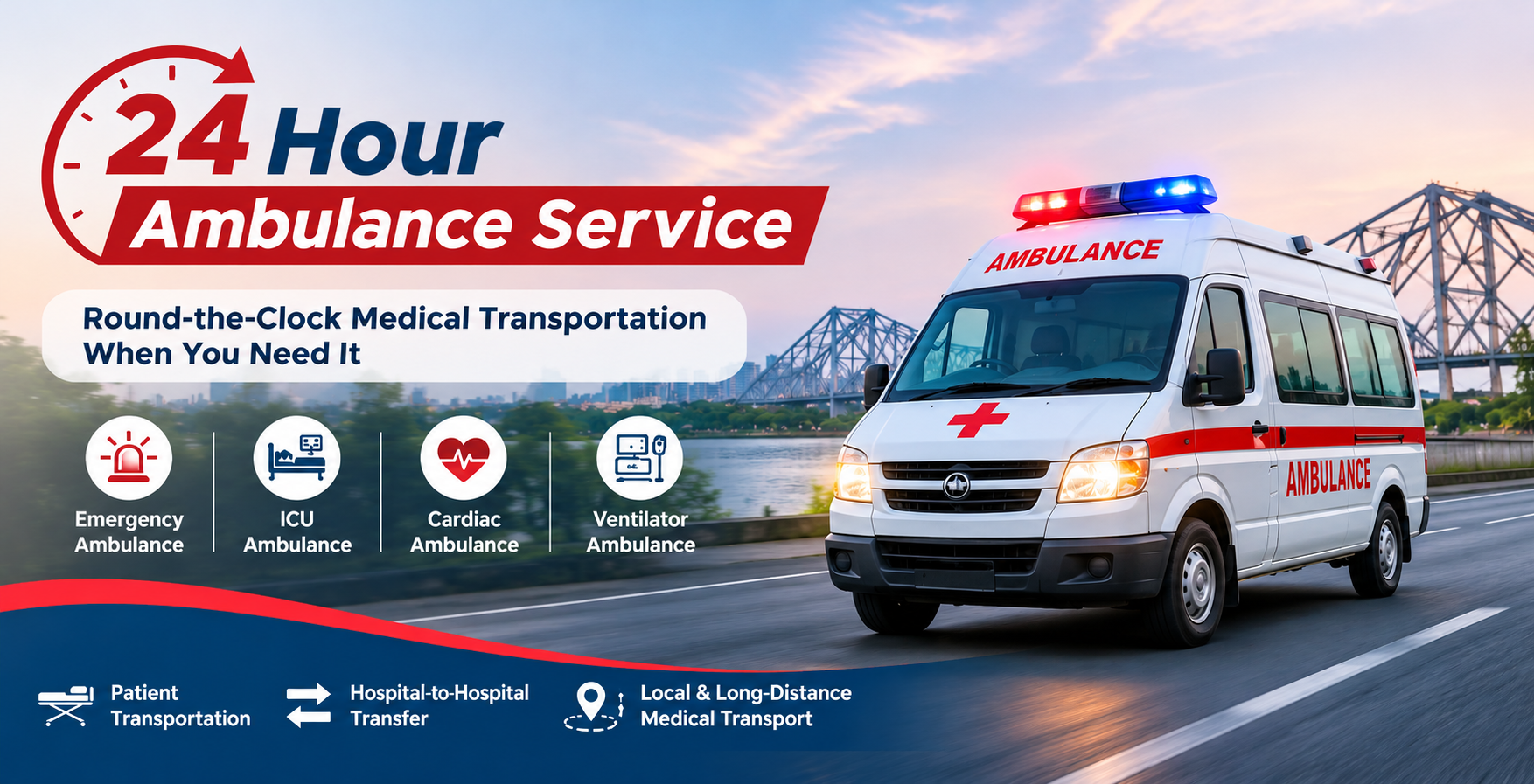

Transporting a critically ill patient requires careful planning, specialised equipment, and appropriate medical supervision. Some patients cannot breathe independently and need continuous ventilator assistance, even while travelling between hospitals. In such situations, a specially equipped ambulance helps maintain the required respiratory support during transportation.
A ventilator ambulance service is designed to transport patients who depend on mechanical breathing assistance. It provides suitable equipment and medical support to help manage their respiratory needs throughout the journey. Understanding how these ambulances work can help families prepare for hospital transfers and make informed transportation decisions with medical guidance.
1. What Is a Ventilator Ambulance?
A ventilator ambulance is a specialised medical vehicle equipped to transport patients who require mechanical ventilation during their journey.
A ventilator supports breathing by helping move air into and out of the lungs when a patient cannot breathe adequately without assistance. This support may be necessary because of serious respiratory illness, neurological conditions, severe injuries, or other critical medical problems.
Unlike a basic ambulance, a ventilator support ambulance is designed to accommodate respiratory equipment and the medical personnel needed to manage it.
Depending on the vehicle, facilities may include:
· Mechanical ventilator
· Oxygen supply
· Patient monitoring equipment
· Suction equipment
· Infusion pumps
· Emergency medical supplies
· Stretcher and patient safety arrangements
The exact facilities can vary, so the equipment required for the patient's condition should always be confirmed before transportation.
2. Why Do Critical Patients Need Ventilator Ambulances?
Some critically ill patients need uninterrupted breathing support. Moving them without suitable respiratory equipment can create serious medical risks.
A ventilator ambulance helps continue the prescribed breathing support while the patient travels to another healthcare facility.
Common situations where this transportation may be required include:
Severe Respiratory Conditions
Patients with serious respiratory illnesses may struggle to maintain adequate breathing. If they depend on mechanical ventilation, they need a suitable ambulance with compatible equipment.
Neurological Conditions
Certain neurological conditions can affect the muscles responsible for breathing. Patients who cannot maintain adequate respiratory function may require ventilator support during transportation.
Serious Injuries
Patients with severe injuries may experience breathing difficulties or require intensive medical support. Their transportation needs should be assessed by the treating medical team.
Post-Surgical Care
Some patients may continue to require ventilator assistance after major surgery. If they need to move between hospitals, specialised transportation may be necessary.
3. How Does a Ventilator Support Ambulance Work?
A ventilator support ambulance provides a controlled environment for transporting patients who depend on mechanical breathing assistance.
Before the journey, medical personnel assess the patient's condition and confirm the required equipment and respiratory settings according to medical instructions.
During transportation, the process generally involves:
1. Patient assessment: The medical team reviews the patient's condition and current respiratory support requirements.
2. Equipment preparation: The ventilator, oxygen supply, monitoring devices, and other required equipment are checked.
3. Safe patient shifting: The patient is carefully moved onto the ambulance stretcher.
4. Ventilator connection: The patient is connected to the appropriate ventilator setup.
5. Continuous observation: Medical personnel monitor the patient and equipment during the journey.
6. Hospital handover: The patient's condition and relevant medical information are communicated to the receiving medical team.
The goal is to maintain the required respiratory support throughout transportation.
4. Important Equipment Used in Ventilator Ambulances
Medical equipment is an essential part of critical patient transport. Each device serves a specific purpose and should be suitable for the patient's medical requirements.
Mechanical Ventilator
A mechanical ventilator helps patients breathe when their natural breathing ability is insufficient. It delivers controlled respiratory support according to prescribed settings.
Oxygen Supply
Oxygen is required by many patients receiving respiratory support. The ambulance should have an adequate supply for the expected journey duration, including an appropriate reserve.
Patient Monitor
A patient monitor helps medical personnel observe important measurements such as oxygen saturation, heart rate, and blood pressure.
Suction Equipment
Suction devices help remove secretions from the airway when medically required.
Infusion Pumps
Some critically ill patients receive prescribed medicines or fluids through controlled infusion systems. Suitable pumps may be needed during transportation.
Before booking, families should confirm that the ambulance has the equipment required for the patient's specific condition.
5. Role of Medical Staff During Critical Patient Transport
Equipment alone is not enough to support a ventilated patient. Trained medical personnel are also important during transportation.
Depending on the patient's condition, the accompanying team may include qualified critical-care medical professionals.
Their responsibilities may include:
· Observing the patient's respiratory condition.
· Monitoring relevant vital signs.
· Checking ventilator functioning.
· Managing oxygen and other required equipment.
· Responding to equipment-related concerns.
· Communicating important changes to the medical team.
The required staff qualifications and level of supervision should be discussed with the treating doctor before the journey.
6. Ventilator Ambulances for Hospital-to-Hospital Transfers
A ventilator ambulance is often required when a patient needs to move from one hospital to another while continuing mechanical breathing support.
Such transfers may happen when the current hospital does not have the required specialist or intensive care facilities.
Before the transfer, both hospitals should coordinate the patient's medical requirements.
Important preparations include:
· Confirming acceptance at the receiving hospital.
· Sharing the patient's diagnosis and treatment history.
· Providing current ventilator settings.
· Preparing recent medical reports.
· Confirming required medicines and equipment.
· Planning the transportation route and expected duration.
Proper coordination helps the receiving medical team understand the patient's condition and prepare for arrival.
7. What to Check Before Booking a Ventilator Ambulance Service
Choosing a suitable ventilator ambulance requires more attention than arranging ordinary patient transportation.
Families should use the following checklist:
1. Ventilator availability: Confirm that the ambulance has a suitable ventilator.
2. Oxygen supply: Check whether sufficient oxygen is available for the complete journey.
3. Medical personnel: Ask about the qualifications and experience of accompanying staff.
4. Monitoring facilities: Confirm that the necessary patient monitoring equipment is available.
5. Emergency equipment: Ask about backup arrangements and essential emergency supplies.
6. Journey planning: Discuss the distance, expected travel time, and route.
7. Transportation charges: Understand the total cost, including equipment and medical staff requirements.
Most importantly, explain the patient's condition accurately and follow the treating doctor's recommendations.
8. Challenges During Long-Distance Ventilator Transportation
Long-distance critical patient transport can be challenging because respiratory support must continue throughout the journey.
Some common concerns include:
· Oxygen management: The oxygen supply must be sufficient for the journey and possible delays.
· Equipment functioning: Ventilators and monitoring devices must remain operational.
· Travel duration: Longer journeys require careful planning and appropriate medical supervision.
· Road conditions: Traffic and unexpected delays may affect transportation time.
· Patient monitoring: The patient's condition may change during travel, requiring medical attention.
Planning for these factors helps reduce avoidable complications during transportation.
Frequently Asked Questions
Who needs a ventilator ambulance?
Patients who depend on mechanical ventilation and need breathing support during transportation may require a ventilator ambulance.
Can a ventilator patient be transferred between hospitals?
Yes. A ventilated patient can be transferred when the treating medical team considers transportation appropriate and suitable equipment and medical personnel are arranged.
What is the difference between a normal ambulance and a ventilator ambulance?
A normal ambulance generally provides basic patient transportation, while a ventilator ambulance is equipped to support patients who need mechanical breathing assistance during the journey.
Is medical staff required in a ventilator ambulance?
Patients requiring ventilator support generally need appropriately trained medical personnel to manage respiratory equipment and monitor their condition during transportation.
Can a ventilator ambulance be used for long-distance travel?
Yes. It can be used for long-distance transportation when the patient's condition is assessed, the equipment is suitable, and adequate medical support is arranged.
Conclusion
A ventilator ambulance plays an important role in transporting patients who depend on mechanical breathing assistance. It helps maintain respiratory support through suitable equipment, oxygen facilities, patient monitoring, and trained medical supervision.
Before arranging a ventilator ambulance service, families should consult the treating medical team and confirm the patient's equipment and transportation requirements. Careful preparation and coordination between hospitals help make critical patient transport more organised and medically appropriate.
