

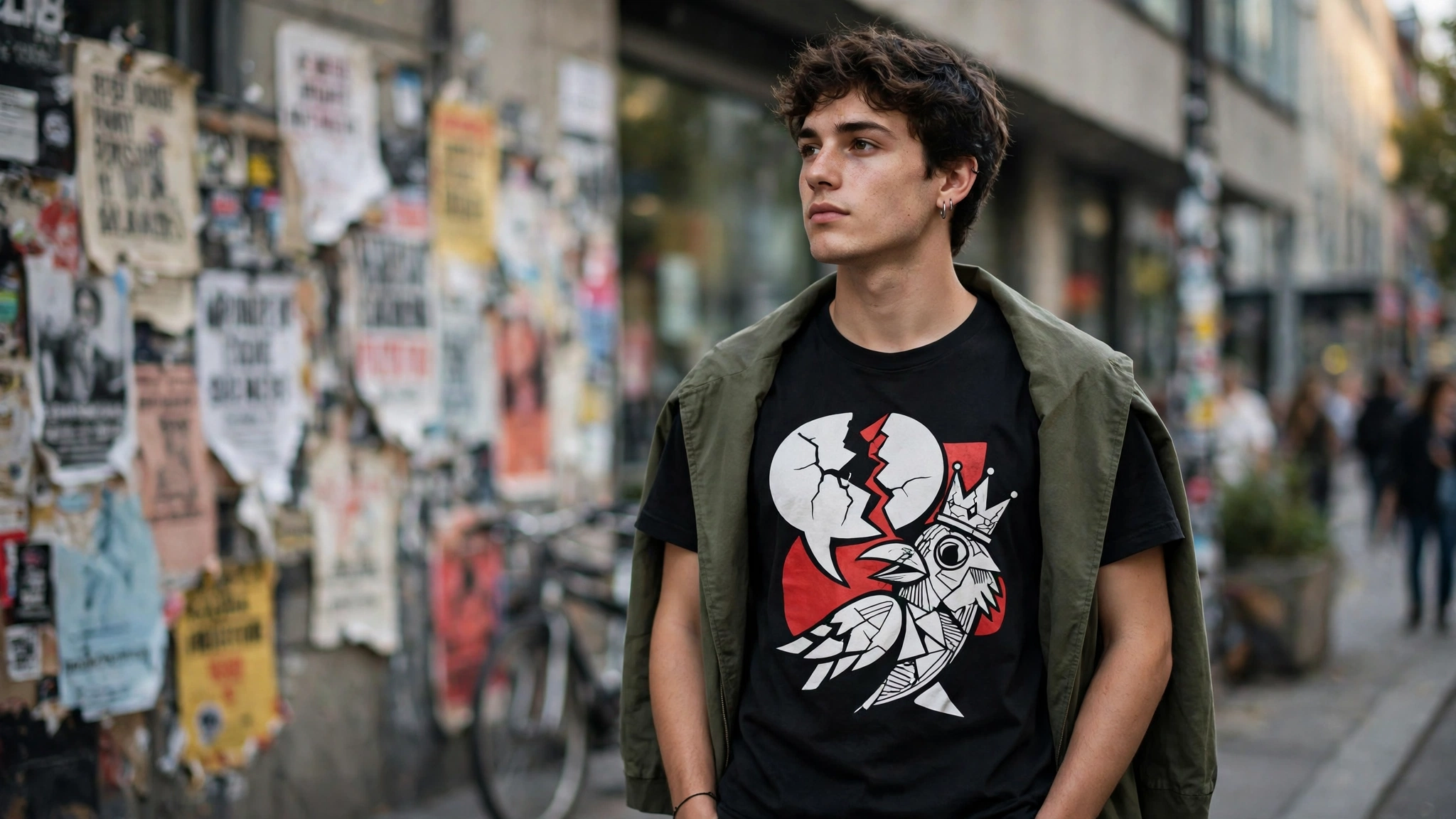

In a world filled with advertisements, social media graphics, and constantly changing fashion trends, getting someone's attention has become increasingly difficult. Yet some of the most memorable statements are surprisingly simple. A few carefully chosen words, printed in a bold and readable style, can communicate an opinion more effectively than an elaborate illustration. This is one reason minimalist typography has become such an influential element of modern protest fashion.
Protest clothing is more than an everyday wardrobe choice. It gives people an opportunity to communicate their beliefs, express frustration, support freedom of expression, and encourage conversations about important issues. When typography takes center stage, the message becomes the main attraction rather than competing with unnecessary visual elements.
From bold political slogans to humorous statements, minimalist designs demonstrate that a powerful message does not need complicated artwork to make an impression. Understanding why this approach works also helps explain the growing appeal of typography-focused statement apparel.
1. Simplicity Helps Messages Get Noticed
The biggest advantage of minimalist typography is its ability to communicate quickly. People rarely spend several minutes examining the clothing worn by someone walking down the street. They usually notice a design for only a few seconds. A clean layout with readable lettering makes those seconds count.
When a shirt contains too many illustrations, decorative elements, and competing colors, the original message can become difficult to understand. Minimalist designs remove these distractions and give the words enough space to communicate their meaning.
This approach is particularly effective for protest apparel because political statements often depend on clarity. A direct slogan can communicate disagreement, frustration, or a particular viewpoint without requiring the viewer to interpret several unrelated design elements.
A well-designed slogan also becomes easier to recognize from a distance. Whether someone sees it at a public gathering, in a coffee shop, or while scrolling through social media photographs, the message has a better chance of making an immediate impression.
2. Bold Typography Creates a Strong Visual Identity
Typography is not simply about choosing an attractive font. Letter size, spacing, weight, alignment, and overall composition influence how people interpret written communication.
Bold lettering often communicates confidence and urgency. Clean sans-serif fonts can create a contemporary appearance, while condensed lettering may give a design a more confrontational personality. Even small adjustments to spacing and alignment can change how a slogan feels.
For political and protest-inspired clothing, these choices are especially important. A statement about freedom, disagreement, or public accountability should look intentional rather than randomly arranged. The typography should support the message and make its personality immediately recognizable.
This is where a minimalist statement apparel piece can stand out. Instead of relying on complicated graphics, it allows the wording to become the central visual feature. The result can feel modern, direct, and expressive without looking overcrowded.
Good typography also creates consistency. When designers understand how to balance font weight, spacing, and contrast, they can develop a recognizable visual style that works across different garments and everyday fashion settings.
3. Less Visual Clutter Makes Political Statements More Memorable
Human attention is limited, particularly in environments where people encounter hundreds of visual messages every day. Minimalist design helps reduce unnecessary information, making the most important element easier to notice.
Consider the difference between a shirt covered in several competing graphics and one featuring a single prominent statement. The first may attract attention through visual complexity, but the second gives viewers a clear starting point. Their eyes naturally move toward the words, allowing them to understand the intended message without searching through decorative details.
Memorability is another important benefit. Short phrases and distinctive lettering are easier to recognize than crowded compositions. When a slogan has a clear visual structure, people may remember its wording, appearance, or the reaction it created.
This does not mean every protest design should look identical or use only plain black-and-white lettering. Color, texture, and creative layouts can still contribute to a strong result. The key is making sure that additional elements strengthen the central message instead of distracting from it.
A successful design knows when to stop adding details.
4. Statement Shirts Turn Everyday Fashion Into Communication
One interesting feature of protest-inspired fashion is that it brings public expression into ordinary environments. Unlike posters that are displayed in specific locations, clothing moves with the person wearing it. A slogan can appear at a social gathering, during a shopping trip, or in an online photograph.
This makes statement apparel a personal form of visual communication. People can use clothing to introduce their opinions, signal their interests, or invite conversations without having to make a formal announcement.
A typography-led political shirt can also create opportunities for interaction. Someone who agrees with the message may recognize a shared viewpoint, while someone with a different perspective might ask what inspired the statement. Either way, the clothing becomes a conversation starter.
Humor can make this communication even more interesting. Sharp wording, unexpected phrasing, and unconventional slogans can challenge familiar expectations while giving a design its own personality.
For example, this high-impact slogan design uses provocative wording as its central concept. Its appeal lies in the relationship between the statement and the wearer's willingness to display an outspoken attitude. It represents a more confrontational side of statement fashion, where humor and political expression can overlap.
Of course, wearing a slogan does not automatically create political change. However, clothing can make opinions visible and encourage discussions that might not otherwise happen.
5. Minimalist Designs Offer Greater Everyday Versatility
Protest clothing does not always need to resemble traditional campaign merchandise. A carefully designed typography-focused shirt can combine expressive messaging with an approachable everyday style.
Minimalist layouts are often easier to coordinate because they avoid excessive visual competition. A shirt with a straightforward typographic design can work with jeans, casual trousers, sneakers, jackets, or layered streetwear outfits.
This versatility matters because people generally prefer clothing that fits naturally into their existing wardrobes. If a statement shirt feels comfortable to style and appropriate for different casual settings, it may become more useful than something designed exclusively for a single event.
Color selection also influences versatility. Neutral shades create a restrained appearance, while contrasting colors can make lettering more noticeable. Similarly, a well-balanced print can maintain visual impact without overwhelming the overall outfit.
The goal is not to make every political statement fashionable or universally acceptable. It is to demonstrate that personal expression and thoughtful design can exist together.
A strong typographic concept should look deliberate, communicate its intended attitude, and remain visually appealing beyond the moment when someone first notices it.
6. Authenticity Gives a Protest Message Its Real Meaning
Although typography can make a slogan visually powerful, the meaning behind the words ultimately matters most. A beautifully arranged phrase may attract attention, but authenticity determines whether the statement feels genuine.
People connect more naturally with clothing that reflects an attitude, belief, or sense of humor they actually identify with. A design should not rely entirely on temporary trends or fashionable lettering. Its message should have a recognizable purpose.
This is particularly relevant to politically expressive apparel. Different people interpret slogans through their own experiences, backgrounds, and perspectives. A statement that appears humorous to one person may communicate serious frustration to another.
Designers should therefore consider the language, context, and possible interpretations of their messages. Clear communication does not require removing personality or controversy. It means understanding what the design is intended to express and making deliberate choices about how that message appears.
Ultimately, typography is a tool for giving ideas a visible form. When the wording, visual style, and underlying attitude work together, the result can feel much more meaningful than decoration alone.
Final Thoughts
Minimalist typography makes protest messages stand out because it prioritizes clarity, readability, and personality. Bold lettering attracts attention, uncluttered layouts improve recognition, and carefully selected wording helps transform an ordinary garment into a form of personal expression.
As statement fashion continues to connect clothing with culture and public conversation, typography remains one of its most effective creative tools. Whether someone prefers subtle messaging, sharp humor, or outspoken political commentary, a thoughtfully designed shirt can communicate an attitude without relying on complicated artwork.
The strongest designs are not necessarily the ones with the most elements. They are the ones that know exactly what they want to say and give that message the space to be heard.
