

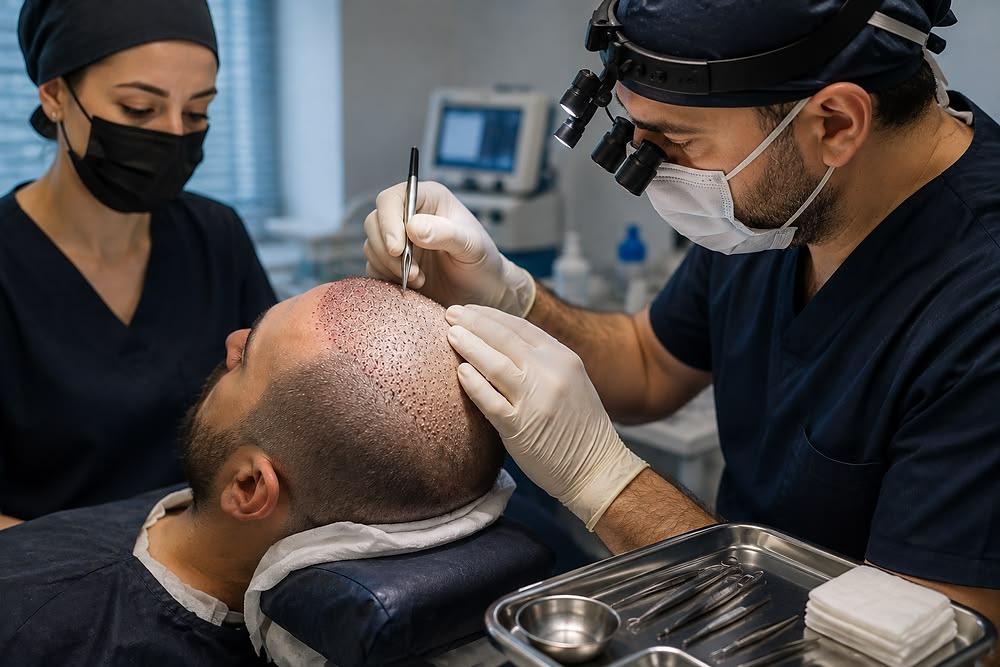

Hair loss is a common concern that can influence appearance and personal confidence. Genetics, hormonal changes, aging, and certain medical conditions may gradually affect hair density and cause visible thinning. Modern hair restoration techniques offer different approaches to address these concerns, and Follicular Unit Transplantation (FUT) remains an established surgical option for suitable candidates.
FUT is based on the scientific understanding of natural hair growth and the characteristics of individual hair follicles. The technique involves transferring healthy follicular units from a donor area to regions affected by hair loss. Understanding How FUT Hair Transplant in Islamabad works can help individuals learn about the procedure, its scientific principles, and the factors that influence its results.
Understanding the Science of Hair Growth
Human hair grows from follicles located within the skin. Each follicle passes through a natural growth cycle consisting of three main phases: anagen, catagen, and telogen.
-
Anagen phase: This is the active growth stage when the hair shaft develops.
-
Catagen phase: During this short transitional stage, follicle growth slows down.
-
Telogen phase: This is the resting stage, after which the hair may shed and a new growth cycle can begin.
Hair thinning can occur when follicles become progressively smaller or spend less time in the active growth phase. In genetic hair loss, certain follicles are sensitive to dihydrotestosterone (DHT), a hormone associated with follicle miniaturization.
Hair transplantation aims to relocate follicles from areas that are generally more resistant to this process.
What Is Follicular Unit Transplantation?
Follicular Unit Transplantation is a surgical hair restoration technique in which a narrow strip of scalp is removed from the donor region, usually at the back of the head. The strip contains naturally occurring follicular units.
Under magnification, the surgical team separates the tissue into individual grafts. Each graft may contain one to four hairs, depending on the natural follicular grouping.
These prepared grafts are then transferred to areas experiencing thinning or baldness. The objective is to preserve the natural structure of the follicles and position them in a way that follows the patient's existing hair growth pattern.
The Scientific Principle Behind Donor Area Selection
Donor area selection is an important part of FUT. The back and sides of the scalp are commonly chosen because follicles in these regions are often less sensitive to the hormonal effects responsible for male pattern baldness.
This characteristic is sometimes described as donor dominance. It means that transplanted follicles generally retain many of their original characteristics after being moved to another area.
However, donor hair is limited, and not everyone has the same density or quality. A specialist evaluates scalp flexibility, follicle density, hair thickness, and the patient's hair loss pattern before planning the procedure.
How Hair Grafts Are Collected and Prepared
The collection process begins after the donor area has been examined and prepared. Local anesthesia is generally used to numb the treatment area.
The surgeon removes a narrow strip of scalp and closes the donor wound using an appropriate surgical technique. The strip is then transferred to a preparation area, where trained members of the surgical team separate the tissue into individual follicular units under magnification.
Careful dissection is essential because excessive handling or damage may reduce the number of usable grafts. The team aims to preserve the follicles and surrounding protective tissue during preparation.
The prepared grafts are organized for placement according to their size and the requirements of the recipient area.
The Importance of Graft Placement and Natural Hair Direction
The science of FUT does not end with graft collection. Accurate placement is equally important for creating a natural-looking result.
The surgeon creates small recipient sites in the areas requiring restoration. Each site is planned according to the angle, direction, and distribution of existing hair.
For example, single-hair grafts are often placed along the frontal hairline to create a softer transition. Multiple-hair grafts may be positioned behind the hairline to help improve the appearance of density.
Proper placement allows transplanted hair to blend more naturally with surrounding follicles. The final appearance also depends on hair thickness, texture, curl pattern, and individual healing.
Factors That Influence FUT Results
Although modern surgical techniques support careful graft handling and placement, results can vary between individuals.
Important factors include:
-
Donor hair density and quality
-
The number of grafts available
-
Follicle survival during preparation and placement
-
Surgical technique and experience
-
Scalp health and healing capacity
-
Existing hair loss and future thinning
A professional consultation helps identify individual limitations and establish realistic treatment goals. FUT may be particularly useful for suitable patients who require a relatively large number of grafts.
However, it generally leaves a linear scar in the donor area, and patients should understand this before choosing the procedure.
Understanding Recovery and the Hair Growth Cycle
After FUT, temporary swelling, redness, tenderness, tightness, and scabbing may occur. The donor area requires particular attention because a strip of scalp has been removed and the wound has been closed.
Some transplanted hair shafts may shed during the first few weeks. This is a common stage of the process and does not necessarily mean that the follicles have been lost.
New hair growth develops gradually over the following months. Results often continue maturing around 9–12 months or longer, depending on individual healing and follicle growth.
Following the surgeon's instructions about washing, sleeping, physical activity, and wound care can support recovery.
Is FUT a Suitable Hair Restoration Option?
FUT may be appropriate for individuals with sufficient donor hair, suitable scalp health, and realistic expectations. It is not suitable for everyone, and other options, including Follicular Unit Extraction (FUE) or non-surgical treatments, may be considered.
People researching How FUT Hair Transplant in Islamabad should consult a qualified hair restoration specialist. A detailed assessment can explain the scientific principles, possible benefits, limitations, and expected results of the procedure.
Frequently Asked Questions
1. What is the scientific principle behind How FUT Hair Transplant in Islamabad?
How FUT Hair Transplant in Islamabad uses the principle of donor dominance by relocating follicles from a donor area that is generally less affected by genetic hair loss to thinning regions.
2. How are follicles protected during How FUT Hair Transplant in Islamabad?
During How FUT Hair Transplant in Islamabad, the donor strip is carefully divided into individual follicular units under magnification. Proper handling helps reduce unnecessary damage to the grafts.
3. How long does hair growth take after How FUT Hair Transplant in Islamabad?
After How FUT Hair Transplant in Islamabad, new growth develops gradually over several months. Results often mature around 9–12 months or longer.
4. Does How FUT Hair Transplant in Islamabad permanently stop hair loss?
No. How FUT Hair Transplant in Islamabad relocates suitable follicles but does not stop untreated natural hair from thinning. A specialist may recommend ongoing hair-loss management.
For more information visit
Enfield royal clinic in islamabad
