

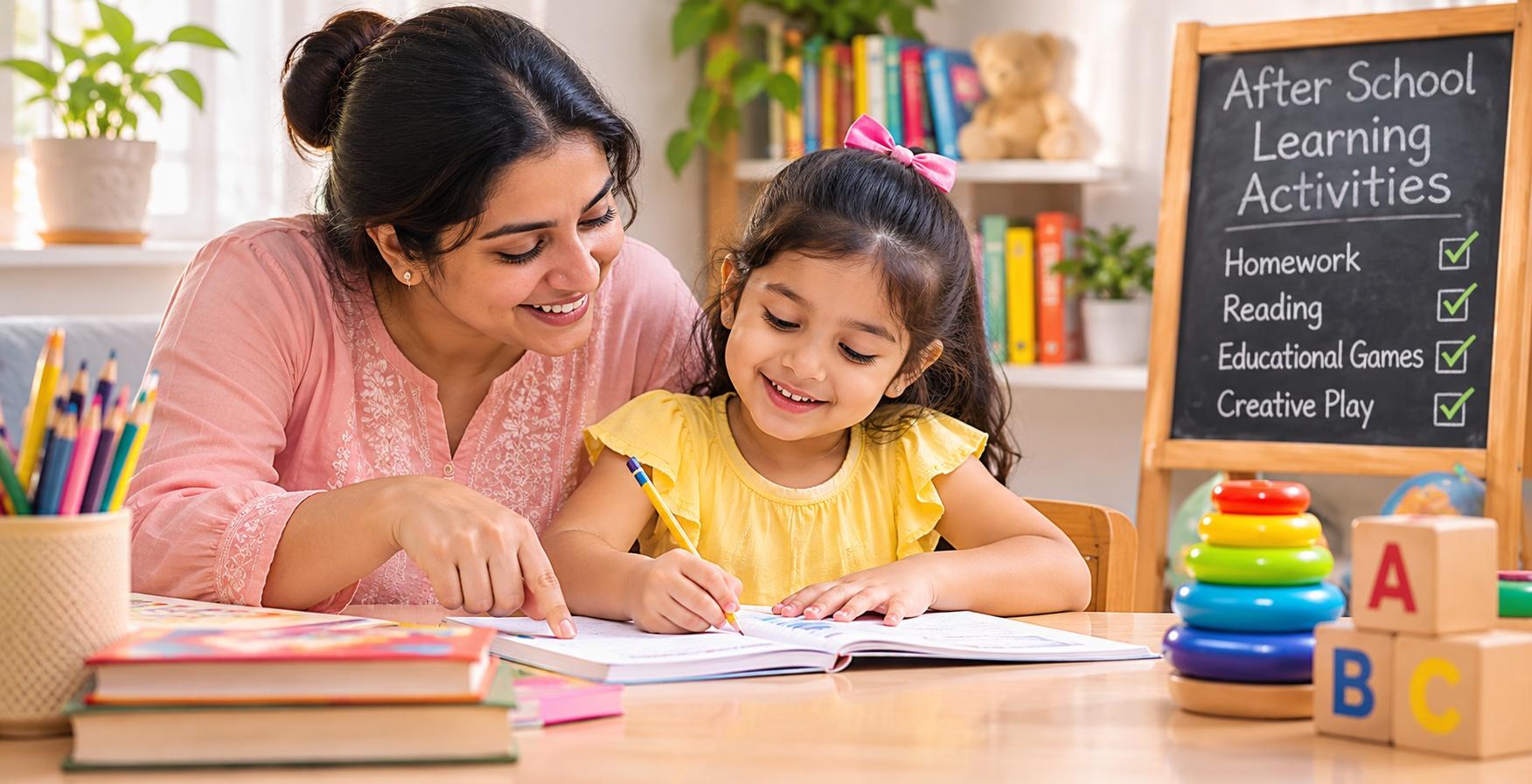

A child's learning journey does not end when the school day is over. The time spent at home also provides valuable opportunities to practise new skills, explore interests, and develop confidence. Parents can support this process through simple activities that make learning enjoyable without creating unnecessary academic pressure.
Well-planned after school learning activities help children connect classroom lessons with everyday experiences. Whether it is reading a story, playing an educational game, completing homework, or exploring nature, small learning opportunities can strengthen a child's understanding.
The goal is not to turn home into another classroom. Instead, parents should create a supportive environment where children feel encouraged to ask questions, practise skills, and learn at their own pace SSCT Bright Kidz.
Why Is Learning at Home Important?
Children need opportunities to revisit what they learn at school. Regular practice can help them remember information, understand difficult concepts, and become more comfortable using new skills.
Learning at home also allows parents to understand their child's interests, strengths, and areas where additional support may be helpful.
Some important benefits include:
- Strengthening classroom learning through regular practice.
- Developing curiosity and independent thinking.
- Improving reading, writing, and communication skills.
- Building confidence through everyday achievements.
- Encouraging creativity and problem-solving.
- Creating positive parent-child learning experiences.
Even a short period of meaningful learning each day can make a difference when it is consistent and enjoyable.
1. Create a Comfortable Learning Environment at Home
A suitable learning space helps children focus on activities without unnecessary distractions. It does not need to be a separate study room. A clean, organised corner with basic learning materials is often enough.
Parents can prepare a small space with:
- Picture books and storybooks.
- Colouring materials and crayons.
- Puzzles and building blocks.
- Age-appropriate worksheets.
- Drawing paper and craft supplies.
- Basic educational toys.
Keep frequently used materials within the child's reach so they can choose activities independently.
Try to reduce distractions such as television and mobile devices during focused learning time. At the same time, allow children to move around and take breaks when needed.
2. Establish a Homework Routine for Kids
A consistent homework routine for kids helps them understand when it is time to complete school-related tasks. However, the routine should be suitable for the child's age, school workload, and energy level.
Children should have some time to relax after returning from school before starting homework.
Parents can follow these simple steps:
Set a Regular Homework Time
Choose a time when the child is comfortable and reasonably energetic. Avoid scheduling homework immediately after school if the child needs rest or a snack.
Break Tasks into Smaller Steps
Long assignments may feel difficult for young children. Divide them into smaller activities and provide short breaks between tasks.
Provide Guidance Without Doing the Work
Parents should explain instructions and help children understand difficult questions. However, children should be encouraged to complete suitable tasks independently.
Appreciate Effort
Recognise your child's effort, patience, and progress rather than focusing only on correct answers. Positive encouragement can make homework feel less stressful.
For preschool children, formal homework may not be necessary. Short activities such as recognising letters, counting objects, or reading picture books can provide suitable practice.
3. Make Reading a Regular Family Activity
Reading is one of the simplest ways parents can support learning at home. It introduces children to new words, improves listening skills, and encourages imagination.
Parents can make reading enjoyable by choosing books that match their child's age and interests.
Some helpful reading practices include:
- Reading a short story together every day.
- Asking children to identify objects in pictures.
- Discussing characters and events.
- Encouraging children to predict what may happen next.
- Allowing older children to read simple passages aloud.
For younger children, picture books and storytelling are useful starting points. Parents should focus on enjoyment rather than expecting children to read independently too early.
4. Use Educational Games to Make Learning Fun
Educational games allow children to practise important skills while enjoying themselves. They combine learning with participation, making difficult concepts easier to explore.
Parents can include different educational games in their child's daily routine.
Number and Counting Games
Ask children to count toys, fruits, steps, or household objects. Simple sorting activities can also introduce numbers, sizes, and patterns.
Word and Letter Games
Use alphabet cards, picture matching, and simple word puzzles to support early literacy.
Memory Games
Matching cards and object-recall games encourage observation, concentration, and memory.
Building and Puzzle Activities
Building blocks, shape sorters, and age-appropriate puzzles introduce problem-solving and spatial understanding.
Choose games according to your child's abilities. The purpose is to encourage exploration, not to create competition or pressure.
5. Connect Learning with Everyday Activities
Children do not learn only through books and worksheets. Everyday household experiences can introduce useful concepts in natural ways.
Parents can include learning opportunities in regular activities.
During cooking: Children can identify ingredients, recognise colours, count vegetables, and observe simple changes in food preparation under adult supervision.
While shopping: Ask children to identify familiar products, compare sizes, or count selected items.
During gardening: Children can observe plants, learn about watering, and notice changes as plants grow.
While travelling: Discuss vehicles, road signs, buildings, and natural surroundings.
During household organisation: Sorting toys, matching socks, and arranging books can introduce classification and basic problem-solving.
These activities help children understand how classroom concepts relate to real life.
6. Encourage Creative Learning Through Art and Play
Creative activities give children opportunities to express ideas and explore their imagination. They also support fine motor skills, concentration, and independent thinking.
Some useful activities include:
- Drawing pictures about a favourite story.
- Making simple paper crafts.
- Painting with child-safe materials.
- Creating shapes using clay or play dough.
- Building structures with blocks.
- Making greeting cards for family members.
Parents should avoid correcting every detail of a child's artwork. Allowing children to make their own choices helps develop creativity and confidence.
7. Balance Learning with Rest and Physical Activity
Children need more than academic practice after school. They also require time for relaxation, movement, and free play.
A balanced routine should include homework or learning activities, outdoor play, family interaction, meals, and sufficient sleep.
Physical activities such as cycling, dancing, running, and playing ball games help children stay active. Quiet activities such as reading, drawing, and listening to stories can provide a relaxing alternative.
Avoid filling every hour with planned tasks. Children also benefit from unstructured play, where they can explore their interests without constant adult direction.
8. Support Learning Without Creating Pressure
Every child learns at a different pace. Some children may quickly understand new concepts, while others need more time and repeated practice.
Parents should focus on creating a positive learning experience rather than expecting immediate results.
Helpful approaches include:
- Listening patiently to children's questions.
- Giving clear and simple explanations.
- Celebrating small improvements.
- Avoiding comparisons with siblings or classmates.
- Allowing children to make mistakes.
- Providing help when they genuinely need it.
If a child regularly struggles with a particular school skill, parents can discuss the concern with the teacher to understand what kind of support may be useful.
9. Maintain Communication with Teachers
Parents and teachers share an important role in supporting children's development. Regular communication helps parents understand what children are learning and where additional practice may be beneficial.
Ask teachers about current classroom topics, recommended reading materials, and suitable activities for home.
Parents can also share observations about their child's interests, difficulties, and learning habits. This cooperation helps create consistency between school and home.
Sample After-School Learning Routine
A simple schedule can help parents organise the afternoon without making it too demanding.
|
Activity |
Suggested Time |
|
Returning home and relaxing |
30 minutes |
|
Snack and conversation |
20 minutes |
|
Homework or school practice |
20–30 minutes |
|
Educational games or reading |
20 minutes |
|
Outdoor or physical play |
30–45 minutes |
|
Family time and dinner |
As suitable |
|
Bedtime preparation |
According to age and needs |
These timings are flexible. Preschool children may need shorter learning sessions and more opportunities for free play.
Frequently Asked Questions
1. What are some useful after school learning activities?
Reading stories, counting household objects, solving puzzles, drawing, educational games, and simple science observations are useful activities for children.
2. How long should children study after school?
The duration depends on the child's age, school workload, and attention span. Young children generally benefit from short, enjoyable learning sessions with regular breaks.
3. How can parents make learning at home enjoyable?
Parents can use games, storytelling, creative projects, and everyday experiences to make learning interactive and interesting.
4. Should parents help children with homework?
Yes. Parents can explain instructions, answer questions, and provide guidance. However, children should be encouraged to complete age-appropriate tasks themselves.
Conclusion
Parents can support children's development by creating a positive learning environment at home and making everyday experiences educational. After school learning activities such as reading, educational games, creative play, and practical household tasks help children strengthen classroom knowledge.
A consistent homework routine for kids, combined with rest, physical activity, and family interaction, creates a healthy balance. Most importantly, parents should encourage curiosity and recognise individual progress rather than placing unnecessary pressure on children.
When learning at home feels enjoyable and supportive, children become more confident, independent, and interested in discovering new things.
